Introduction
Hi, I'm cardene, a software engineer and technical writer focused on blockchain and AI.
I've also authored Japanese technical books on specification-driven development with LLMs and decentralized application (DApp) development.

I also build and publish a variety of tools, libraries, and open-source projects.
Overview
When a node receives a new block, it verifies the correctness of its execution result.
For other nodes to build subsequent blocks and for services to provide balances and transaction histories, the executed transactions must also remain available.
EIP8142 supports this data availability by binding the content used for execution verification to the content published to the network.
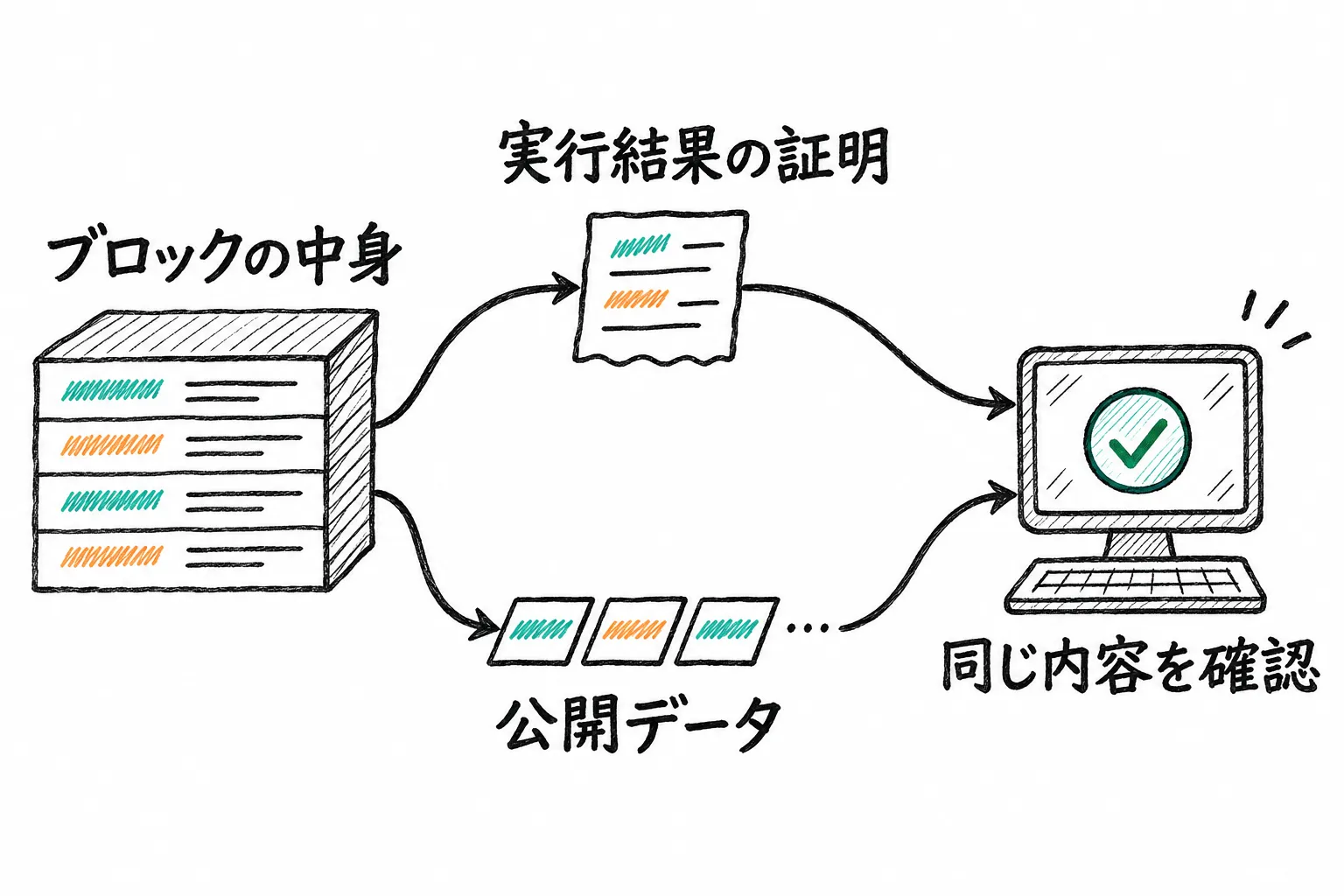
Proof-based verification and data publication
Consider a node that receives a compact proof of correct execution instead of re-executing every transaction in a block. By checking the proof against the execution result, a verifying node can reduce the burden of downloading and re-executing the entire block. However, a block producer could distribute a valid proof without providing the underlying data to other nodes. Some nodes would be able to verify the proof while other nodes would be unable to obtain the actual data and continue processing.
Nodes building subsequent blocks need the preceding execution data to construct further state transitions. Services providing balances and histories also need actual data to answer users' requests; a proof alone is insufficient. Verifying that execution is correct does not necessarily mean that other nodes can access its contents. The content verified through a proof must therefore be bound to the content published to the network for the same block.
Under EIP8142, the block producer publishes transactions and records of state accesses and changes through the existing data distribution mechanism.
Receiving nodes check whether the published data matches the execution content being verified.
They also use the existing distributed availability checks to establish that this data can be obtained.
This combination is called Block-in-Blobs.
If the producer distributes different content, the consistency check fails. If the producer withholds the data, the availability check cannot be satisfied.
Motivation
When every validator re-executes blocks, receiving the execution data is a prerequisite for verification. If verification shifts toward proofs alone, the data publication guarantee previously associated with this prerequisite must be maintained through another mechanism.
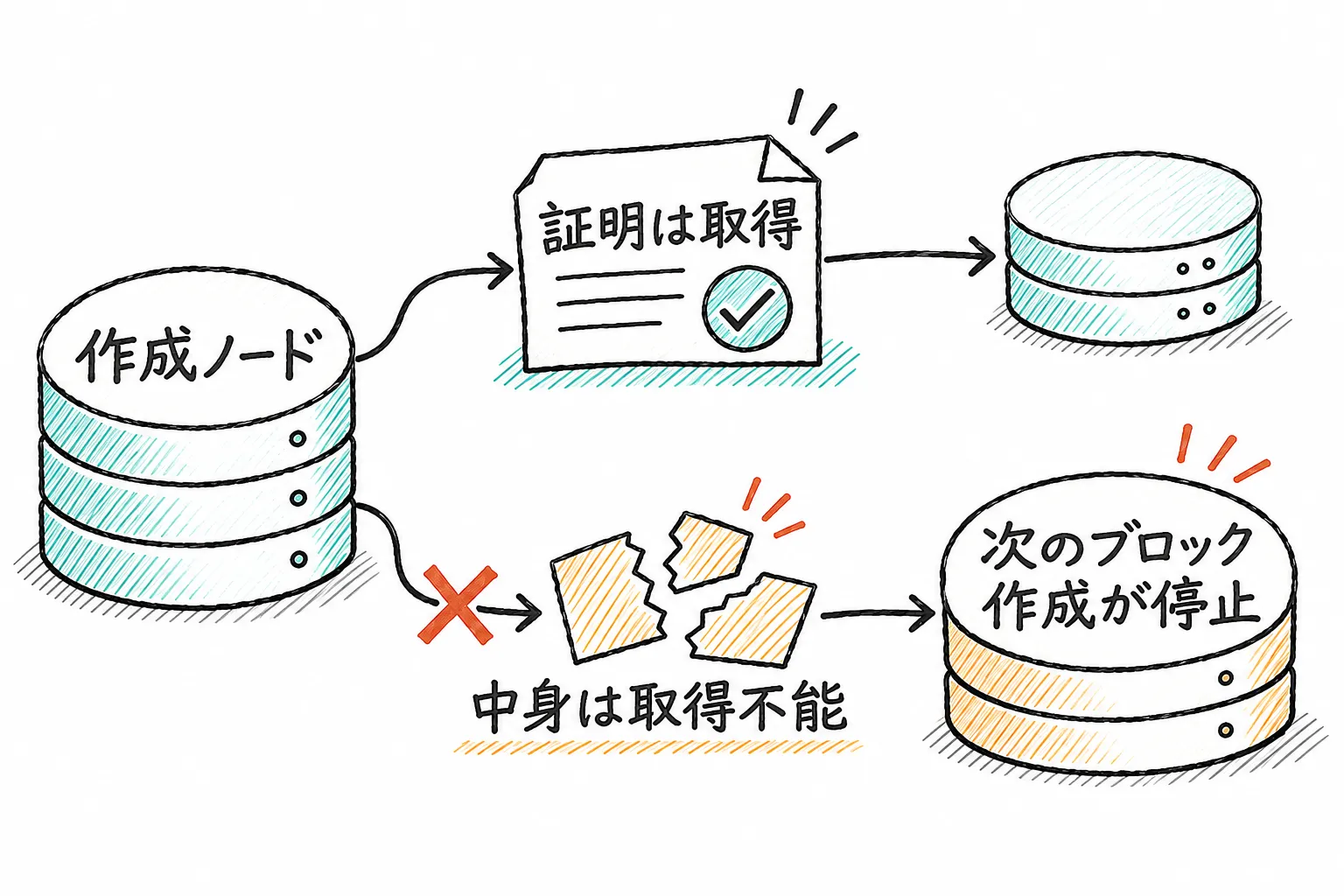
Exclusive access to block contents and stalled nodes
Suppose a block producer publishes a valid execution result and proof. If only that producer retains the transactions and state access records, other producers cannot obtain the preceding execution data. Proof-based validators may complete verification, while producers requiring the actual data cannot build subsequent blocks from the same information. Exclusive access to the data could give the original producer an advantage in continuing to produce blocks.
Services answering balance and history queries and nodes indexing data for search are also affected. These nodes ingest execution data to update their state and query results. Receiving a valid proof alone does not allow them to provide the contents of a requested transaction. Even when reducing the communication requirements for consensus validators, a publication mechanism must remain available for services requiring the underlying data.
Requiring all validators to download all the data again would increase each validator's bandwidth requirements as block throughput grows.
Rather than reintroducing this burden, EIP8142 uses existing data publication and sampling mechanisms.
The design separately checks execution correctness, consistency between executed and published data, and availability of the published data.
It does not specify permanent archival storage or guarantees for search services; its scope is data publication required for block verification.
Specification
The producer converts two types of publication data into a byte sequence using a deterministic procedure and splits it into the required number of Blob objects.
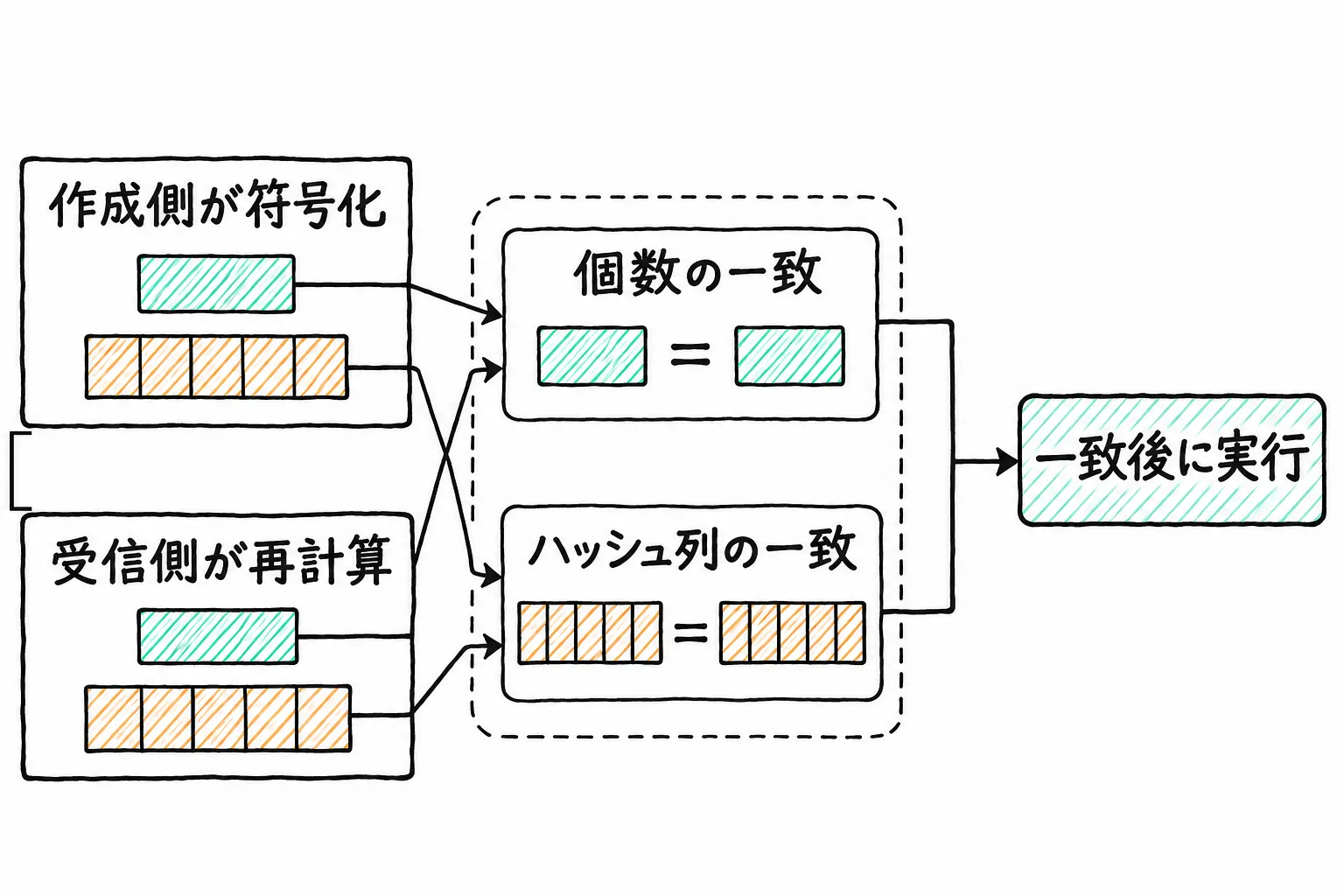
Receiving nodes perform the same transformation, check the resulting count and references against those recorded in the block, and then proceed with execution.
Separately, the consensus layer checks the availability of the published data.
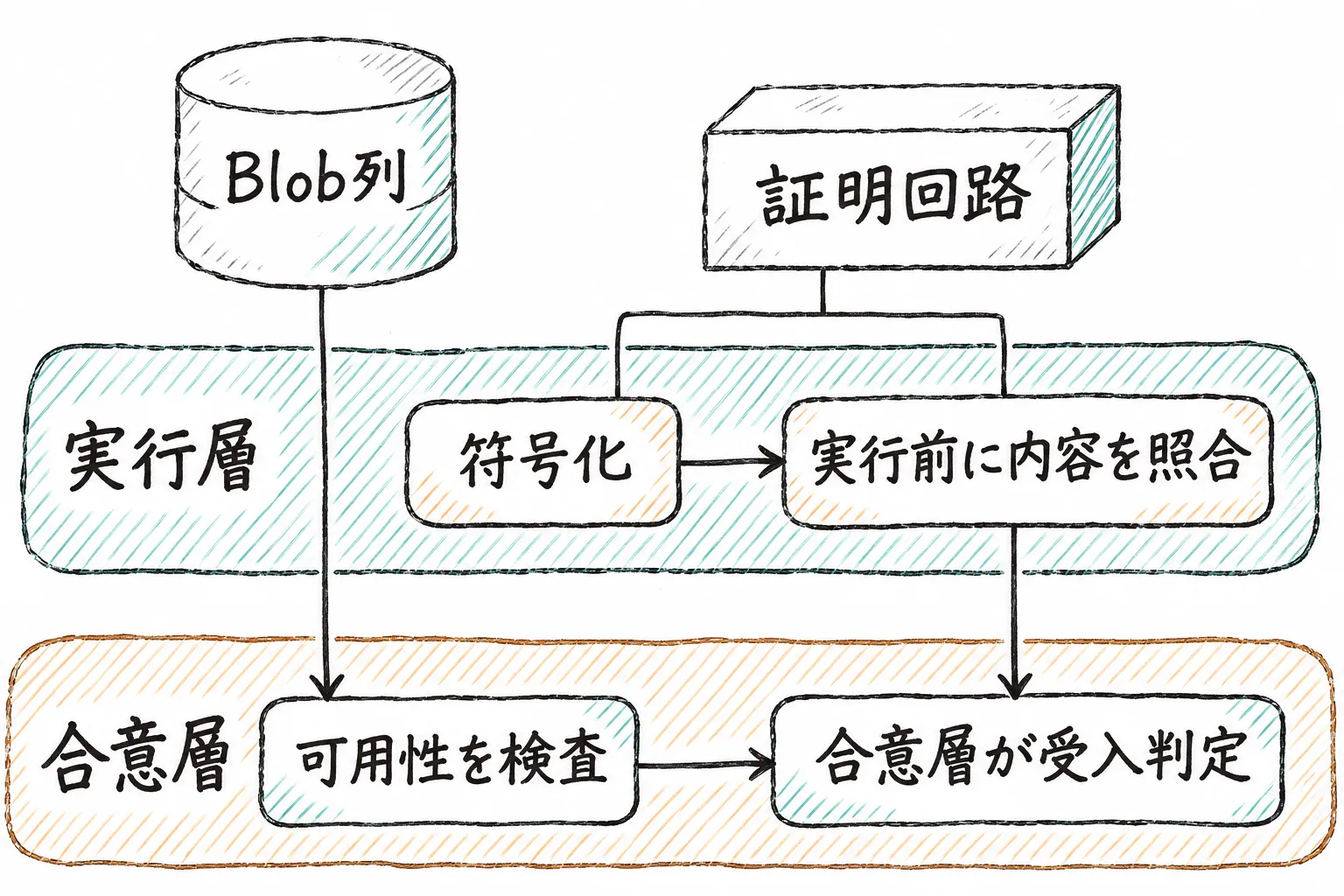
Mapping published data to blobs
A block contains both the actual data to be published to other nodes and compact values committing to that data. These are associated in the same order, distinguishing the publication-data range from the user-blob range.
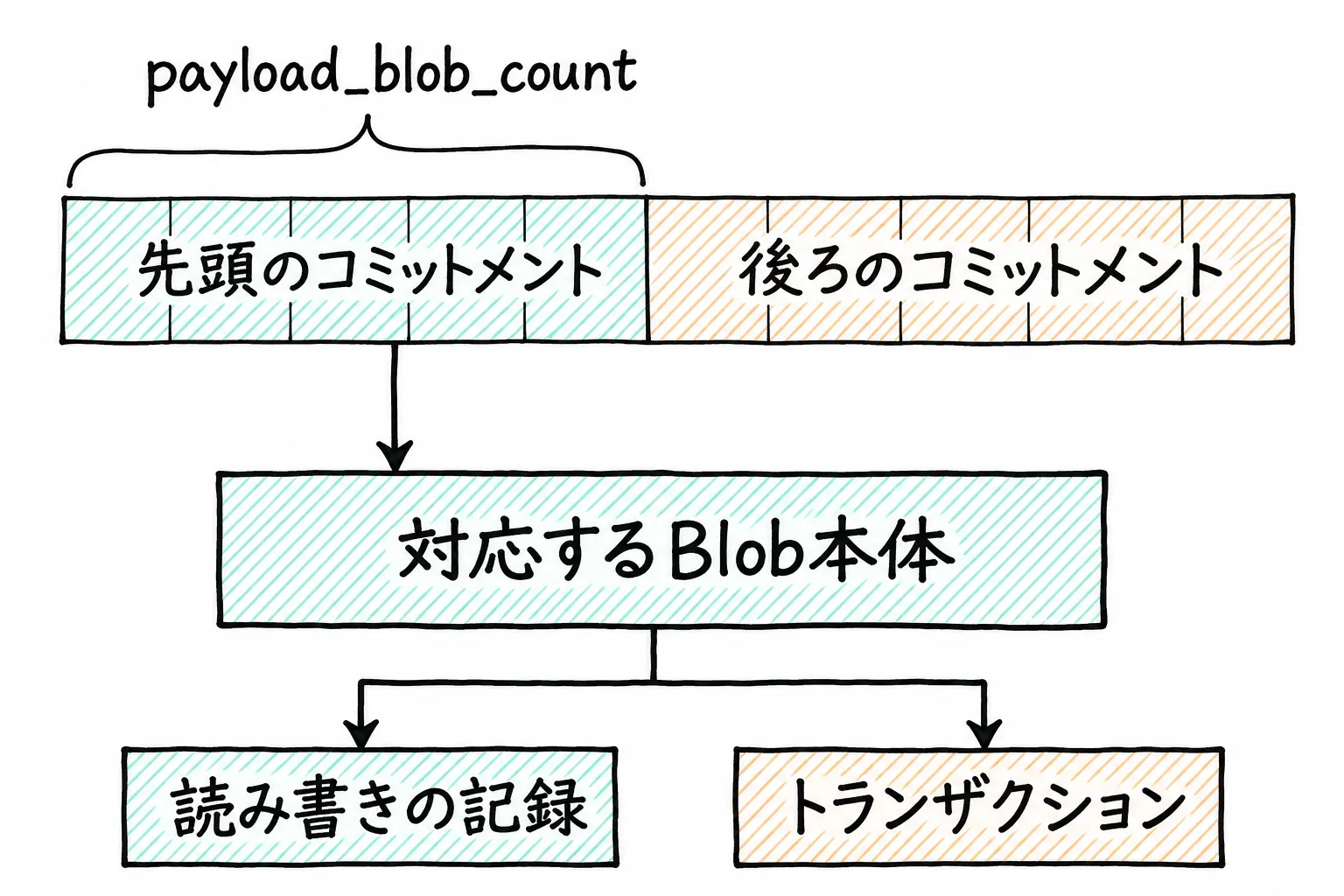
Existing blobs and availability checks
A Blob is a data structure for distributing large amounts of data between nodes. A KZG commitment is a compact value committing to its contents.
An EIP4844 type-3 transaction references versioned hashes derived from blob commitments rather than embedding the blob bodies in the transaction itself.
Receiving nodes can derive hashes from the commitments and verify their correspondence with the data referenced by the transaction.
For more about EIP4844, see the following article.
[EIP4844] Understanding Shard Blob Transactions
PeerDAS, introduced by EIP7594, distributes smaller portions of erasure-coded blob data and samples them to check availability rather than requiring every node to download all the data.
A cell is an authenticated portion of the extended blob data. Nodes use proofs to verify that cells correspond to their commitments.
EIP8142 reuses this distribution and availability mechanism for publication-data blobs.
For more about EIP7594, see the following article.
[EIP7594] Verifying Data Availability Without Holding Entire Blobs
Matching the commitments to the contents and establishing that the actual data can be obtained are distinct checks. Combining KZG-based consistency checks with availability checks allows nodes to reject both substituted content and withheld data.
ExecutionPayloadData
class ExecutionPayloadData(Container):
    # Block Access List (BAL) from EIP7928, RLP-encoded
    blockAccessList: bytes
    # List of transactions, each transaction is RLP-encoded
    transactions: List[Transaction, MAX_TRANSACTIONS_PER_PAYLOAD]
The producer assembles the transaction list and the records of state locations accessed and values changed within the block that other nodes require.
ExecutionPayloadData represents these publication data.
The access records are the Block Access List introduced by EIP7928.
This list is abbreviated as BAL.
Receiving nodes can use these records to identify accounts, storage locations, and updated values when applying or verifying state transitions.
For more about EIP7928, see the following article.
[EIP7928] Recording State Reads and Writes Within Blocks
Recursive Length Prefix (RLP) is an encoding format that preserves the boundaries and ordering of byte strings and lists.
blockAccessList is an already RLP-encoded byte string, and transactions is a list of the encoded bytes of individual transactions.
The class notation describes the data structure; it does not specify encoding the entire ExecutionPayloadData as an SSZ Container.
The complete execution data exchanged between the execution and consensus layers includes withdrawals and header fields in addition to transactions.
That broader structure is ExecutionPayload, whereas ExecutionPayloadData extracts only the two fields published through blobs.
- Fields
| Field | Type | Contents |
|---|---|---|
blockAccessList |
bytes |
RLP-encoded state access records |
transactions |
List[Transaction, MAX_TRANSACTIONS_PER_PAYLOAD] |
Transactions in execution order |
The transaction list length limit is inherited from the existing consensus specification for ExecutionPayload.
Commitments placed at the beginning
The producer places the commitments to publication-data blobs at the beginning of the beacon block's blob_kzg_commitments list.
The commitments to blobs used by type-3 transactions follow them.
The new uint64 header field, payload_blob_count, specifies the number of commitments in this initial range.
For example, if the count is two, a receiving node obtains the blob bodies associated with the first two commitments and decodes them in that order. Commitments are used to verify data correspondence; they do not themselves contain enough information to reconstruct the original transactions. If the count or ordered reference hashes derived from the execution data do not match, the receiving node rejects validation.
Constants and shared capacity
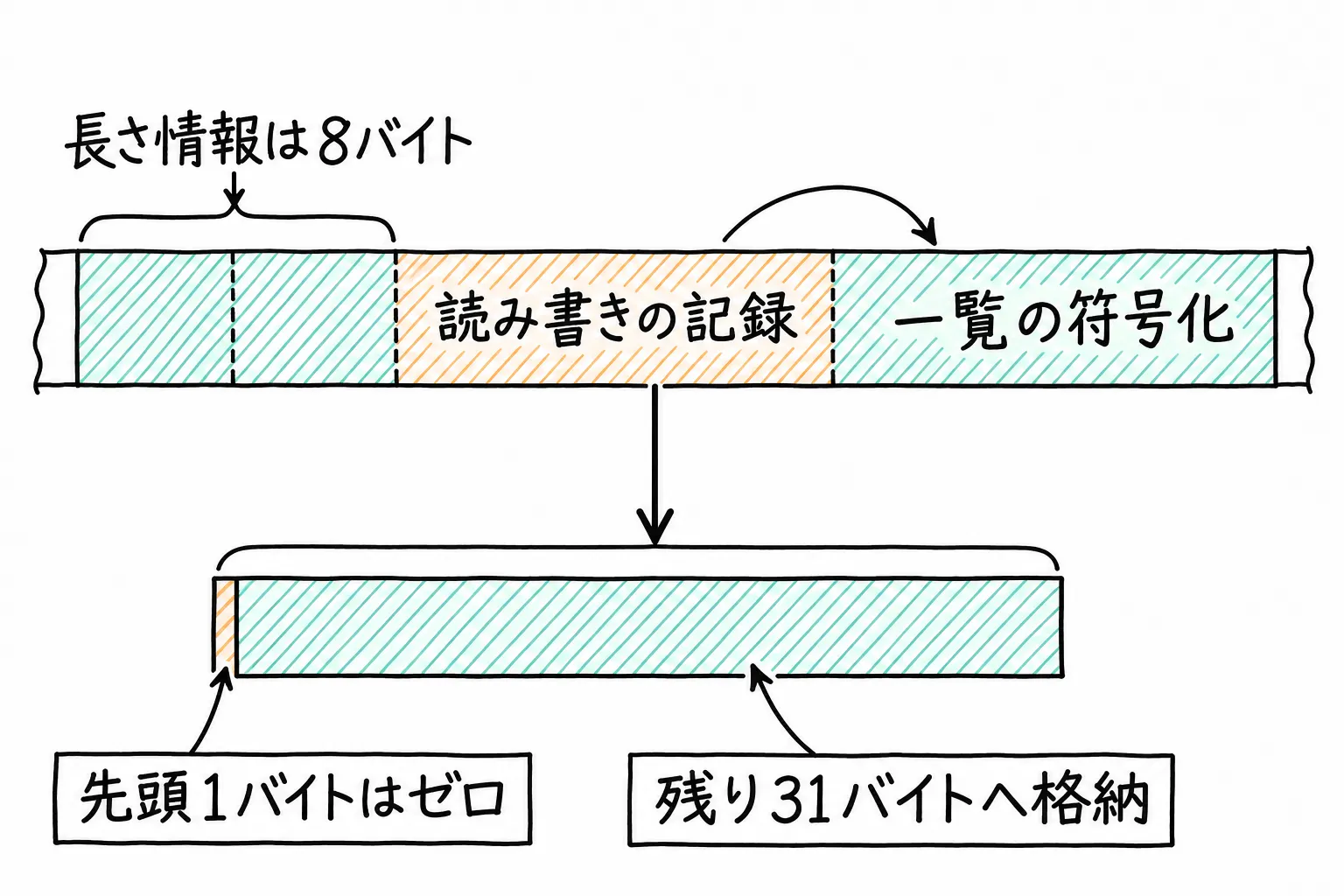
One blob consists of 4096 field elements of 32 bytes each, with 31 bytes of each element available for publication data.
This gives 126976 usable bytes per blob; the blob gas amount per blob is 2**17.
Because the most significant byte of each field element is zero, the usable data capacity is smaller than the full 131072-byte blob.
| Constant | Value or expression | Purpose |
|---|---|---|
FIELD_ELEMENTS_PER_BLOB |
4096 | Number of field elements per blob |
BYTES_PER_FIELD_ELEMENT |
32 | Bytes per field element |
GAS_PER_BLOB |
2**17 |
Blob gas per blob |
USABLE_BYTES_PER_FIELD_ELEMENT |
BYTES_PER_FIELD_ELEMENT - 1 = 31 |
Data region excluding the leading zero byte |
USABLE_BYTES_PER_BLOB |
FIELD_ELEMENTS_PER_BLOB * USABLE_BYTES_PER_FIELD_ELEMENT = 126976 |
Usable bytes per blob |
MAX_BLOBS_PER_BLOCK |
Network-specific configuration | Combined limit for publication-data and user blobs |
MAX_TRANSACTIONS_PER_PAYLOAD |
Inherited from the existing consensus specification | Transaction list length limit in ExecutionPayload |
Publication-data blobs and user blobs count toward the same MAX_BLOBS_PER_BLOCK limit.
The maximum varies according to network configuration and is not fixed at the historical value of six.
EIP7892 allows blob-related settings to be updated at activation times, keeping the execution layer's blobSchedule.max consistent with the consensus layer's MAX_BLOBS_PER_BLOCK.
Nodes use the active settings to determine whether the combined number of blobs remains within the applicable limit.
BlobsBundle
The producer returns the blob bodies, their commitments, and proofs together in a BlobsBundle.
Commitments, blob bodies, and cell proofs preserve the same ordering: publication-data blobs first, followed by those belonging to type-3 transactions.
| Field | Contents and purpose |
|---|---|
commitments |
Commitments to publication-data and type-3 blobs, in the same order |
blobs |
Blob bodies corresponding to those commitments |
proofs |
Cell proofs for each blob |
payload_kzg_proofs |
Random-point proofs for publication-data blobs only; length equals payload_blob_count |
Cell proofs authenticate distributed portions of blob data against their commitments.
By contrast, payload_kzg_proofs, added by the proof-oriented construction, contains random-point KZG proofs used to establish consistency between complete publication-data blobs and their commitments.
The additional field has type List[KZGProof], and its length must equal payload_blob_count.
For example, with two publication-data blobs and one user blob, the three ordinary lists represent all three blobs in the same order. Only the two publication-data blobs have the additional random-point proofs. The proof generator receives the first two commitments and the additional proofs and checks them against the re-encoded publication data. Passing these values as private inputs to a circuit does not make the contents of blobs published to the network confidential.
Encoding and decoding byte sequences
Length information and data ordering are fixed so that producers and receivers derive identical blob sequences from the same data. Decoders use the declared lengths to extract data and reject invalid values in reserved bytes or trailing padding.
get_execution_payload_data
def get_execution_payload_data(payload: ExecutionPayload) -> ExecutionPayloadData:
    """
    Extract the data from an ExecutionPayload that must be made available via blobs.
    """
    return ExecutionPayloadData(
        blockAccessList=payload.blockAccessList,
        transactions=payload.transactions,
    )
This function extracts only the two fields to be published through blobs from the complete execution payload.
It reads blockAccessList and transactions from the supplied ExecutionPayload and returns them in an ExecutionPayloadData object.
The return value excludes headers and withdrawals, ensuring that producers and receivers begin encoding from the same publication data.
-
Read the publication data
Read the state access records and transaction list from the input.
-
Return the two fields together
Pass only the publication data to the encoder.
This function does not independently validate the extracted values. Whether the state access records and transactions correspond to execution is checked through existing execution procedures and subsequent consistency checks.
- Parameters
| Parameter | Type | Purpose |
|---|---|---|
payload |
ExecutionPayload |
Complete execution payload from which publication data is extracted |
- Return value
| Return value | Type | Contents |
|---|---|---|
| Result | ExecutionPayloadData |
State access records and transaction list |
- Requirements
| Check | Required condition |
|---|---|
| Extraction fields | The input includes blockAccessList and transactions from the dependent specifications |
execution_payload_data_to_blobs
def execution_payload_data_to_blobs(data: ExecutionPayloadData) -> List[Blob]:
    """
    Canonically encode the execution-payload data into an ordered list of blobs.

    Encoding steps:
      1. bal_bytes = data.blockAccessList
      2. txs_bytes = RLP.encode(data.transactions)
      3. Create 8-byte header: [4 bytes BAL length][4 bytes tx length]
      4. payload_bytes = header + bal_bytes + txs_bytes
      5. return bytes_to_blobs(payload_bytes)

    The first blob will contain (in order):
      - [4 bytes] BAL data length
      - [4 bytes] Transaction data length
      - [variable] BAL data (may span multiple blobs)
      - [variable] Transaction data (may span multiple blobs)

    This allows extracting just the BAL data without transactions.

    Note: blockAccessList is already RLP-encoded per EIP7928. Transactions are RLP-encoded as a list.
    """
    bal_bytes = data.blockAccessList
    txs_bytes = RLP.encode(data.transactions)

    # Create 8-byte header: [4 bytes BAL length][4 bytes tx length]
    bal_length = len(bal_bytes).to_bytes(4, 'big')
    txs_length = len(txs_bytes).to_bytes(4, 'big')
    header = bal_length + txs_length

    # Combine header + data
    payload_bytes = header + bal_bytes + txs_bytes

    return bytes_to_blobs(payload_bytes)
This function converts the state access records and transaction list into a byte sequence whose original boundaries can be recovered. The two length fields precede the actual data, allowing the receiver to extract the state access records before parsing the transactions.
-
Encode both lengths
Encode the lengths of the state access records and the RLP-encoded list using four bytes each.
-
Concatenate the lengths and data
Preserve the order of the eight-byte length prefix, the records, and the transaction list.
-
Split into blobs
Pass the byte sequence to
bytes_to_blobsand return the ordered list.
Each length field is a four-byte big-endian integer. Big-endian encoding places the most significant bytes first. The state access records and transaction list immediately follow the combined eight-byte prefix. The already encoded bytes of each transaction are retained, and the sequence of these byte strings is encoded as an RLP list. The specification does not define truncating lengths that cannot fit into four bytes.
- Parameters
| Parameter | Type | Purpose |
|---|---|---|
data |
ExecutionPayloadData |
The two publication fields |
- Return value
| Return value | Type | Contents |
|---|---|---|
| Result | List[Blob] |
Encoded blobs in concatenation order |
- Requirements
| Check | Required condition |
|---|---|
| Length information | Each data length must fit into four bytes |
bytes_to_blobs
def bytes_to_blobs(data: bytes) -> List[Blob]:
    """
    Pack arbitrary bytes into one or more blobs.
    Remaining space in final blob is zero-padded.
    """
    blobs = []
    offset = 0

    while offset < len(data):
        chunk = data[offset : offset + USABLE_BYTES_PER_BLOB]
        blob = chunk_to_blob(chunk)
        blobs.append(blob)
        offset += USABLE_BYTES_PER_BLOB

    return blobs
This function divides a concatenated byte sequence into chunks according to the usable capacity of one blob.
It passes each chunk to chunk_to_blob and returns a blob list preserving the original order.
-
Split the data at the capacity boundary
Take up to 126976 bytes from the beginning for each chunk.
-
Convert each chunk into a blob
Use
chunk_to_blobto place the data into field elements and append the resulting blobs in order.
For example, 126976 bytes require one blob, whereas 126977 bytes require two. A final shorter chunk also becomes a complete blob, with the remaining space filled with zeros by the called function. Passing an empty byte string directly to this function returns an empty list. Publication-data encoding, however, always includes the eight-byte length prefix, so that is a separate input case.
- Parameters
| Parameter | Type | Purpose |
|---|---|---|
data |
bytes |
Concatenated publication data |
- Return value
| Return value | Type | Contents |
|---|---|---|
| Result | List[Blob] |
Ordered list of blobs after splitting |
- Requirements
| Check | Required condition |
|---|---|
| Chunk size | Data exceeding USABLE_BYTES_PER_BLOB is placed in subsequent blobs |
chunk_to_blob
def chunk_to_blob(data: bytes) -> Blob:
    """
    Pack up to USABLE_BYTES_PER_BLOB bytes into a single blob.
    If data is shorter than USABLE_BYTES_PER_BLOB, it is zero-padded.
    Each 31-byte chunk is stored in bytes [1:32] of a field element,
    with byte [0] (MSB) set to zero to ensure value < BLS modulus.
    """
    assert len(data) <= USABLE_BYTES_PER_BLOB

    # Pad to exactly USABLE_BYTES_PER_BLOB if needed
    if len(data) < USABLE_BYTES_PER_BLOB:
        data = data + bytes(USABLE_BYTES_PER_BLOB - len(data))

    blob = bytearray(FIELD_ELEMENTS_PER_BLOB * BYTES_PER_FIELD_ELEMENT)

    for i in range(FIELD_ELEMENTS_PER_BLOB):
        chunk_start = i * USABLE_BYTES_PER_FIELD_ELEMENT
        chunk = data[chunk_start : chunk_start + USABLE_BYTES_PER_FIELD_ELEMENT]

        # Store 31 data bytes in [1:32], the first byte [0] stays zero
        field_element_start = i * BYTES_PER_FIELD_ELEMENT
        blob[field_element_start + 1 : field_element_start + BYTES_PER_FIELD_ELEMENT] = chunk

    return Blob(blob)
This function places one blob's worth of data into 32-byte field elements, using 31 bytes per element. The unused most significant byte remains zero so the value stays within the permitted BLS field range.
-
Check the length and pad the remainder
Verify that the input does not exceed the limit and zero-pad it to 126976 bytes.
-
Place 31 bytes into each field element
Leave the first byte of each 32-byte field element zero and write the data into the remaining 31 bytes.
A shorter input within the limit is zero-padded to 126976 bytes before placement.
Writing each 31-byte segment into bytes two through 32 of its field element produces a complete 131072-byte blob.
The first assert rejects oversized inputs; the function does not implicitly split them into additional blobs.
- Parameters
| Parameter | Type | Purpose |
|---|---|---|
data |
bytes |
Data fitting within one blob's usable capacity |
- Return value
| Return value | Type | Contents |
|---|---|---|
| Result | Blob |
Complete 131072-byte blob |
- Requirements
| Check | Required condition |
|---|---|
| Input size limit | Reject inputs exceeding 126976 bytes using assert |
blobs_to_bytes
def blobs_to_bytes(blobs: List[Blob]) -> bytes:
    """
    Unpack blobs back to bytes.
    Returns all usable bytes from all blobs (including any padding).
    """
    raw = bytearray()

    for blob in blobs:
        raw.extend(blob_to_chunk(blob))

    return bytes(raw)
This function extracts and concatenates the usable data regions from an ordered list of blobs.
It passes each blob to blob_to_chunk and concatenates the returned chunks without further modification.
-
Extract the data region of each blob
Pass the blob to
blob_to_chunk, which checks the reserved bytes. -
Concatenate and return in order
Concatenate the extracted chunks, including trailing zeros.
The returned bytes retain trailing zero padding. The publication-data decoder reads the actual lengths of the state access records and transaction data from the first eight bytes. Removing zeros at this stage could remove legitimate data, so padding is not stripped before extraction using the declared lengths.
- Parameters
| Parameter | Type | Purpose |
|---|---|---|
blobs |
List[Blob] |
Blob bodies in their original order |
- Return value
| Return value | Type | Contents |
|---|---|---|
| Result | bytes |
Concatenated usable regions, including zero padding |
- Requirements
| Check | Required condition |
|---|---|
| Input order | Supply blobs in the original encoding order |
blob_to_chunk
def blob_to_chunk(blob: Blob) -> bytes:
    """
    Extract the 31 usable bytes from each field element.
    Validates that the first byte is zero for each field element.
    """
    result = bytearray()

    for i in range(FIELD_ELEMENTS_PER_BLOB):
        field_element_start = i * BYTES_PER_FIELD_ELEMENT

        # Validate first byte is zero
        assert blob[field_element_start] == 0x00, "Invalid blob: first byte must be zero"

        # Extract usable data bytes
        result.extend(blob[field_element_start + 1 : field_element_start + BYTES_PER_FIELD_ELEMENT])

    return bytes(result)
This function reads each 32-byte field element in a blob, checks the reserved leading byte, and extracts the remaining 31 bytes. It performs this operation for all 4096 elements and returns the concatenated usable regions.
-
Check the most significant bytes
Verify that the first byte of every element is zero.
-
Concatenate the remaining 31-byte regions
Extract and return only the data regions.
If any leading byte is nonzero, the function rejects the input using assert.
Even if the data regions are correct, a blob containing a nonzero reserved byte is not accepted.
Decoding checks the regions fixed to zero during encoding, ensuring that the same byte layout is preserved.
- Parameters
| Parameter | Type | Purpose |
|---|---|---|
blob |
Blob |
One complete blob |
- Return value
| Return value | Type | Contents |
|---|---|---|
| Result | bytes |
126976 bytes extracted from 4096 field elements |
- Requirements
| Check | Required condition |
|---|---|
| Reserved region | Reject a nonzero most significant byte in any 32-byte field element |
blobs_to_execution_payload_data
def blobs_to_execution_payload_data(blobs: List[Blob]) -> ExecutionPayloadData:
    """
    Canonically decode an ordered list of blobs into execution-payload data.

    Decoding steps:
      1. raw = blobs_to_bytes(blobs)
      2. Read 8-byte header: [4 bytes BAL length][4 bytes tx length]
      3. Split into bal_bytes and txs_bytes
      4. return ExecutionPayloadData(blockAccessList, transactions)
    """
    # Extract raw bytes from blobs
    raw = blobs_to_bytes(blobs)

    # Read 8-byte header
    bal_length = int.from_bytes(raw[0:4], 'big')
    txs_length = int.from_bytes(raw[4:8], 'big')

    # Verify that declared length does not exceed data length
    assert len(raw) >= 8 + bal_length + txs_length

    # Extract data portions
    bal_bytes = raw[8 : 8 + bal_length]
    txs_bytes = raw[8 + bal_length : 8 + bal_length + txs_length]

    # Decode transactions
    transactions = RLP.decode(txs_bytes)

    # The rest must be padding, no trailing data allowed
    trailing = raw[8 + bal_length + txs_length:]
    assert all(b == 0 for b in trailing)

    return ExecutionPayloadData(blockAccessList=bal_bytes, transactions=transactions)
This function decodes the blob sequence into the state access records and transaction list. It reads two lengths from the first eight bytes, extracts the declared regions, and RLP-decodes the transaction list.
-
Concatenate the usable regions
Extract the data from all blobs, excluding the reserved bytes.
-
Extract the two fields using their lengths
Read the lengths from the first eight bytes and split the records and transaction list accordingly.
-
Check the list and trailing data
Decode the list with RLP and return the two fields if all remaining bytes are zero.
Reject the input if the sum of the declared lengths plus eight bytes exceeds the extracted usable capacity. The function also verifies that every byte following the declared data regions is zero, rejecting nonzero trailing data. Excessive declared lengths and invalid trailing values are independent rejection conditions. For valid publication data, an encoding and decoding round trip recovers the original two fields.
- Parameters
| Parameter | Type | Purpose |
|---|---|---|
blobs |
List[Blob] |
Initial list of publication-data blobs |
- Return value
| Return value | Type | Contents |
|---|---|---|
| Result | ExecutionPayloadData |
Decoded BAL and transaction list |
- Requirements
| Check | Required condition |
|---|---|
| Declared lengths | Extracted usable capacity must be at least eight bytes plus the sum of the two declared lengths |
| Trailing bytes | All bytes following the data regions must be zero |
| List encoding | The transaction list must be decodable using RLP |
Producer-side and receiver-side verification
The execution layer, which executes transactions, and the consensus layer, which agrees on block ordering, communicate through the Engine API to request candidate blocks and validate them.
The producer calculates the publication-data blobs and returns them. The receiver independently derives their count and reference hashes from the same data and checks consistency.
A zkEVM provides an environment in which execution correctness can be checked using proofs.
The native execution approach and the approach designed to reduce computation within proof circuits establish the same validity conditions through different consistency-check procedures.
extract_data_from_type_3_tx
def extract_data_from_type_3_tx(transactions: List[Transaction]) -> Tuple[List[Blob], List[KZGCommitment], List[List[KZGProof]]]:
    """
    Extract blobs, KZG commitments, and cell proofs from type-3 (blob) transactions.

    Returns a tuple of (blobs, commitments, cell_proofs) in the order they appear
    in the transaction list.

    Implementation note: This is not new logic - a function(s) like this should already be available in your existing getPayload/blob bundle implementation.
    """
    ...
This function extracts the blob bodies, commitments, and cell proofs corresponding to type-3 transactions in transaction order.
The producer appends these returned values after the publication-data blobs and their associated values.
-
Collect
type-3data in transaction orderPreserve the transaction order and the order of blobs within each transaction.
-
Return the three corresponding lists
Pass the blob bodies, commitments, and cell proofs to the producer in matching order.
The function body is omitted; the example assumes the existing blob sidecar handling mechanism. This is not a new executable reference implementation. The subsequent construction assumes that all three lists correspond to the same blobs in the same order.
- Parameters
| Parameter | Type | Purpose |
|---|---|---|
transactions |
List[Transaction] |
Transactions in the block |
- Return value
| Return value | Type | Contents |
|---|---|---|
| First return value | List[Blob] |
Blob bodies corresponding to type-3 transactions |
| Second return value | List[KZGCommitment] |
Commitments in the same order |
| Third return value | List[List[KZGProof]] |
Cell proofs associated with each blob |
- Requirements
| Check | Required condition |
|---|---|
| Existing extraction mechanism | The function body is omitted and delegated to the existing blob sidecar implementation |
get_payload
def get_payload(payload_id: PayloadId) -> GetPayloadResponse:
    # 1. Build the block (select transactions, etc.)
    payload = build_execution_payload(payload_id)

    # 2. Compute payload blobs to determine count
    payload_data = get_execution_payload_data(payload)
    payload_blobs = execution_payload_data_to_blobs(payload_data)
    payload_blob_count = len(payload_blobs)

    # 3. Set the count in the header
    payload.payload_blob_count = payload_blob_count

    # 4. Compute commitments and cell proofs for payload blobs
    payload_commitments = [blob_to_kzg_commitment(b) for b in payload_blobs]
    payload_versioned_hashes = [kzg_commitment_to_versioned_hash(c) for c in payload_commitments]
    # Cell proofs
    payload_cells_and_proofs = [compute_cells_and_kzg_proofs(b) for b in payload_blobs]
    payload_cell_proofs = [proofs for _, proofs in payload_cells_and_proofs]

    # 5. Extract type-3 transaction blobs, commitments, and cell proofs
    type3_blobs, type3_commitments, type3_cell_proofs = extract_data_from_type_3_tx(payload.transactions)
    type3_versioned_hashes = []
    for tx in payload.transactions:
        if tx.type == BLOB_TX_TYPE:
            type3_versioned_hashes.extend(tx.blob_versioned_hashes)

    # 6. Combine: payload blobs first, then type-3 blobs
    all_blobs = payload_blobs + type3_blobs
    all_commitments = payload_commitments + type3_commitments
    all_cell_proofs = payload_cell_proofs + type3_cell_proofs
    all_blob_versioned_hashes = payload_versioned_hashes + type3_versioned_hashes

    return GetPayloadResponse(
        execution_payload=payload,
        blobs_bundle=BlobsBundle(
            commitments=all_commitments,
            blobs=all_blobs,
            proofs=all_cell_proofs
        ),
        block_value=calculate_block_value(payload)
    )
This function builds a candidate block and returns its delivery data, with publication-data blobs placed first.
It constructs a candidate using payload_id, extracts and encodes the two fields, and records the resulting number of blobs in the header's payload_blob_count.
-
Build the candidate and encode the publication data
Calculate the required blob count and write it into the header.
-
Calculate commitments and cell proofs
Generate a commitment and distribution cell proofs for each publication-data blob.
-
Append
type-3blob dataArrange the corresponding blob bodies, commitments, and proofs in matching order and return them with the execution payload.
Calculate the commitment and cell proofs for every publication-data blob.
Then append the type-3 blob bodies, commitments, and cell proofs in the same order.
Transaction selection must account for the capacity consumed by publication data so the combined blob count stays within the shared limit.
- Parameters
| Parameter | Type | Purpose |
|---|---|---|
payload_id |
PayloadId |
Identifier of the candidate block to construct |
- Return value
| Return value | Type | Contents |
|---|---|---|
| Result | GetPayloadResponse |
Execution payload, blob bundle, and block value |
- Requirements
| Check | Required condition |
|---|---|
| Shared capacity | Combined publication-data and type-3 blob count must not exceed MAX_BLOBS_PER_BLOCK |
get_payload_zk
def get_payload_zk(payload_id: PayloadId) -> GetPayloadResponse:
    # 1. Build the block (select transactions, etc.)
    payload = build_execution_payload(payload_id)

    # 2. Compute payload blobs to determine count
    payload_data = get_execution_payload_data(payload)
    payload_blobs = execution_payload_data_to_blobs(payload_data)
    payload_blob_count = len(payload_blobs)

    # 3. Set the count in the header
    payload.payload_blob_count = payload_blob_count

    # 4. Compute commitments, cell proofs, and random point proofs for payload blobs
    payload_commitments = [blob_to_kzg_commitment(b) for b in payload_blobs]
    payload_versioned_hashes = [kzg_commitment_to_versioned_hash(c) for c in payload_commitments]
    # Cell proofs
    payload_cells_and_proofs = [compute_cells_and_kzg_proofs(b) for b in payload_blobs]
    payload_cell_proofs = [proofs for _, proofs in payload_cells_and_proofs]
    # Random point proofs for payload consistency verification
    payload_random_point_proofs = [compute_blob_kzg_proof(b, c) for b, c in zip(payload_blobs, payload_commitments)]

    # 5. Extract type-3 transaction blobs, commitments, and cell proofs
    type3_blobs, type3_commitments, type3_cell_proofs = extract_data_from_type_3_tx(payload.transactions)
    type3_versioned_hashes = []
    for tx in payload.transactions:
        if tx.type == BLOB_TX_TYPE:
            type3_versioned_hashes.extend(tx.blob_versioned_hashes)

    # 6. Combine: payload blobs first, then type-3 blobs
    all_blobs = payload_blobs + type3_blobs
    all_commitments = payload_commitments + type3_commitments
    all_cell_proofs = payload_cell_proofs + type3_cell_proofs

    return GetPayloadResponse(
        execution_payload=payload,
        blobs_bundle=BlobsBundle(
            commitments=all_commitments,
            blobs=all_blobs,
            proofs=all_cell_proofs,
            payload_kzg_proofs=payload_random_point_proofs
        ),
        block_value=calculate_block_value(payload)
    )
This function extends the basic construction procedure with random-point KZG proofs for publication-data blobs. In addition to ordinary cell proofs, it calculates proofs of consistency from the blob bodies and their commitments.
-
Construct the publication-data blobs and count
Encode the publication data in the same order as in the basic construction.
-
Generate cell proofs and additional proofs separately
Calculate both the distribution proofs and the random-point KZG proofs for consistency verification.
-
Store the additional proofs in a separate field
Return only the additional publication-data proofs in
payload_kzg_proofs.
The additional proofs are placed in payload_kzg_proofs; proofs corresponding to type-3 blobs are not included in this field.
For example, if there are two publication-data blobs, the proof generator receives two initial commitments and two additional proofs.
Cell proofs for distribution and proofs used in the circuit to check complete publication-data blobs remain in separate fields.
- Parameters
| Parameter | Type | Purpose |
|---|---|---|
payload_id |
PayloadId |
Identifier of the candidate block to construct |
- Return value
| Return value | Type | Contents |
|---|---|---|
| Result | GetPayloadResponse |
Response containing additional consistency proofs |
- Requirements
| Check | Required condition |
|---|---|
| Additional proof inputs | Calculate each proof using only the corresponding publication-data blob and its commitment |
| Additional proof count | Must equal payload_blob_count |
new_payload
def new_payload(
    payload: ExecutionPayload,
    expected_blob_versioned_hashes: List[VersionedHash],
    ...
) -> PayloadStatus:
    # 1. Derive payload blobs and commitments
    payload_data = get_execution_payload_data(payload)
    payload_blobs = execution_payload_data_to_blobs(payload_data)
    payload_blob_count = len(payload_blobs)
    payload_commitments = [blob_to_kzg_commitment(b) for b in payload_blobs]
    payload_versioned_hashes = [kzg_commitment_to_versioned_hash(c) for c in payload_commitments]

    # 2. Verify payload_blob_count matches header
    assert payload_blob_count == payload.payload_blob_count

    # 3. Extract type-3 tx versioned hashes
    type3_versioned_hashes = []
    for tx in payload.transactions:
        if tx.type == BLOB_TX_TYPE:
            type3_versioned_hashes.extend(tx.blob_versioned_hashes)

    # 4. Verify versioned hashes: payload blobs first, then type-3
    assert expected_blob_versioned_hashes == payload_versioned_hashes + type3_versioned_hashes

    # 5. Run EL STF
    return execute_payload(payload)
This function recalculates the publication-data blobs from the received execution payload and checks the header count and expected hashes.
expected_blob_versioned_hashes is the ordered list of hashes referencing all blobs in the block, supplied by the consensus layer.
Concatenate the recalculated publication-data hashes with the user-blob hashes referenced by the transactions and compare them with the expected list.
-
Recalculate the publication-data blobs
Use the same encoding to obtain commitments and versioned hashes.
-
Check the count and the complete hash list
Append the
type-3hashes after the publication-data hashes and compare all values and their order. -
Pass the payload to execution
Call
execute_payloadonly after the checks succeed.
The comparison covers not only the count but also every hash value and its position.
Even when the publication-data blob count matches, execution does not proceed if references or ordering differ.
After the comparison, the function calls execute_payload. Data availability is checked separately by the consensus layer; the proposal does not add an independent download-completion condition to this function.
- Parameters
| Parameter | Type | Purpose |
|---|---|---|
payload |
ExecutionPayload |
Complete received execution payload |
expected_blob_versioned_hashes |
List[VersionedHash] |
Expected ordered list of hashes for all blobs, supplied by the consensus layer |
- Return value
| Return value | Type | Contents |
|---|---|---|
| Result | PayloadStatus |
Execution result of the payload that passed the consistency checks |
- Requirements
| Check | Required condition |
|---|---|
| Count | Recalculated blob count matches the header count |
| Reference hashes | Concatenated publication-data and type-3 hashes exactly match the expected values and ordering |
new_payload_zk
def new_payload_zk(
    payload: ExecutionPayload,
    expected_blob_versioned_hashes: List[VersionedHash], # public input

    # BiB additions: prefix metadata for payload blobs
    payload_kzg_commitments: List[KZGCommitment],  # private input
    payload_kzg_proofs: List[KZGProof],            # private input
    ...
) -> PayloadStatus:
    # 1. Declared payload blob count from the header
    n = payload.payload_blob_count
    assert len(payload_kzg_commitments) == n
    assert len(payload_kzg_proofs) == n

    # 2. Derive payload blobs and versioned hashes
    payload_data = get_execution_payload_data(payload)
    payload_blobs = execution_payload_data_to_blobs(payload_data)
    payload_versioned_hashes = [kzg_commitment_to_versioned_hash(c) for c in payload_kzg_commitments]

    # 3. Verify payload blob count matches header
    assert len(payload_blobs) == n

    # 4. Extract type-3 tx versioned hashes
    type3_versioned_hashes = []
    for tx in payload.transactions:
        if tx.type == BLOB_TX_TYPE:
            type3_versioned_hashes.extend(tx.blob_versioned_hashes)

    # 5. Verify versioned hashes: payload blobs first, then type-3
    assert expected_blob_versioned_hashes == payload_versioned_hashes + type3_versioned_hashes

    # 6. Verify blob–commitment consistency using batch KZG proof verification
    assert verify_blob_kzg_proof_batch(
        blobs=payload_blobs,
        commitments=payload_kzg_commitments,
        proofs=payload_kzg_proofs
    )

    # 7. Run EL STF
    return execute_payload(payload)
This function uses publication-data commitments and KZG proofs supplied to the proof circuit to check consistency with reconstructed blobs. It first compares the header count with the input list lengths, then re-encodes the publication-data blobs from the same execution payload.
-
Check the declared count against the input lists
Verify that the required number of publication-data commitments and proofs is supplied, with no missing or extra entries.
-
Reconstruct blobs and check the reference list
Construct the same blob sequence from the execution payload and verify all hash values and their order.
-
Verify the KZG proofs and execute
Proceed with execution only after verifying consistency with the committed content.
The native approach recomputes commitments directly, whereas this approach uses verify_blob_kzg_proof_batch to verify the correspondence between blobs and commitments in a batch.
This avoids expensive multi-scalar multiplications inside the proof circuit while preserving the same block acceptance conditions.
The expected hashes and header are public inputs; the payload, commitments, and KZG proofs are private circuit inputs.
Private inputs in this context are values that need not all be presented directly to the proof verifier.
Publication-data blobs themselves are distributed to the network, so this does not guarantee transaction confidentiality.
- Parameters
| Parameter | Type | Purpose |
|---|---|---|
payload |
ExecutionPayload |
Execution payload verified inside the circuit |
expected_blob_versioned_hashes |
List[VersionedHash] |
Public input: expected hashes for all blobs |
payload_kzg_commitments |
List[KZGCommitment] |
Private input: publication-data commitments |
payload_kzg_proofs |
List[KZGProof] |
Private input: KZG consistency proofs |
- Return value
| Return value | Type | Contents |
|---|---|---|
| Result | PayloadStatus |
Execution result of the payload that passed the consistency checks |
- Requirements
| Check | Required condition |
|---|---|
| Input lists | Commitment and proof list lengths each match the header count |
| Re-encoded count | Number of reconstructed publication-data blobs matches the declared count |
| Complete hash list | Concatenated publication-data and type-3 hashes match every expected value |
| Content consistency | verify_blob_kzg_proof_batch succeeds |
Consensus layer and data recovery
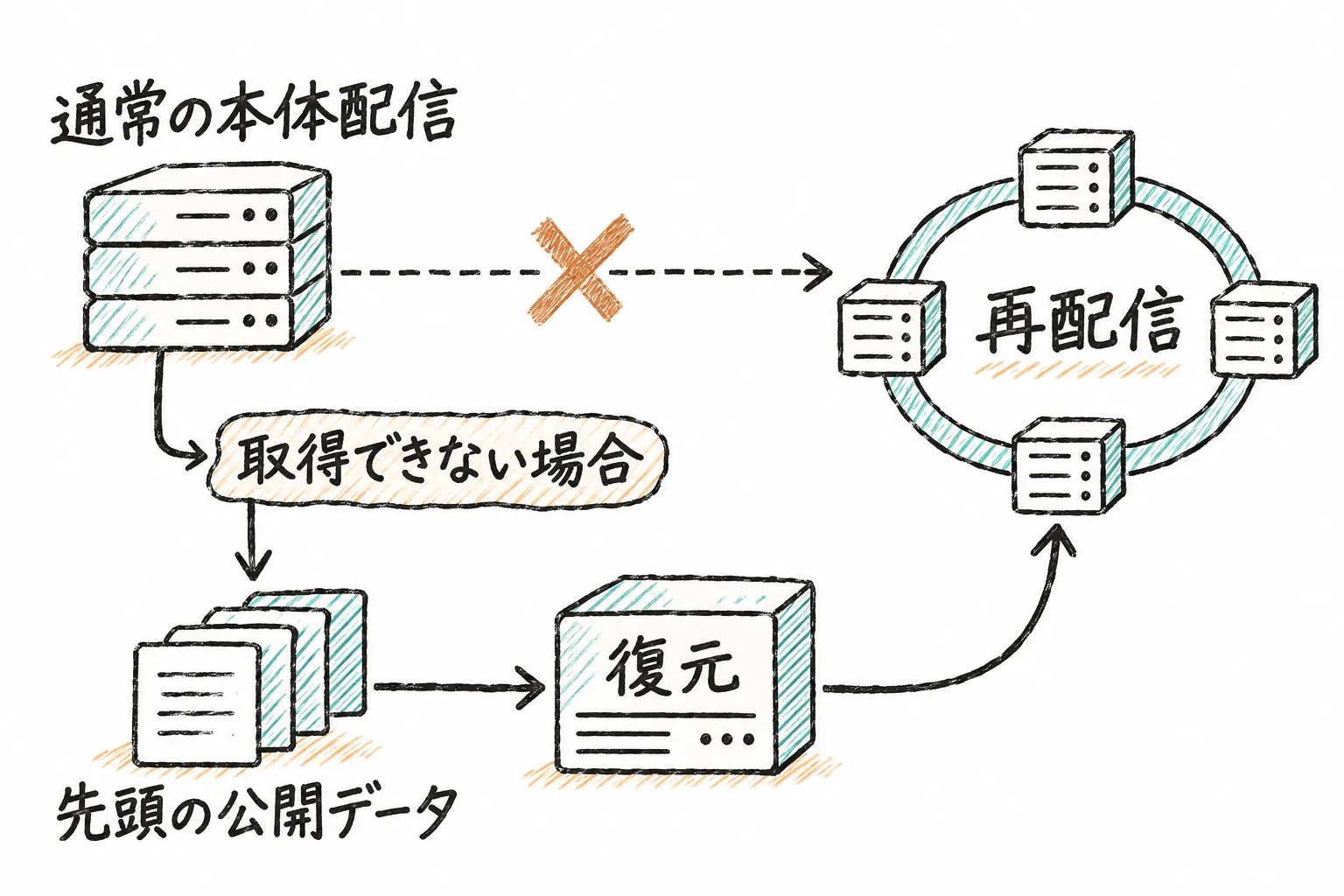
The consensus layer uses the initial blob count to identify the publication-data range, while reusing the existing blob distribution and availability mechanisms. If ordinary execution-payload delivery is unavailable, nodes retain a recovery path through the obtained publication-data blobs.
ExecutionPayload
class ExecutionPayload(Container):
    parent_hash: Hash32
    fee_recipient: ExecutionAddress
    state_root: Bytes32
    receipts_root: Bytes32
    logs_bloom: ByteVector[BYTES_PER_LOGS_BLOOM]
    prev_randao: Bytes32
    block_number: uint64
    gas_limit: uint64
    gas_used: uint64
    timestamp: uint64
    extra_data: ByteList[MAX_EXTRA_DATA_BYTES]
    base_fee_per_gas: uint256
    block_hash: Hash32
    transactions: List[Transaction, MAX_TRANSACTIONS_PER_PAYLOAD]
    withdrawals: List[Withdrawal, MAX_WITHDRAWALS_PER_PAYLOAD]
    blob_gas_used: uint64
    excess_blob_gas: uint64
    # [New in EIP8142]
    payload_blob_count: uint64
This definition adds the publication-data blob count to the complete execution payload received by the consensus layer.
The added payload_blob_count field is a uint64 indicating how many initial commitments correspond to publication-data blobs.
Existing fields are retained, and publication-data blobs use the same availability checks and distribution mechanisms as other blobs.
However, the displayed class definition does not show blockAccessList, even though the extraction function reads that attribute inherited from EIP7928.
This fragment is not a complete standalone executable class without its existing types and dependent specifications.
| Added field | Type | Purpose |
|---|---|---|
payload_blob_count |
uint64 |
Number of initial publication-data commitments |
Recovery from distributed data
If a node does not receive execution data through the usual gossip topic, it can reconstruct the BAL and transactions from the initial publication-data blobs.
EIP7732 introduces the execution_payload topic, through which receivers ordinarily obtain execution payload data.
This topic is used to distribute the execution payload body between nodes.
When proof-based validators operate using only headers, they may continue verification even if the producer omits ordinary payload delivery and publishes data only in blobs.
To prevent other nodes waiting for the execution payload from stalling, EIP8142 describes recovery and redistribution from the blob bodies corresponding to the initial commitments.
The decoding function returns the BAL and transactions. Withdrawals and headers come from other specified inputs. Recovering these two fields does not guarantee that an entire signed delivery object can always be reconstructed from them alone. The recovery path for missing ordinary delivery and future delivery-protocol implementation details should be considered separately.
Blob capacity and costs
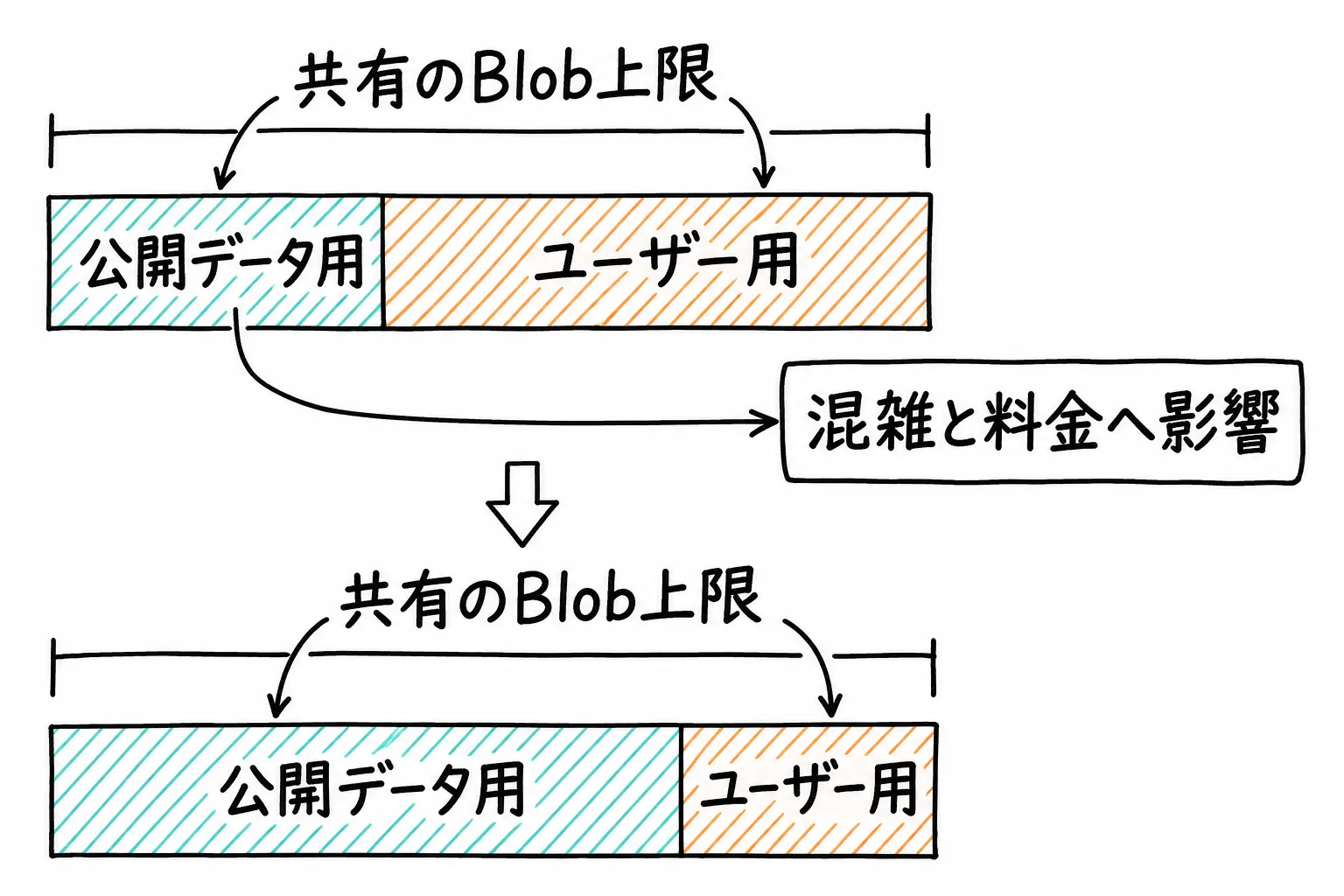
Both publication-data blobs and user blobs consume shared capacity and blob gas. Even if the protocol does not require publication-data blobs to incur the same individual fees as user blobs, their effects on shared capacity and congestion remain.
Protocol-required blob usage
Publication-data blobs do not correspond to an individual user's type-3 transaction.
The proposal therefore does not require publication-data blobs to be charged the same per-blob fees as user blobs, treating them as protocol-required resource usage for maintaining data availability.
For example, increasing the publication data from one blob to two reduces the remaining user-blob capacity by one under the same limit. Because publication-data blobs also consume blob gas, they affect congestion and the blob base fee. Explicit pricing remains undecided. The absence of a direct charging requirement does not imply zero resource costs or zero effects on fees.
Additional considerations
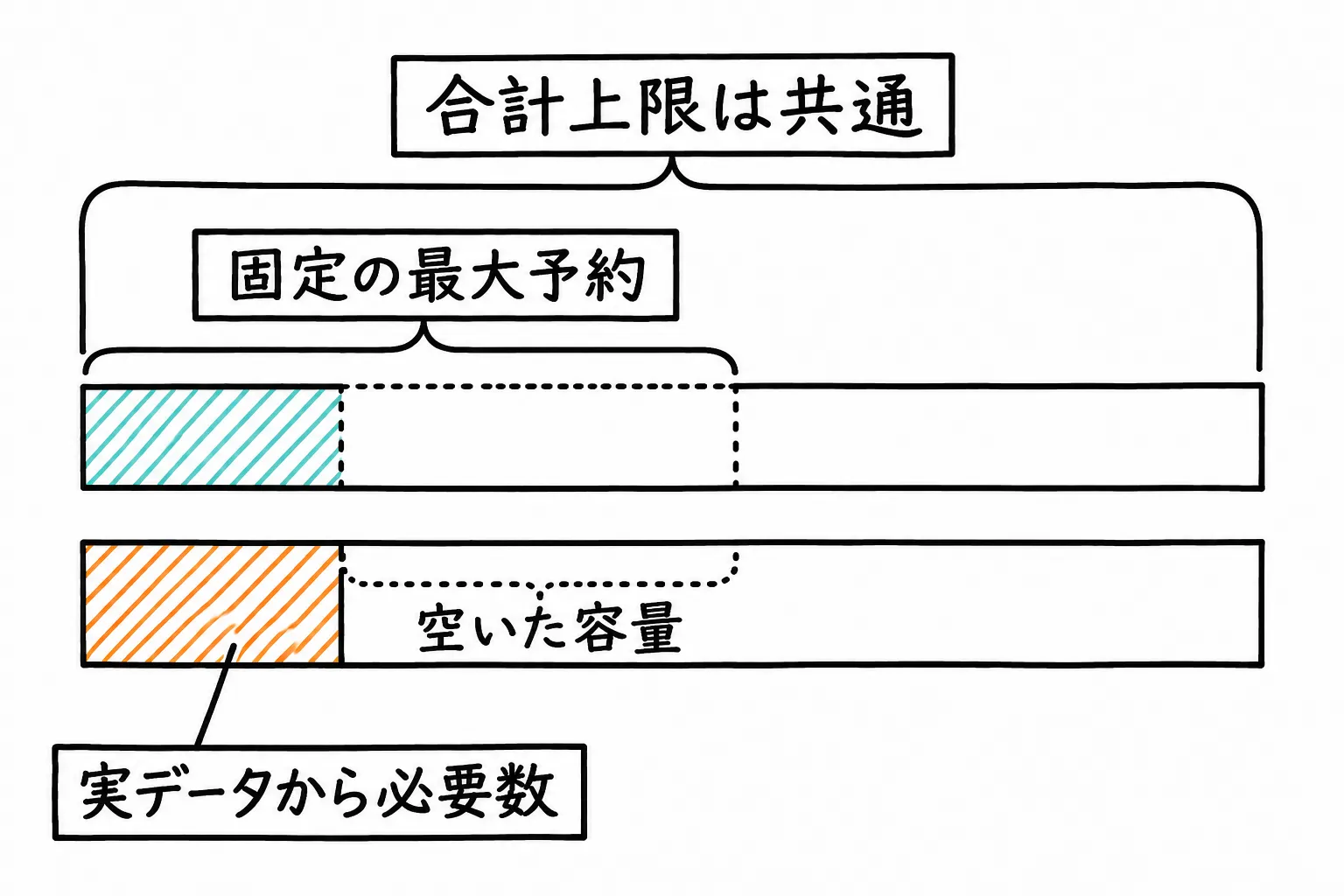
Selecting which data to publish and using only the necessary number of blobs connects the information required by other nodes with efficient use of shared capacity. Any compression or alternative serialization format must account for verification and proof-generation computation as well as bandwidth.
Data included in publication
Transactions must be included because they cannot be derived from the other components or the consensus layer. The BAL can be calculated by re-executing transactions, but proof-based validators do not re-execute them. Both are therefore included in publication-data blobs so other producers and nodes updating state can obtain them.
Withdrawals can be derived from the consensus layer, and execution requests can be recalculated from transactions and are also needed for consensus-layer verification.
The proposal does not add these fields to the two publication-data fields.
The header itself contains payload_blob_count; including the header in the blobs would introduce a circular dependency in which the count depends on its own encoded representation.
Adding a separate header field for the number of blobs occupied by the BAL alone remains an unresolved TODO.
This would be distinct from payload_blob_count, which counts all publication-data blobs. The additional field's name, type, and validation formula have not been defined.
Fixed reservations versus a variable blob count
Always reserving the worst-case number of blobs would prevent unused reserved capacity from being allocated to user blobs, even for blocks with little publication data.
EIP8142 encodes the actual data, determines the required count, and constructs a block within the overall limit.
For example, if the publication data fits into one blob, it uses one blob rather than consuming a fixed worst-case reservation. However, this does not guarantee a fixed minimum amount of capacity for user blobs. When a block requires more publication-data blobs, fewer slots remain for user blobs.
Compression and serialization
Compressing publication data could reduce the number of required blobs. However, decompression would become part of verification, adding computation that also needs to be proven. The proposal recommends uncompressed data while compression ratios, additional proof-generation costs, and changes to the verification input format remain under investigation.
The specified encoding procedure uses RLP. The encoded bytes of individual transactions are retained and encoded as an RLP list. Moving to SSZ is treated as a future possibility rather than part of the current procedure.
EIP7807 proposes migrating execution block structures to the SSZ representation used by the consensus layer.
Nodes can derive a block hash from the same structure.
However, EIP7807 explicitly retains the existing encoding of individual transactions, which is not identical in scope to the future SSZ-encoded transaction list mentioned by EIP8142.
These statements from separate proposals should not be conflated into a single already deployed serialization format.
Compatibility
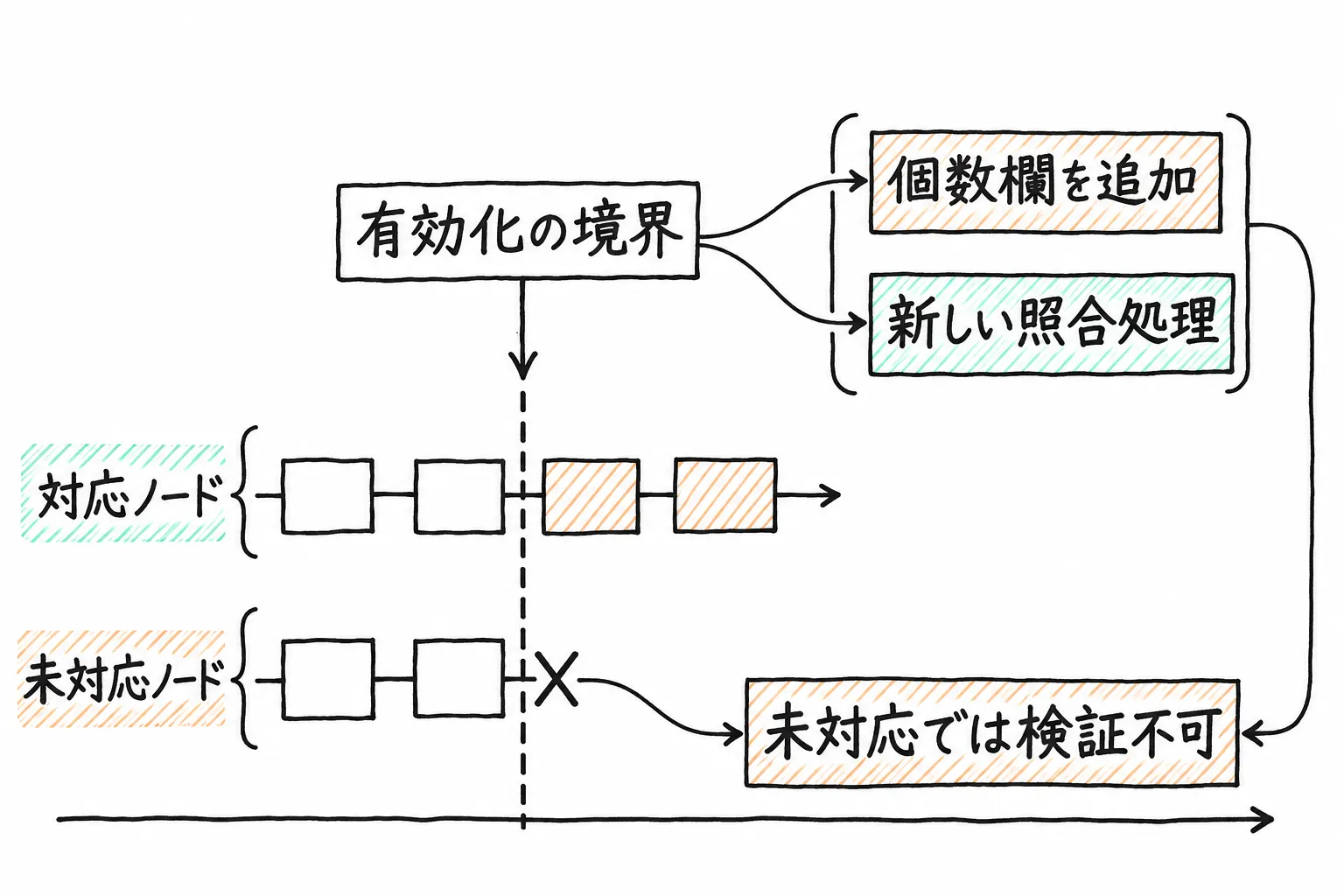
Adding the publication-data blob count to the header and changing receiver-side consistency checks requires a fork activating the same rules across nodes.
Node upgrades and activation
After activation, producers and receivers verify blocks using identical encoding, count, and ordering rules. Nodes that do not support the new header and validation rules cannot validate post-activation blocks under the new protocol. Reusing existing blob distribution does not eliminate the need for node upgrades.
At the time of this article, EIP8142 is in Draft status.
Treat it as a proposed specification, including its unresolved pricing and bandwidth considerations and the absence of published official tests and a reference implementation.
The proposal does not establish an activation date or confirm that the described behavior is already deployed.
Tests
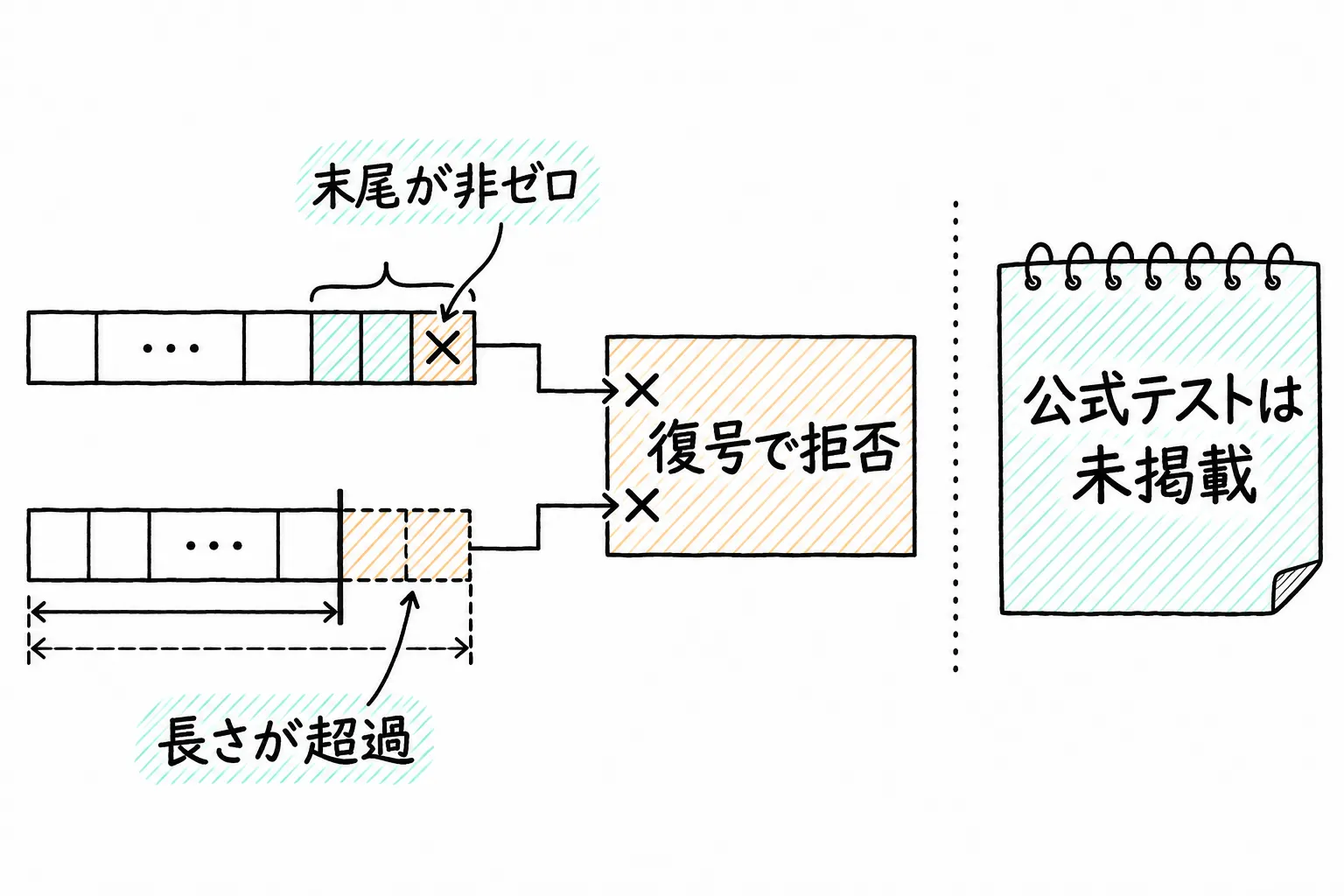
The proposal's test section is marked TODO, and official test vectors have not been published in the version discussed here. Distinguish rejection conditions derived from the specification from test results actually obtained by running an implementation.
Unpublished tests and validation targets
Encoding and decoding checks include 31-byte boundaries, one-blob capacity, reserved leading bytes, and trailing zero padding. For example, 126976 and 126977 bytes require different blob counts, and inputs containing nonzero reserved bytes are rejected.
Check excessive declared data lengths separately from nonzero values remaining after the declared data regions. Receiver-side validation also checks the header count, correspondence between commitments and blobs, and hash values and ordering.
The official reference implementation section is also marked TODO. The proposal's Python examples contain existing procedures and omitted arguments and should be distinguished from a complete executable node implementation. A successful byte-conversion test does not establish successful integrated verification involving RLP, KZG proofs, the Engine API, and the consensus layer.
Security
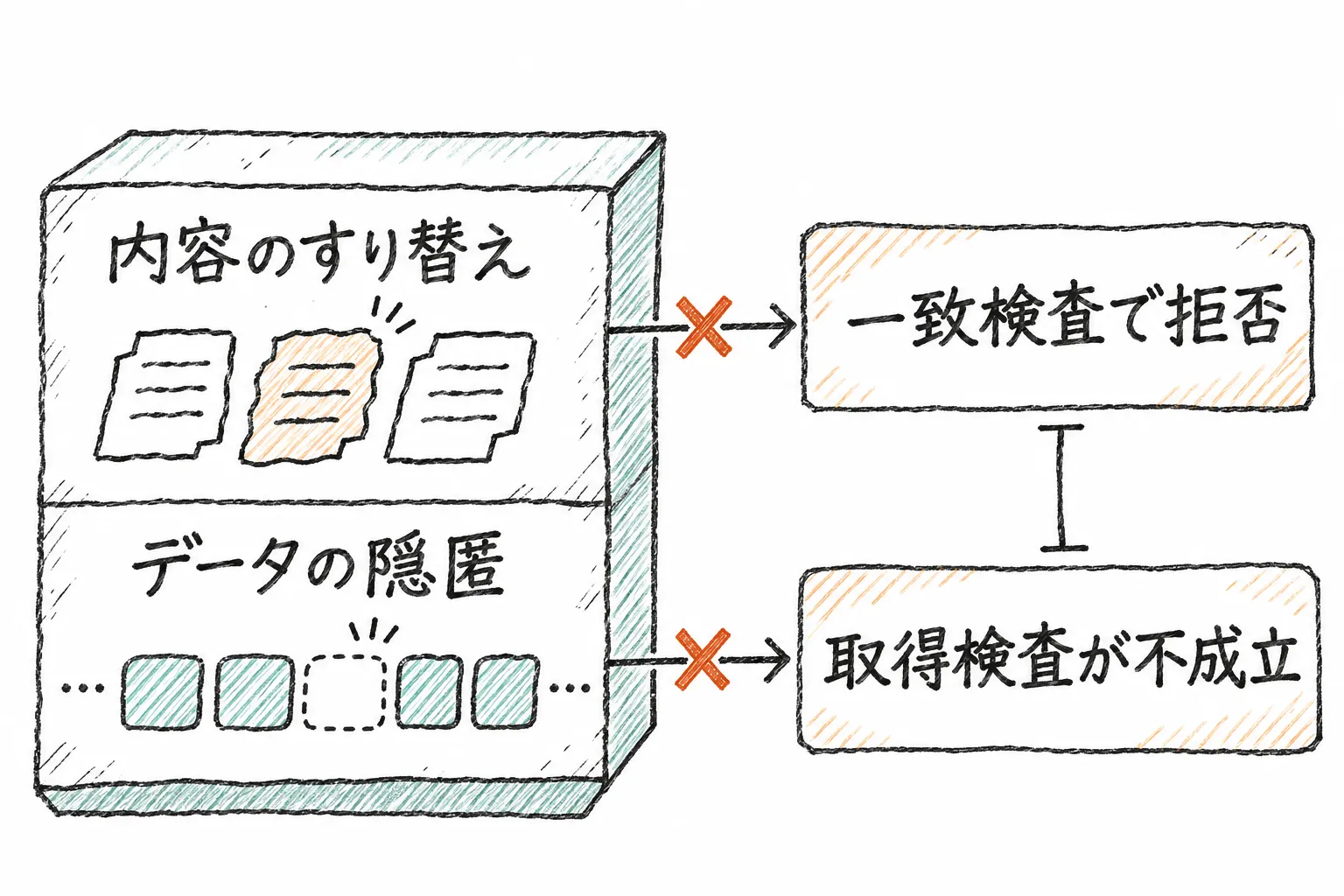
Checks that execution and published data match reject a different class of attacks from checks that published data can be obtained. Shared capacity limits and costs associated with data volume also constrain how much publication data a producer can generate.
Substitution of published content
Even if the producer proves correct execution, publishing different blobs would leave the data required by receiving nodes inconsistent with that execution. The native approach checks hashes derived from commitments calculated from the execution payload. The proof-oriented approach additionally verifies KZG proofs establishing consistency with the blob contents, alongside the count and ordering checks.
For example, execution does not proceed if the expected hash values or ordering differ, even when the count matches. However, consistency alone cannot prevent a producer from supplying matching commitments while withholding the corresponding data. Availability is established through the existing data availability sampling (DAS) mechanism on the consensus layer. Block acceptance requires both content consistency and data availability rather than conflating the two checks.
Congestion and bandwidth requirements
Publication-data blobs count toward the shared limit, so a producer cannot publish arbitrarily large amounts of execution data in a block.
Increasing the publication-data volume through larger transaction calldata also incurs ordinary execution gas costs.
The proposal describes this economic constraint, but does not claim that attempts to increase fees are impossible.
The more capacity consumed by publication-data blobs, the fewer user blobs can fit in the same block. Producers must account for publication data when selecting transactions and keep the combined blob count within the limit. Publication-data blobs also impose additional outgoing bandwidth requirements on producers because they have not been distributed before block construction. The precise bandwidth requirements and explicit pricing remain under consideration.
Conclusion
EIP8142 publishes the contents of proof-verified blocks through blobs, connecting execution correctness with other nodes' ability to obtain the actual data.
The execution layer checks content consistency and ordering, while the consensus layer reuses existing data availability checks. This connects proof-only validators with nodes requiring the actual execution data.
The proposal's specification and Python examples are available on the official page.
