Introduction
Hi, I'm cardene, a software engineer and technical writer focused on blockchain and AI.
I've also authored Japanese technical books on specification-driven development with LLMs and decentralized application (DApp) development.

I also build and publish a variety of tools, libraries, and open-source projects.
ERC-1046 extends ERC-20 metadata using the URI-based approach familiar from ERC-721.
This article translates, summarizes, and explains the original proposal. The original Japanese article was prepared with assistance from ChatGPT.

For background on ERC-721, see:
Overview
ERC-721 is a standard for non-fungible tokens (NFTs) on Ethereum. It allows individual digital assets and collectibles to be identified and their ownership represented by tokens. Its optional metadata extension introduces the tokenURI function.
The function returns a URI that identifies a JSON metadata document for a particular NFT. Metadata can contain an image, a name, a description, and asset-specific properties. Referencing external metadata allows a contract to provide detailed information about an NFT without storing the entire document in contract storage. Metadata may also be served onchain through a suitable URI.
The metadata schema can be represented in JSON as follows.
{
    "title": "Asset Metadata",
    "type": "object",
    "properties": {
        "name": {
            "type": "string",
            "description": "Identifies the asset to which this NFT represents"
        },
        "description": {
            "type": "string",
            "description": "Describes the asset to which this NFT represents"
        },
        "image": {
            "type": "string",
            "description": "A URI pointing to a resource with mime type image/* representing the asset to which this NFT represents. Consider making any images at a width between 320 and 1080 pixels and aspect ratio between 1.91:1 and 4:5 inclusive."
        }
    }
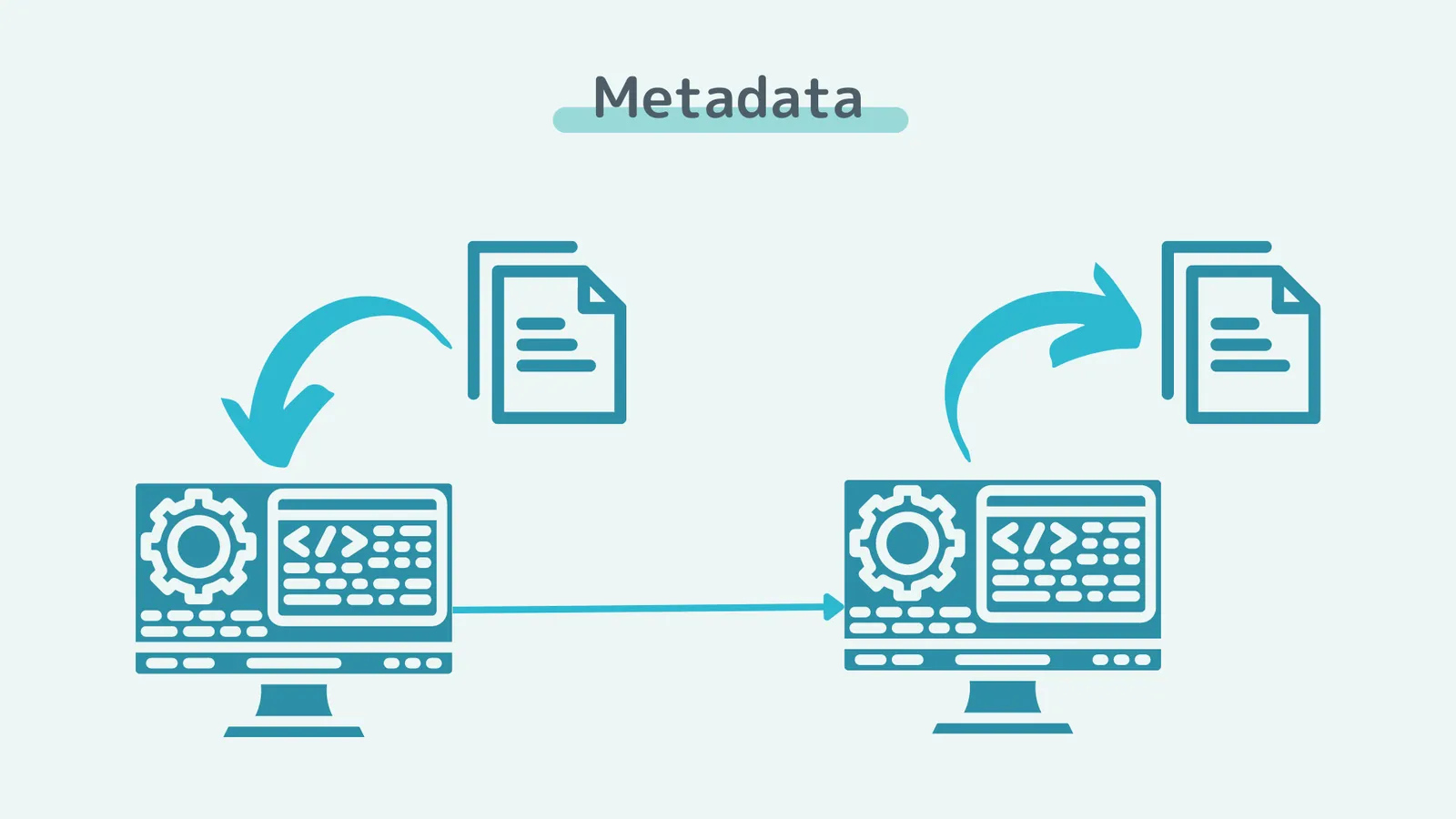
}ERC-20 is a widely used standard for fungible tokens on Ethereum. Its conventional metadata is commonly exposed through contract functions. ERC-1046 introduces a tokenURI function for ERC-20 to bring the benefits of URI-based metadata to fungible tokens as well.
For background on ERC-20, see:
Conventional ERC-20 metadata includes the values returned by name, symbol, and decimals.
ERC-1155 supports multiple token types within a single smart contract, including fungible and non-fungible assets. ERC-1046 also proposes a tokenURI interface extension and a metadata schema extension for ERC-1155 to improve interoperability with ERC-20 and ERC-721.
For background on ERC-1155, see:
A common URI-based metadata approach offers several benefits.
- Clients can use interoperability metadata to identify the token standard or standards that a contract claims to support, including ERC-20, ERC-721, and ERC-1155.
- Clients can use a consistent mechanism to display token information, for example in asset lists or individual token pages.
- Metadata can provide additional information about a token's characteristics and intended uses.
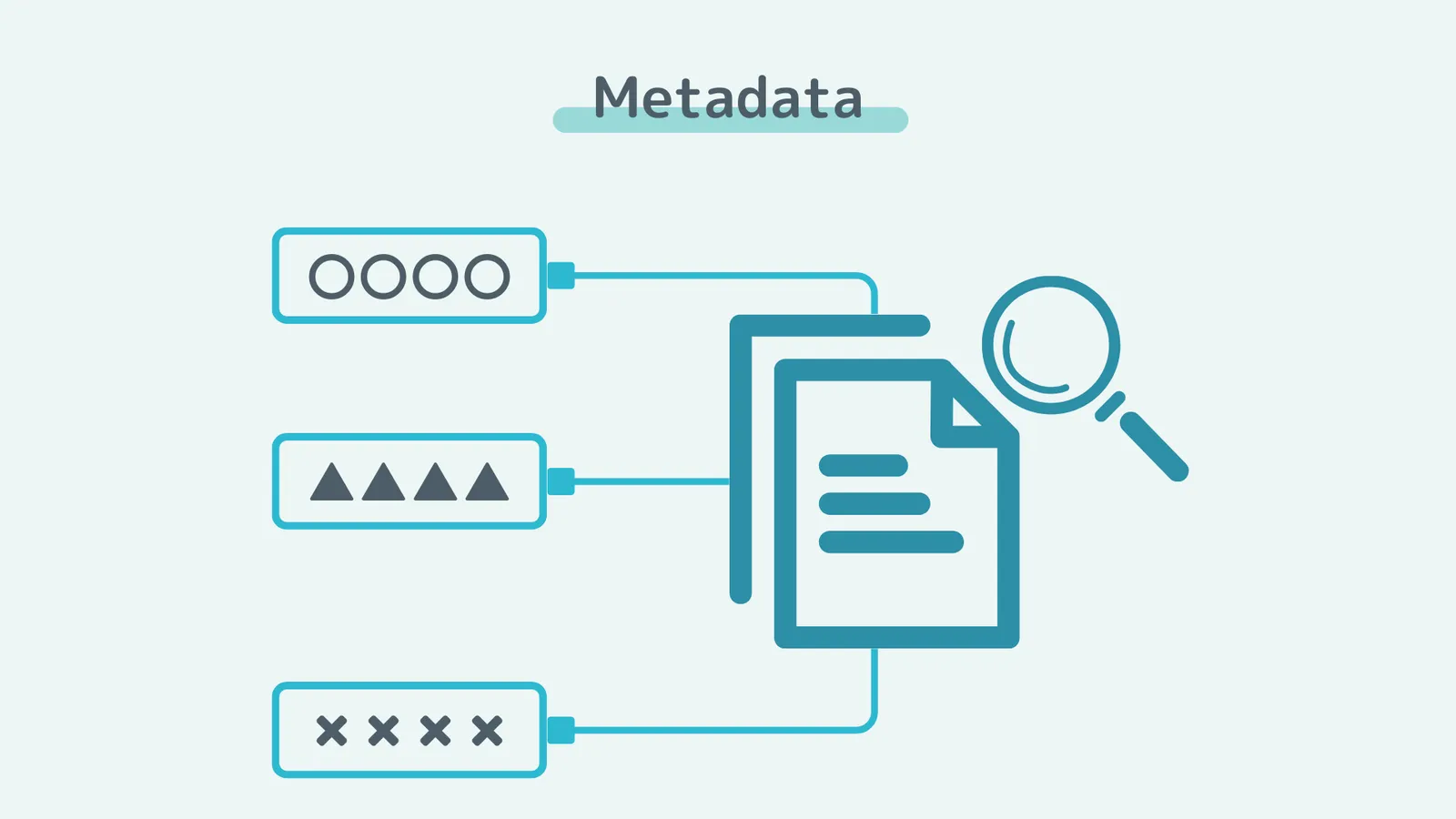
The aim is a more flexible and consistent metadata ecosystem. The function signatures are not identical across all three standards: ERC-20 metadata concerns the contract as a whole, while ERC-721 and ERC-1155 metadata may be associated with a token ID. Metadata declarations also should not be treated as independent proof of contract behavior.
Specification
Interoperability metadata
interface InteroperabilityMetadata {
    erc1046?: boolean | undefined;

    erc721?: boolean | undefined;

    erc1155?: boolean | undefined;
}
All these fields are optional. A metadata document can include one or more as appropriate, allowing wallets and other applications to identify the advertised token interfaces. The proposal also notes that not every field in an extensible interoperability object needs to be a Boolean.
erc1046
When this field is true, it indicates ERC-1046 token metadata. When false, it is omitted. A value of true instructs compatible wallets to treat the address as an ERC-20 token.
erc721
When this field is true, it indicates ERC-721 token metadata. When false, it is omitted. A value of true instructs compatible wallets to treat the address as an ERC-721 token.
erc1155
When this field is true, it indicates ERC-1155 token metadata. When false, it is omitted. A value of true instructs compatible wallets to treat the address as an ERC-1155 token.
ERC-20 extension
ERC-20 interface extension
pragma solidity ^0.8.0;

interface ERC20TokenMetadata /* is ERC20 */ {
    function tokenURI() external view returns (string);
}
tokenURI
Returns a URI referencing token metadata, in a manner similar to ERC-721. A URI (Uniform Resource Identifier) identifies a resource containing information about the token.
The referenced metadata must be JSON and follow the ERC-20 Token Metadata Schema defined by ERC-1046.
This interface gives fungible tokens a standardized way to expose richer metadata through a URI. Wallets and DApps can use it to display token information consistently without requiring every metadata field to have its own contract function.
ERC-20 Token Metadata Schema
interface ERC20TokenMetadata {
    interop: InteroperabilityMetadata;

    name?: string;

    symbol?: string;

    decimals?: number;

    description?: string;

    image?: string;

    images?: string[];

    icons?: string[];
}
interop
Contains interoperability information as defined by the InteroperabilityMetadata interface. Clients can use it to identify the advertised token standard and interpret the corresponding URI.
name
A string representing the ERC-20 token's name. If the contract exposes a name function, this value must match the function's return value.
symbol
A string representing the ERC-20 token's symbol. If the contract exposes a symbol function, this value must match the function's return value.
decimals
An integer representing the number of decimal places used to display the token. If the contract exposes a decimals function, this value must match its return value. Otherwise, the default is 18.
description
A concise human-readable description of the ERC-20 token, expressed as one paragraph without markup or line breaks.
image
A URI for an image representing the token. The referenced resource has a MIME type matching image/*. For bitmap images, the recommended width is between 320 and 1080 pixels, with an aspect ratio between 1.91:1 and 4:5.
images
An array of image URIs representing the token. The same requirements as the image field apply.
icons
An array of URIs for token icons. The icons are bitmap images with transparent backgrounds and a 1:1 aspect ratio. Widths range from 320 to 1080 pixels, with the height equal to the width.
These fields allow wallets and DApps to present token names, symbols, images, and other information using a consistent metadata format.
ERC-721 extension
Extension to the ERC-721 Metadata Schema
interface ERC721TokenMetadataInterop extends ERC721TokenMetadata {
    interop: InteroperabilityMetadata;
}
ERC-1155 extension
ERC-1155 Interface Extension
pragma solidity ^0.8.0;

interface ERC1155TokenMetadataInterop /* is ERC1155Metadata */ {
    function tokenURI() external view returns (string);
}
ERC-1155 Metadata Schema
Contracts implementing ERC-1155 and its token metadata URI extension are encouraged to use the following metadata extension.
interface ERC1155TokenMetadataInterop extends ERC1155TokenMetadata {
    interop: InteroperabilityMetadata;
}
The schema refers to InteroperabilityMetadata, which contains the interoperability fields described earlier, including erc1046, erc721, and erc1155.
Clients consuming ERC1155TokenMetadataInterop can use those fields to interpret metadata in the context of the advertised token standard. This helps distinguish metadata associated with different token interfaces and makes it easier to reuse metadata handling across ERC-20, ERC-721, and ERC-1155.
Additional recommendations
To reduce contract deployment and execution costs, the proposal recommends omitting optional name(), symbol(), and decimals() functions and exposing these values through the metadata URI instead. It also recommends omitting the decimals metadata field when the value is the default of 18.
This is a recommendation from the proposal, not necessarily a suitable choice for every application. Existing wallets, exchanges, and DeFi protocols may rely on the conventional metadata functions, so implementers should assess compatibility before removing them.
Rationale
ERC-1046 aims to make richer ERC-20 metadata easier to implement while minimizing disruption to the existing ecosystem. Consistent field names encourage code reuse.
Identifying token types can be difficult. ERC-165 provides interface detection for contracts supporting that mechanism, but separate calls can add overhead for wallets and websites. Including interoperability information in token metadata offers an alternative source of discovery information and can reduce additional requests.
Clients should still verify relevant onchain behavior where security or correctness depends on interface support. A metadata field is not an authorization or proof of conformance.
Backward compatibility
ERC-1046 defines an optional extension to ERC-20 rather than replacing its transfer and approval functions. It also introduces recommendations for retaining compatibility with existing ERC-721 and ERC-1155 metadata interfaces.
Security considerations
Clients must account for server-side request forgery (SSRF) when retrieving token metadata from untrusted URIs. Wallets and backend services should validate allowed URI schemes and ports and enforce restrictions on access to internal network resources, including after redirects and DNS resolution.
Without appropriate restrictions, a vulnerable metadata-fetching service could be induced to interact with internal services, such as a locally hosted Redis database. Metadata should be retrieved through an appropriately isolated and restricted fetcher.
Citation
Tommy Nicholas (@tomasienrbc), Matt Russo (@mateosu), John Zettler (@JohnZettler), Matt Condon (@shrugs), Gavin John (@Pandapip1), "ERC-1046: tokenURI Interoperability," Ethereum Improvement Proposals, no. 1046, April 2018. [Online serial]. Available: https://eips.ethereum.org/EIPS/eip-1046.
Discussion
ERC-1046 applies the URI-based metadata model of ERC-721 to ERC-20. I found the ability to manage fungible-token metadata outside the contract interesting, since conventional ERC-20 metadata is typically exposed through contract functions.
At the time of writing in August 2023, I was unsure which concrete applications would benefit most from the extension and wondered whether it would see widespread adoption. I would be interested in hearing about practical use cases.
Conclusion
ERC-1046 proposes a common approach to richer ERC-20 metadata and interoperability with ERC-721 and ERC-1155. It gives compatible clients a consistent way to retrieve and interpret token metadata while leaving existing token transfer semantics unchanged.
Questions are welcome through Twitter direct messages.