Introduction
Hi, I'm cardene, a software engineer and technical writer focused on blockchain and AI.
I've also authored Japanese technical books on specification-driven development with LLMs and decentralized application (DApp) development.

I also build and publish a variety of tools, libraries, and open-source projects.
Overview
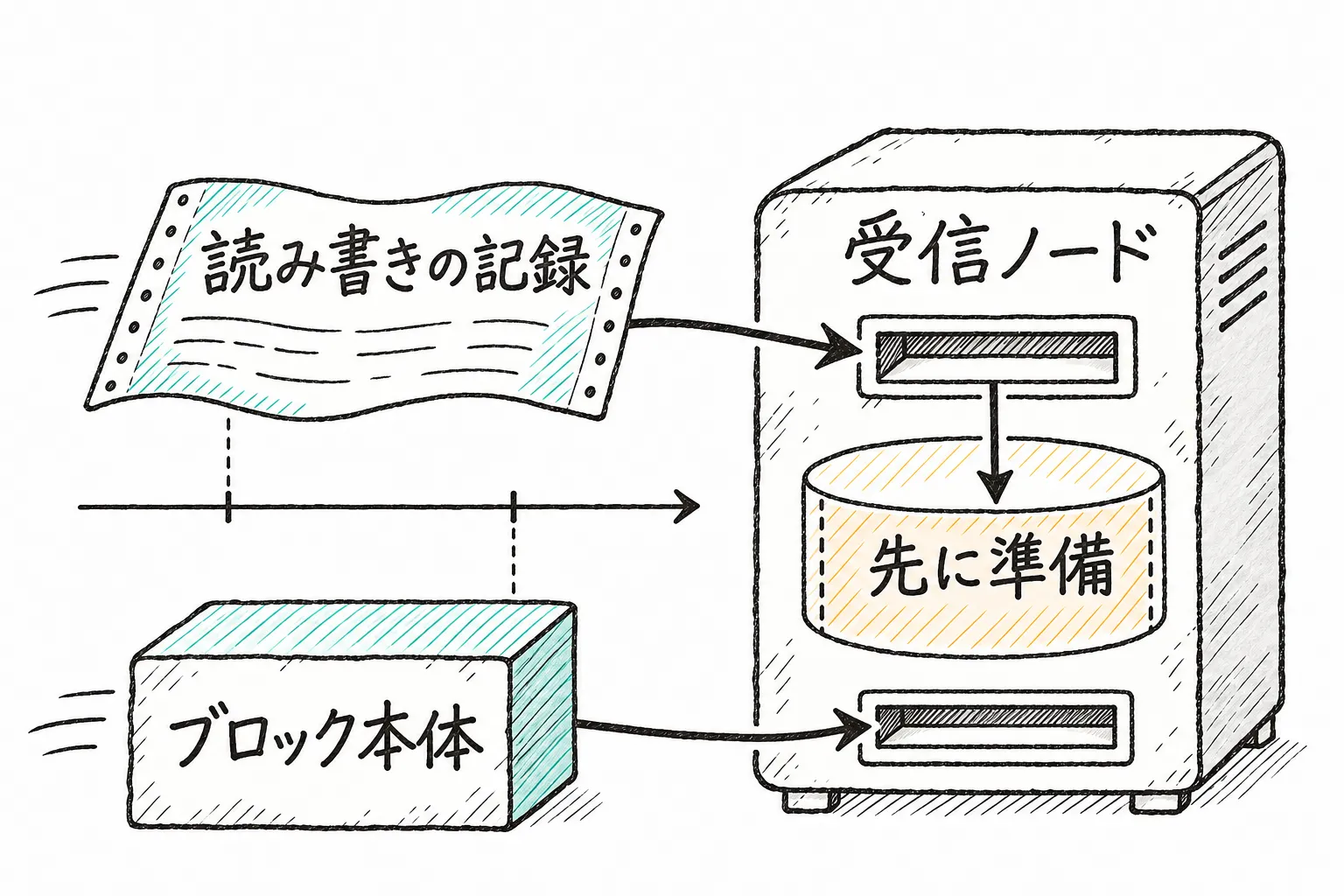
If a node waits for the block payload before reading the data it needs, that I/O latency is concentrated in the short period before execution. Delivering a record of the locations read and written in advance lets the node prepare their stored values while waiting for the payload.
Early delivery of access records and execution preparation
Consider a node validating a block that includes a transfer and a contract update. The receiving node executes these operations using the sender's balance and the storage values to be updated. If it knows which locations are needed, it can read their values from storage ahead of time. However, if the information identifying those locations arrives with the payload, the time spent waiting for publication cannot be used for this preparation.
The block producer therefore sends a record of the accounts and storage locations touched by execution, along with their post-change values, ahead of the payload. This is the block access record. The receiving node identifies the locations it needs from that record and can read their values before receiving the payload. It can also use the post-change values in the record to begin computing the commitment representing the resulting state.
The proposal defining this separate delivery mechanism is EIP8146, formally titled Block Access List Sidecars.
Because the record is separated from the payload, the receiving node verifies that the record corresponds to the target block before storing it.
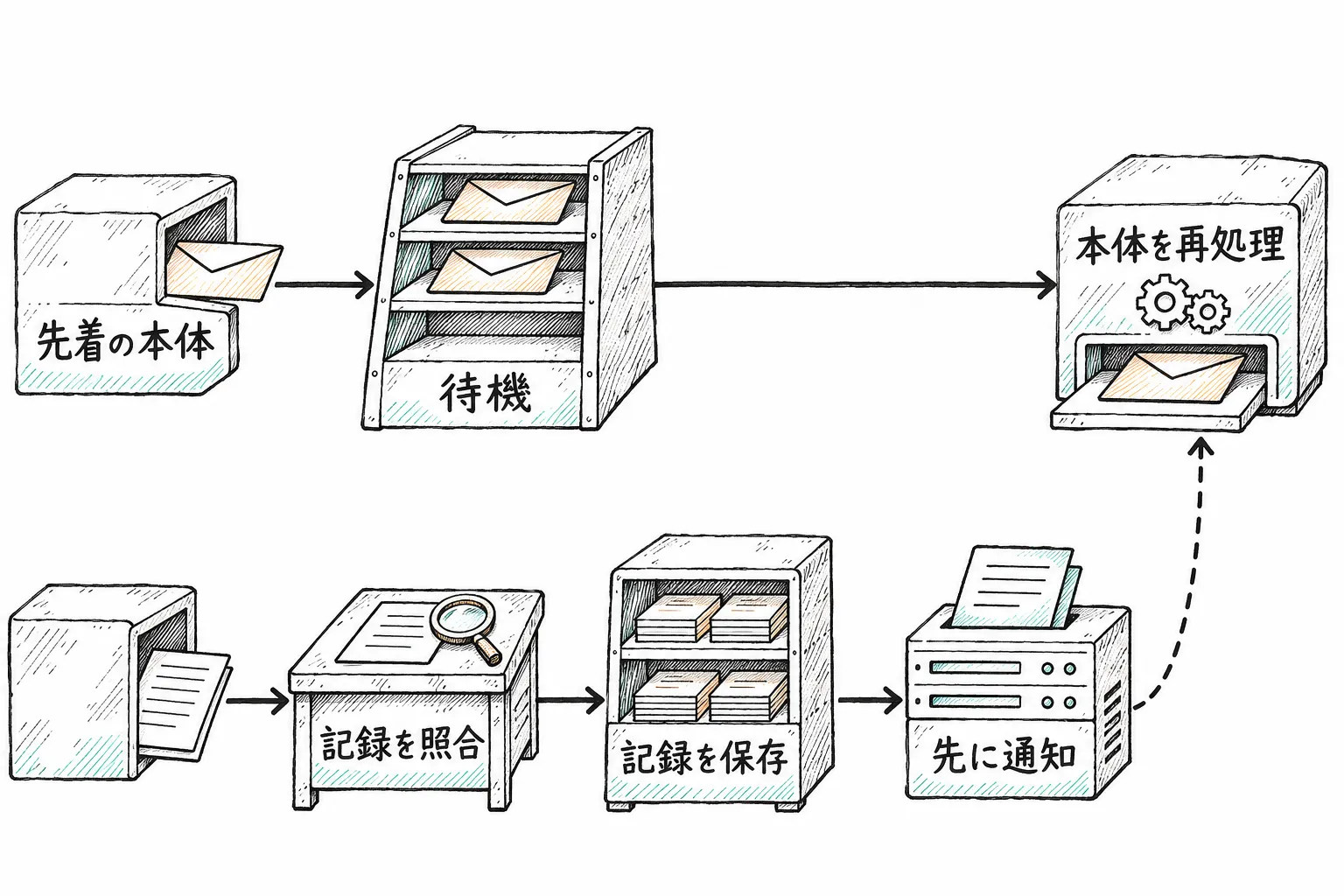
If the payload arrives first, the node retains it and waits until the corresponding record is available before passing it on for execution.
Regardless of which arrives first, the same payload and record must be paired in the required processing order.
An access record received early is not yet a result verified by executing the payload. During payload execution, the node verifies that the locations actually accessed and the values changed match the record. A record belonging to another block is rejected during the preliminary check, and payload validation does not proceed while the required record is missing. With those conditions intact, preparation of the data needed for execution moves to the period before payload arrival.
Motivation
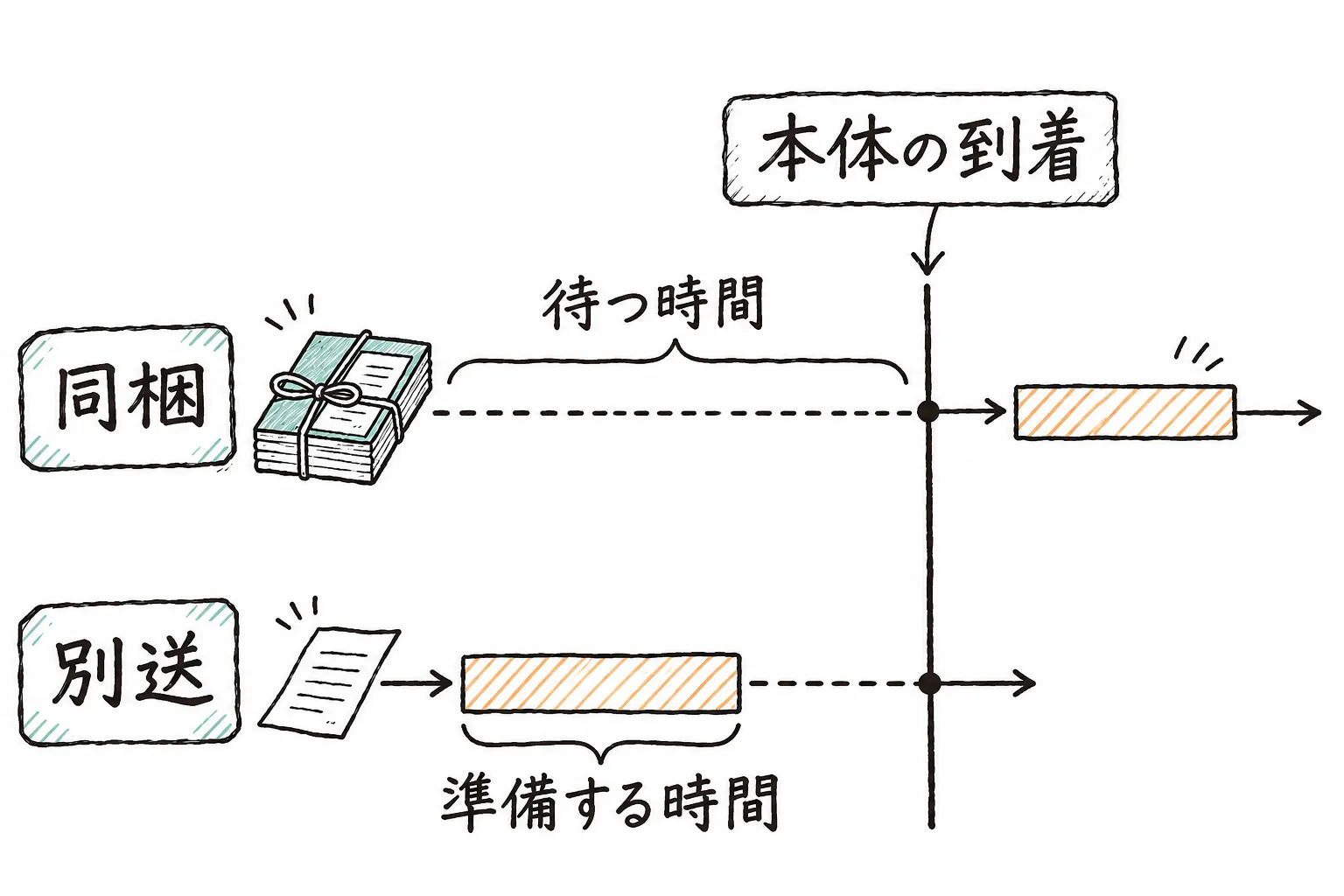
When the access record is delivered with the payload, data reads and execution both follow receipt. Separate delivery lets nodes prepare sooner and lets nodes selecting transactions for subsequent blocks use post-change values earlier.
Work concentrated after payload arrival
When the payload producer delays publication, receiving nodes have less time before they must begin validation. If the list of locations to access is inside the payload, nodes must wait for the payload even to read that list. They then request reads from storage, concentrating network delivery and execution preparation in the same short interval.
If the record is sent first, receiving nodes can read the accounts and contract storage locations they will later access while waiting for the payload. Once the payload arrives, they execute using the data already prepared. Removing the bundled record also reduces the amount of data transmitted together immediately after payload publication. The network traffic for distributing the record itself, however, remains on a separate path.
The analysis cited by the proposal at a gas limit of 60 million compares 1,000 blocks, from 23,991,474 through 23,992,473, under the same encoding and compression conditions. The compressed access records including reads averaged 72.4 KiB, while the comparison blocks averaged approximately 71.7 KiB. In this sample, bundling the record with the payload adds an amount of data comparable to the payload itself. Separate delivery shifts that load to another time interval; these measurements do not establish that every block's size or propagation time is halved.
For synchronization methods that advance state using recorded changes, it is also useful to retrieve the record separately from the transactions that caused those changes. Nodes checking execution correctness, on the other hand, execute the payload and compare the result with the record. Using a record early is distinct from completing payload execution validation, so the validation requirements remain even when preparation starts sooner.
Applying post-change values to transaction selection
Nodes selecting transactions for subsequent blocks also consult balances and nonces changed by the preceding block. If they select transactions using stale values, transactions already included or no longer executable because of a balance change may remain among the candidates. If those changes become known only after the entire payload executes, decisions about rebuilding the candidate set are also delayed.
The access record includes post-change values for accounts touched during execution. If a node selecting candidates receives that record early, it can advance the values used to check candidates without waiting for full payload execution. For example, knowing that the preceding block increased an account's nonce lets the node reconsider older candidates using that nonce.
This early use helps when the matching record is available before candidates are finalized.
A record that arrives after candidates have been selected is too late to affect that selection.
EIP8146 defines a path for delivering post-change values early, not the entire candidate-building procedure or the arrival time at every receiving node.
Specification
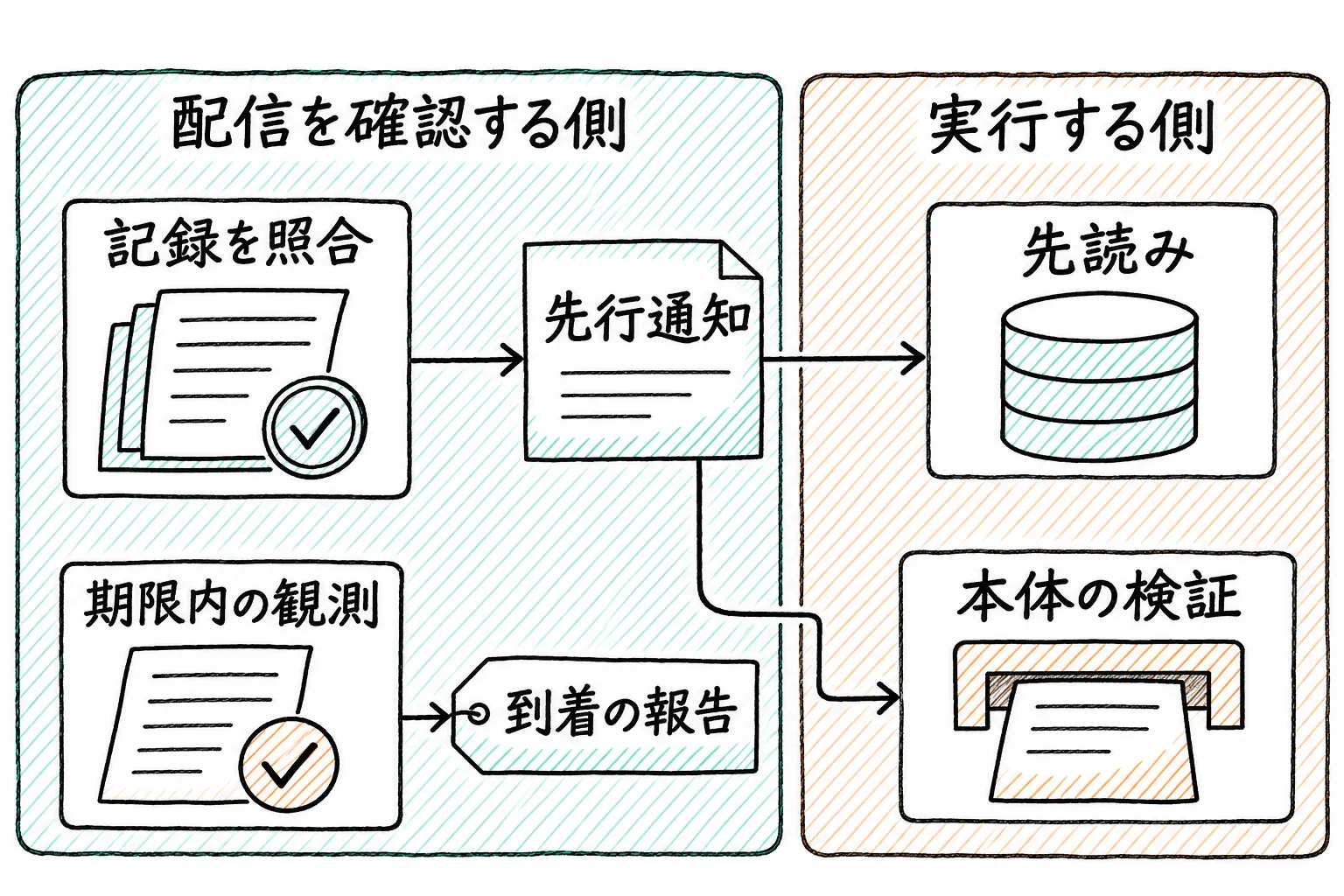
The receiver verifies the record's correspondence to the block, stores it, and notifies the execution layer in advance. When the payload arrives, it validates it together with the same record; missing records can be requested from other nodes. A committee member's report that a record was checked before the deadline is separate from executing and validating the payload.
Data binding the access record to the block
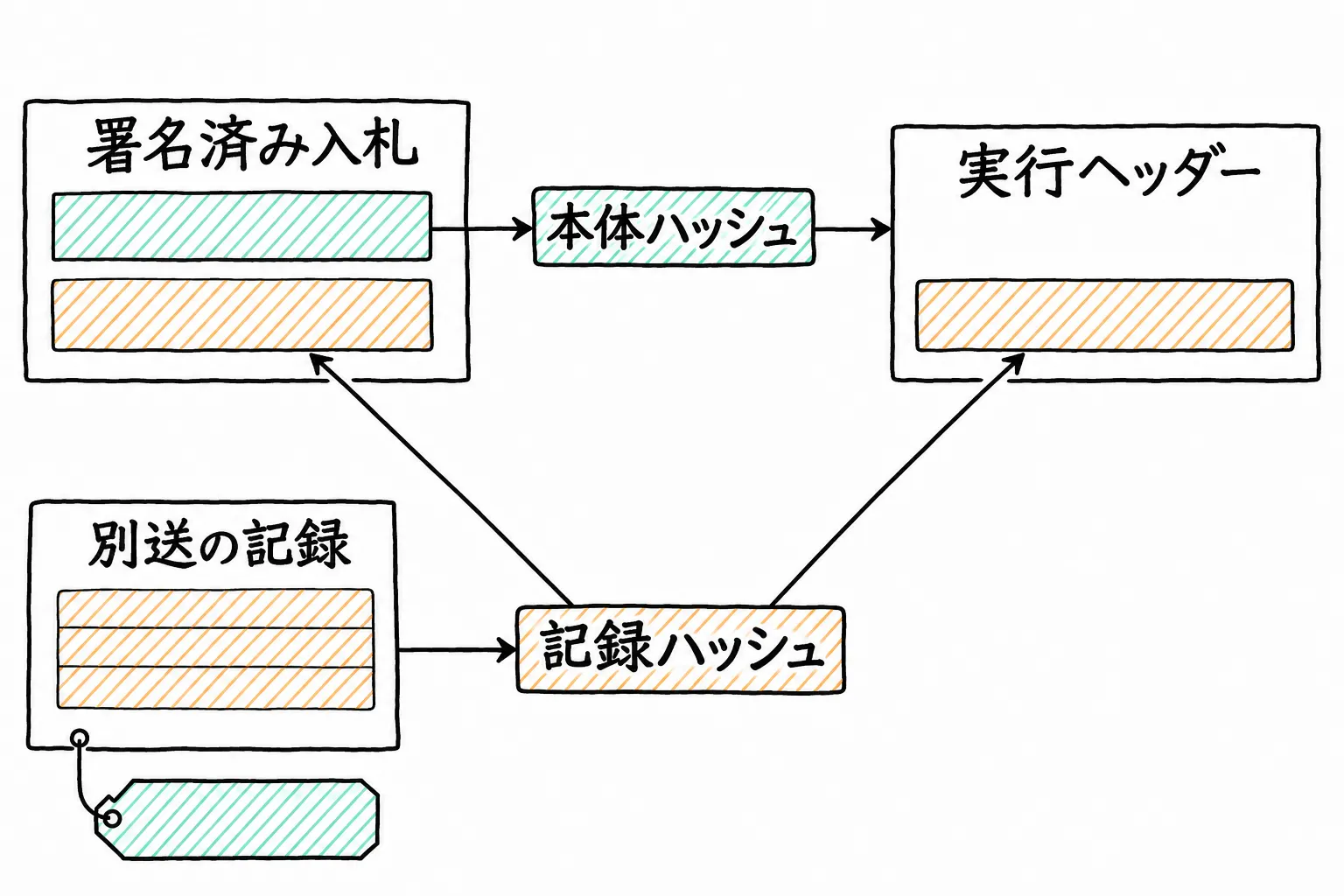
When a record is delivered separately, the receiver binds it to the previously committed content. Using distinct identifiers for the consensus-layer storage location and the execution payload prevents the node from confusing different blocks received in the same slot.
Distribution roles and prerequisite standards
Within a node, the consensus layer handles agreement and block distribution, while the execution layer executes transactions and verifies state updates.
The consensus layer is abbreviated CL and the execution layer EL.
The Engine API is the communication interface through which the consensus layer requests payload retrieval and validation from the execution layer.
The data payload constructed by the execution layer and published later is called an ExecutionPayload.
ePBS separates the builder, who assembles and bids on the payload, from the proposer, who selects a bid and includes it in a beacon block.
A regular builder signs a bid containing a commitment to the payload it will reveal later and the bid price.
Receiving nodes read the execution block hash from the signed bid in the beacon block to determine whether the later payload matches the commitment.
EIP7732 defines this separation of bids and payloads, as well as the committee that observes data arrival.
That committee is called the PTC.
Its members report arrival observations, while ordinary execution nodes independently validate the payload by executing it.
Receiving an arrival report alone does not complete payload execution validation.
A block-level access list records the accounts and contract storage locations touched by a block, together with their post-change values.
It is abbreviated BAL.
Receiving nodes read the record hash from the access record and execution block header to check that they correspond to the same content.
EIP7928 defines the record format and the conditions for verifying completeness and correctness against the execution result.
This distinguishes preparing to use a record received early from verifying that actual execution matches the record.
For more on EIP7928, see the following article.
[EIP7928] Recording Reads and Writes Within a Block
EIP8146 distributes this record as independent auxiliary data called a sidecar.
It retains the record contents and execution-time validation requirements while adding a path for delivering it to the execution layer before the payload.
The commitment identifying a beacon block is called its root, and the time interval for proposing a block is called a slot.
The root identifies the consensus-layer object, while the execution block hash identifies the payload to execute.
A Blob is a unit for distributing large data separately from the payload.
gossip propagates received data by forwarding it to neighboring nodes, while Req/Resp requests a specified object and receives the corresponding record in response.
Sidecars are distributed through the former and missing records retrieved through the latter.
Constants and byte sequence types
Records delivered to the consensus layer have a size limit and a period during which nodes must respond to historical requests. A period grouping multiple slots is called an epoch; historical records are served using that unit. To report timely arrival affirmatively, a committee member must also finish its check a minimum interval before the voting deadline. These are three distinct requirements: capacity, serving period, and arrival reporting.
SSZ defines consensus data types and lengths.
The sidecar record is encoded using RLP, which converts its ordered contents into bytes, and those bytes are carried subject to a size bound.
The consensus layer does not decode the record's internals; it hashes the entire received byte sequence.
| Constant | Value | Purpose |
|---|---|---|
MAX_BLOCK_ACCESS_LIST_SIZE |
uint64(2**23) |
Maximum length of the byte sequence carrying the RLP-encoded BAL, equivalent to 8 MiB. |
MIN_EPOCHS_FOR_BLOCK_ACCESS_LIST_SIDECARS_REQUESTS |
uint64(3533) |
Number of recent epochs for which sidecars are served through both Req/Resp methods. |
BLOCK_ACCESS_LIST_LEAD_TIME |
uint64(1) |
Minimum number of seconds before the voting deadline by which a committee member must finish local validation. |
| Type | SSZ definition |
Contents |
|---|---|---|
BlockAccessList |
ByteList[MAX_BLOCK_ACCESS_LIST_SIZE] |
Carries the RLP-encoded BAL as a byte sequence of at most 8 MiB. |
8 MiB is the size limit for the encoded record. It is not the average compressed size or the size of an entire retrieval response. After checking the size, nodes separately verify whether the record's contents match actual execution.
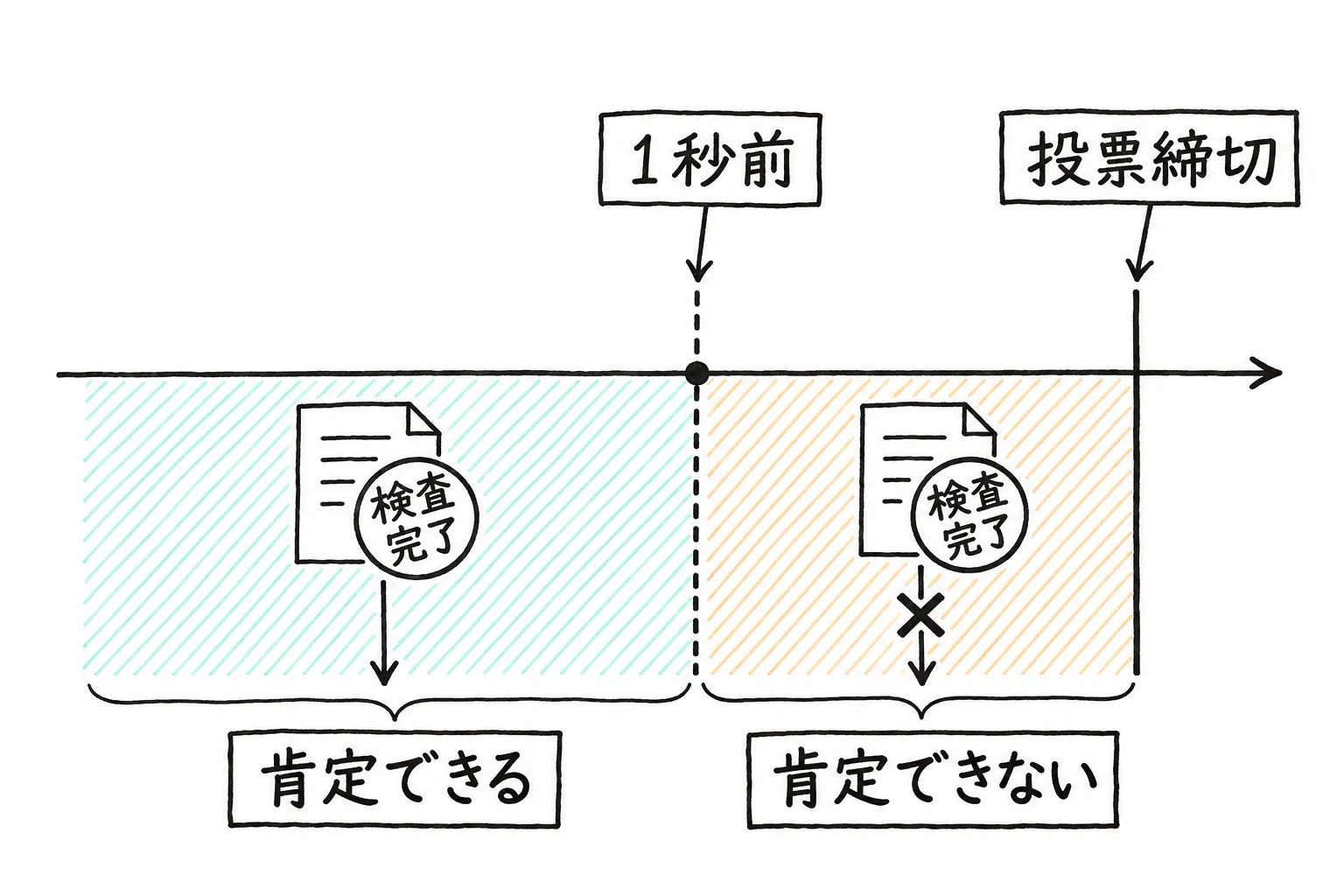
The one-second condition applies to the time at which a committee member finishes checking the record locally. A member can vote affirmatively if validation finishes at least one second before the voting deadline, but not if it finishes later. This is not a rule requiring the execution layer to wait one second after receiving the record before executing the payload. The sidecar serving period of 3533 epochs differs from the serving period of the separate execution-layer mechanism in the related proposals; the rationale section distinguishes them.
ExecutionPayload
The access record field is removed from the payload constructed by the execution layer. Separate delivery eliminates the need to wait until payload publication to use the record. The changes to the payload are as follows.
class ExecutionPayload(Container):
    # ... fields unchanged from EIP7732 ...
    blob_gas_used: uint64
    excess_blob_gas: uint64
    # [Removed in EIP8146]
# block_access_list: BlockAccessList- Fields
| Field | Type | Contents and changes |
|---|---|---|
blob_gas_used |
uint64 |
Existing field indicating the amount of gas used for Blob data. It remains in the payload. |
excess_blob_gas |
uint64 |
Existing field indicating excess Blob gas. It remains in the payload. |
block_access_list |
BlockAccessList |
Encoded BAL. Removed from the payload and moved to the sidecar. |
Only the record field inside the payload is removed; the access record itself remains available through a separate distribution path.
The remaining Blob gas fields cannot reconstruct the access record.
This change applies to post-fork payloads; pre-fork blocks are read using the existing format containing the record.
ExecutionPayloadBid
A commitment to the access record is added to the bid a regular builder signs before revealing the payload.
By receiving the beacon block containing that bid, nodes can check whether a subsequently received record matches the builder's commitment.
keccak256 is the hash function that derives a 32-byte commitment from the encoded record.
The bid contains the following fields.
class ExecutionPayloadBid(Container):
    parent_block_hash: Hash32
    parent_block_root: Root
    block_hash: Hash32
    prev_randao: Bytes32
    fee_recipient: ExecutionAddress
    gas_limit: uint64
    builder_index: BuilderIndex
    slot: Slot
    value: Gwei
    execution_payment: Gwei
    blob_kzg_commitments: List[KZGCommitment, MAX_BLOB_COMMITMENTS_PER_BLOCK]
    # [New in EIP8146]
block_access_list_hash: Bytes32- Fields
| Field | Type | What the receiver reads |
|---|---|---|
parent_block_hash |
Hash32 |
Hash of the parent execution block. |
parent_block_root |
Root |
Root of the parent beacon block. |
block_hash |
Hash32 |
Hash of the execution block committed to by the bid. Used to associate the record and the later payload. |
prev_randao |
Bytes32 |
Randomness value to set in the payload. |
fee_recipient |
ExecutionAddress |
Execution address specified by the proposer. Also used as the bid payment destination. |
gas_limit |
uint64 |
Gas limit set for payload execution. |
builder_index |
BuilderIndex |
Index of the builder submitting the bid. |
slot |
Slot |
Slot for which the bid is intended. |
value |
Gwei |
Bid amount paid by the builder to the proposer. |
execution_payment |
Gwei |
Value used for an execution-layer payment. Set to 0 for bids distributed through public gossip. |
blob_kzg_commitments |
List[KZGCommitment, MAX_BLOB_COMMITMENTS_PER_BLOCK] |
List of commitments to the Blob contents. |
block_access_list_hash |
Bytes32 |
Record hash derived from the RLP-encoded BAL. Used to verify the sidecar. |
The monetary unit Gwei is one billionth of an ETH.
The record hash added by EIP8146 does not change the payment terms of the bid.
The path for delivering records early is separate from the rules governing bid payments.
The record hash is set to keccak256(rlp(BAL)).
The BAL carried by the sidecar is already RLP-encoded, so the receiver applies keccak256 once to the received bytes.
Wrapping the bytes in RLP again before hashing would produce a value that does not match the commitment in the bid.
If the received record differs from the bid, neither storage nor early notification proceeds.
The bid's block_hash identifies the execution block and is distinct from the beacon block root identifying the consensus-layer object.
The underlying EIP7732 bid also contains execution_requests_root, which is used to verify execution requests.
Although that field is absent from the bid shown in EIP8146, the inherited payload validation refers to it.
When integrating the types into a client, check the existing fields in the underlying specification as well as the new access record hash.
BlockAccessListSidecar
The builder attaches the target beacon block root and slot to the separately delivered record. The receiving node uses that root to locate the block's bid and check the record hash. The independently delivered record has the following data structure.
class BlockAccessListSidecar(Container):
    beacon_block_root: Root
    slot: Slot
block_access_list: BlockAccessList- Fields
| Field | Type | Purpose |
|---|---|---|
beacon_block_root |
Root |
Identifies the target beacon block. Also used as the consensus-layer storage key for the record. |
slot |
Slot |
Target slot. Checked against the block's slot. |
block_access_list |
BlockAccessList |
Byte sequence of the RLP-encoded BAL. |
Even records from the same slot belong to different blocks if their target roots differ. The receiving node checks both the root and the slot, and compares the content hash with the corresponding bid. If the target block is not yet available, there is no bid against which to check the record, so the node can defer forwarding and wait for the block.
PayloadAttestationData
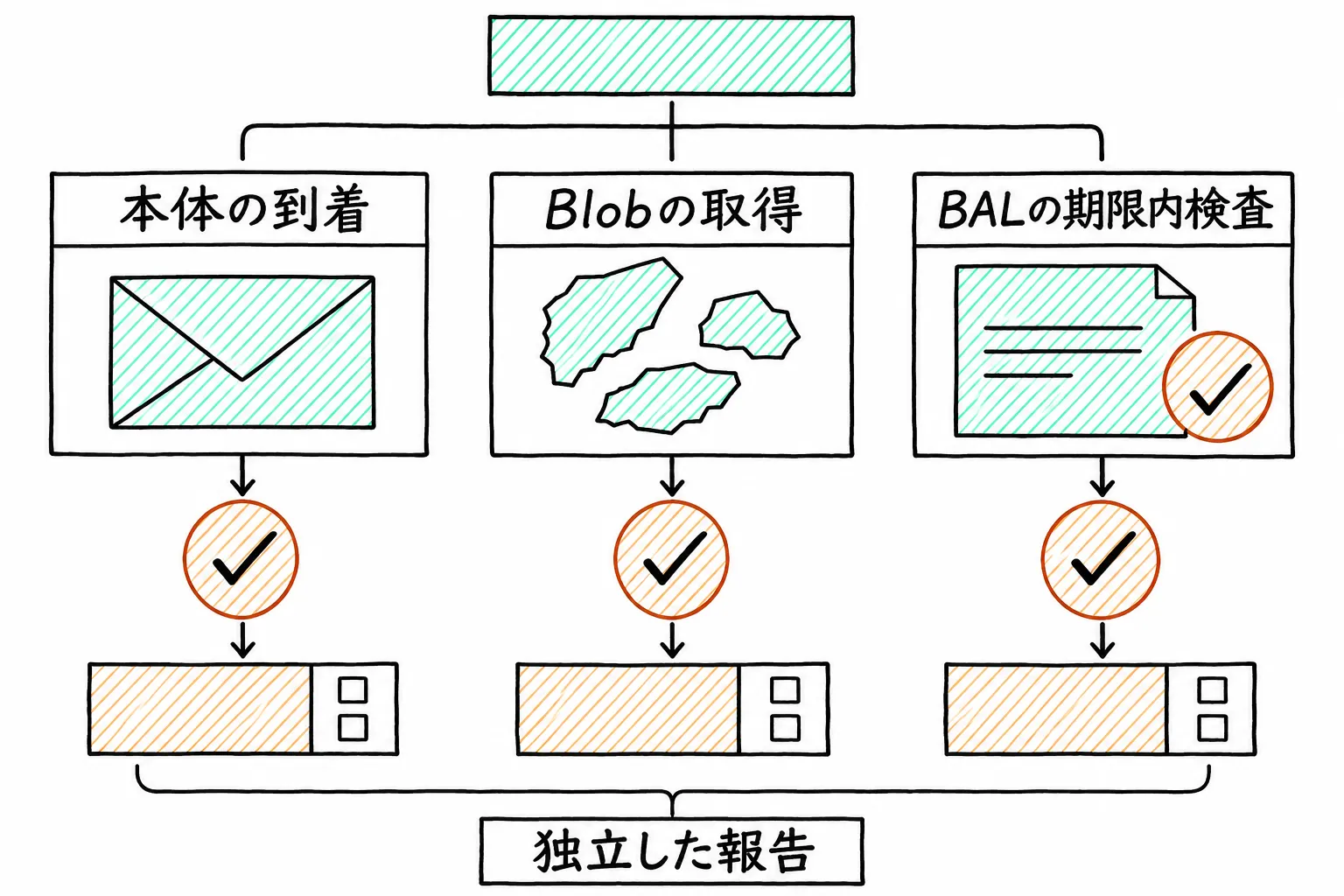
Committee members report the arrival status observed for the target block separately for each kind of data.
For example, even if the payload and Blob data arrive, a delayed record check prevents an affirmative observation for the record alone.
These independent observations are recorded as Boolean values for the same block and slot.
class PayloadAttestationData(Container):
    beacon_block_root: Root
    slot: Slot
    payload_present: boolean
    blob_data_available: boolean
    # [New in EIP8146]
block_access_list_present: boolean- Fields
| Field | Type | Reported information |
|---|---|---|
beacon_block_root |
Root |
Beacon block to which the report refers. |
slot |
Slot |
Slot to which the report refers. |
payload_present |
boolean |
Whether the payload was observed by the prescribed time under the conditions of EIP7732. |
blob_data_available |
boolean |
Whether Blob data is available under the conditions of EIP7732. |
block_access_list_present |
boolean |
Whether local gossip validation of the target BAL finished at least one second before the voting deadline. |
The value affirming the record's presence is True; when the affirmative conditions are not met, it is False.
This False does not mean that execution results were checked and the BAL was found to be incorrect.
Even if network reception has finished, the record cannot be affirmed unless the local verification finishes by one second before the deadline.
Each field in this report is Boolean.
However, a node receiving reports may not yet have received a particular member's report; its stored value in that case is None.
A report that validation did not finish in time is distinct from the absence of a report.
Store
The consensus layer stores validated records for each block separately from arrival reports received from committee members. Both use the beacon block root, but the stored values and their purposes during payload processing differ. The following fields are added to the consensus layer's local store.
@dataclass
class Store(object):
    # ... existing fields ...
    # [New in EIP8146]
    block_access_lists: Dict[Root, BlockAccessList] = field(default_factory=dict)
    block_access_list_availability_vote: Dict[Root, List[Optional[boolean]]] = field(
        default_factory=dict
)- Fields
| Field | Type | Stored information |
|---|---|---|
block_access_lists |
Dict[Root, BlockAccessList] |
Stores the validated BAL bytes for each root. |
block_access_list_availability_vote |
Dict[Root, List[Optional[boolean]]] |
Stores whether each PTC member's report has arrived and its Boolean value, for each root. |
- Key
| Key | Object identified |
|---|---|
Root |
Storage key for each beacon block. Distinct from the execution-layer storage key using the execution block hash. |
- Values
| Stored value | Storage state and interpretation |
|---|---|
BlockAccessList |
The BAL for the target root is stored locally. Payload processing checks whether this key exists. |
None |
No report has been received from the member yet. It does not count as a negative report. |
False |
The member's report has arrived but does not affirm that validation finished in time. |
True |
An affirmative report from the member that validation finished in time has been received and stored. |
When a new block is accepted, all committee member entries initially indicate that no report has been received.
When a negative report arrives from a member, only the entry for that member's index changes from None to False.
Filling the list of reports is separate from storing the BAL in the node's own record dictionary.
Even if affirmative reports arrive from other members, payload validation cannot proceed while the record dictionary is empty.
Reception and execution preparation
The consensus layer checks the received record against the block, stores it, and notifies the execution layer. Payload reception checks for local storage of the same record; if it is missing, the payload is retained for reprocessing. Arrival report storage and storage of the record used for execution are connected as separate operations.
on_block
This function initializes each committee member's access record arrival report to not received for an accepted beacon block. The following storage initialization is added where existing block processing initializes payload votes.
# [New in EIP8146]
store.block_access_list_availability_vote[block_root] = [None] * PTC_SIZE-
Select the root of the accepted block
Store the access record arrival reports under the
block_rootused by existing block processing. -
Initialize an unreceived entry for every member
Create
PTC_SIZEentries set toNone, and later update only the index of a member whose report arrives.
- Referenced values
| Value | Purpose |
|---|---|
store |
Consensus-layer store holding the voting lists for each block. |
block_root |
Root of the accepted beacon block. |
PTC_SIZE |
Number of reporting PTC members. |
-
Execution conditions
-
Initialize the target root's voting list during existing block acceptance processing.
-
Initialization does not establish that a member's report has been received.
This addition stores the state in which no member has reported yet.
Initializing the entries to False would make members who have not reported appear to have voted negatively, so the unreceived state uses a separate value.
The function's overall parameters and return value are inherited from existing block processing.
on_payload_attestation_message
This function stores a committee member's received arrival report in the entry corresponding to the target block and member index. Alongside the existing processing that records payload arrival, it stores the independent observation for the access record. The following assignment is added.
# [New in EIP8146]
store.block_access_list_availability_vote[data.beacon_block_root][ptc_index] = (
    data.block_access_list_present
)-
Select the block covered by the report
Use
data.beacon_block_rootfrom the report to select the list of access record arrival votes. -
Update the reporting member's entry
Store
data.block_access_list_presentatptc_index, changing that member's entry from unreceived to reported.
- Referenced values
| Value | Purpose |
|---|---|
store |
Consensus-layer store for reports. |
data |
Target block and observation data extracted by the existing reception procedure. |
ptc_index |
Position in the list corresponding to the reporting PTC member. |
-
Execution conditions
-
Store the additional field from a message satisfying the existing report acceptance requirements.
-
This assignment changes neither other members' entries nor the dictionary of locally stored
BALdata.
The stored Boolean reflects the reporting member's observation.
Storing an affirmative report does not establish that this node has acquired the BAL needed to execute the payload.
The change to this function concerns report storage and does not redefine the existing parameters or return value.
notify_ptc_messages
This function carries over the access record arrival field when extracting individual reports from aggregated reports in a beacon block.
It passes the new block_access_list_present field to the extracted PayloadAttestationMessage.
Copying only the payload and Blob fields would lose the member's observation of the access record.
The extracted report is also passed to the storage operation corresponding to the target root and member index. The change preserves the same observation field for directly received reports and reports extracted from aggregates. It is distinct from the notification that delivers the record itself to the execution layer; it introduces neither a new signing scheme nor an execution-layer notification method. This change adds propagation of the field, without redefining the overall function signature.
on_block_access_list_sidecar
This function checks a received record against its target block, stores it, and delivers it to the execution layer without waiting for the payload.
For each sidecar that has passed gossip validation, it checks that the target exists and the content matches.
Consensus-layer storage and notification proceed in the following order.
def on_block_access_list_sidecar(store: Store, sidecar: BlockAccessListSidecar) -> None:
    assert sidecar.beacon_block_root in store.blocks
    block = store.blocks[sidecar.beacon_block_root]
    assert sidecar.slot == block.slot

    # The consensus layer treats the BAL as opaque bytes; no RLP decoding
    bid = block.body.signed_execution_payload_bid.message
    assert keccak256(sidecar.block_access_list) == bid.block_access_list_hash

    store.block_access_lists[sidecar.beacon_block_root] = sidecar.block_access_list

    # Deliver to the execution layer without waiting for the payload
EXECUTION_ENGINE.notify_block_access_list(sidecar.block_access_list, bid.block_hash)-
Check the target block and slot
Verify that the block for the target root exists in
store.blocksand that its slot matches the sidecar's slot. -
Check the record against the bid hash
Compute
keccak256over the encoded bytes in the sidecar and compare it with the bid'sblock_access_list_hash. The consensus layer does not decode the internalRLPcontents. -
Store the record and notify the execution layer
Store the
BALunder the target beacon block root. Pass theBALand the executionblock_hashcommitted to in the bid to the execution layer.
- Parameters
| Parameter | Details |
|---|---|
store: Store |
Consensus-layer store holding the target block and validated BAL data. |
sidecar: BlockAccessListSidecar |
Separately delivered record that has passed gossip validation. |
-
Execution conditions
-
Called for each sidecar that passes
gossipvalidation. -
Storage and notification proceed only if the block and record match.
The consensus-layer store uses the beacon root, while the execution-layer association uses the execution block hash. Even if the payload has not arrived, the node sends the notification as soon as verification and storage are complete. A matching hash establishes that the record matches the commitment in the bid. Whether the record matches actual execution is checked after the payload arrives.
on_execution_payload_envelope
This function confirms that the corresponding record is stored locally, validates the payload, and then stores the revealed data.
Even when the builder's signed payload arrives, the function does not pass it to the execution layer before the BAL for the same block.
The checks and storage performed on acceptance are as follows.
def on_execution_payload_envelope(
    store: Store, signed_envelope: SignedExecutionPayloadEnvelope
) -> None:
    envelope = signed_envelope.message
    assert envelope.beacon_block_root in store.block_states
    assert is_data_available(envelope.beacon_block_root)

    # [New in EIP8146] The BAL must be available locally
    assert envelope.beacon_block_root in store.block_access_lists

    state = store.block_states[envelope.beacon_block_root]
    verify_execution_payload_envelope(state, signed_envelope, EXECUTION_ENGINE)
store.payloads[envelope.beacon_block_root] = envelope-
Check the target state and data availability
Check that the state for the target root is in
store.block_statesand that the existingis_data_availablecondition holds. -
Check the record for the same root
Verify that the target
BALexists instore.block_access_lists. If it has not been obtained, wait without passing the payload to the execution layer. -
Store the payload after existing validation
Call
verify_execution_payload_envelopewith the target state. Store the successfully validated revealed data instore.payloads, indexed by root.
- Parameters
| Parameter | Details |
|---|---|
store: Store |
Consensus-layer store holding the target state, BAL, and revealed payload data. |
signed_envelope: SignedExecutionPayloadEnvelope |
Payload data revealed with the builder's signature. |
-
Execution conditions
-
The target state and required data are available, and the
BALfor the same root is stored locally. -
Existing payload validation requirements are satisfied.
If the payload arrives before the record, the client caches the payload rather than discarding it.
After storing the corresponding BAL, the client reruns this handler on the same payload.
Retaining a payload for later validation is distinct from permitting execution without the record.
engine_getPayloadV6
This method retrieves a constructed payload and its corresponding access record.
It moves blockAccessList from inside the payload structure to the top level of the response.
The builder can retrieve both the payload and the record to distribute separately from this response.
-
Retrieve the constructed payload
Obtain the payload data from the execution layer through the existing payload construction and retrieval path.
-
Use the top-level record for separate delivery
Extract the
RLP-encodedBALfrom the top level of the response and prepare the sidecar for distribution.
- Response changes
| Field | New position and contents |
|---|---|
blockAccessList |
The RLP-encoded BAL, moved from inside the payload structure to the top level of the response. |
-
Execution conditions
-
Use the existing payload construction and retrieval path.
-
Use the retrieved record and payload for the bid and separate delivery of the same block.
The rest of the response is inherited from the existing API.
The proposal changes where the record is returned; it does not redefine the input parameter list or the overall response type.
Clients that read the record from inside the payload structure must update where they retrieve it.
engine_notifyBlockAccessListV1
This method delivers the access record to the execution layer independently of the payload, initiating storage and prefetching. The consensus layer calls it immediately after verifying the sidecar, without waiting for payload publication. The execution layer proceeds in the following order.
-
Store the record by execution block hash
Store the received
blockAccessListunderblockHash. This 32-byte hash associates the record with the payload that arrives later. -
Start prefetching the declared locations
Read the accounts and contract storage locations identified by the record.
-
Optionally begin computing the post-state root
Begin computing the root from the post-change values in the record. Starting this computation is optional, unlike the mandatory prefetching step.
- Parameters
| Parameter | Details |
|---|---|
blockAccessList |
Byte sequence of the RLP-encoded BAL. |
blockHash |
32-byte execution block hash associating the record with the payload. |
-
Execution conditions
-
Call the method after checking the sidecar, without waiting for the payload.
-
Call it before passing the payload for the same
blockHashtoengine_newPayloadV5.
The response from this method acknowledges receipt of the record. Whether payload execution matches the record and header is verified later during execution. The acknowledgment response type and failure codes are unspecified. The proposal also does not specify how to retry a failed notification.
The processing order when record notification and payload notification are separate is as follows.
t0   sidecar received    --engine_notifyBlockAccessListV1-->   EL prefetches state, MAY start post-state root
t1   envelope received   --engine_newPayloadV5------------->   EL executes against warm state
t2 <--------- {status: VALID}--------| Time | Processing |
|---|---|
t0 |
Notify the execution layer of the record and begin prefetching. The execution layer may also begin computing the post-state root. |
t1 |
Pass the payload to the execution layer, which executes it together with the previously received record. |
t2 |
Return the existing execution result after payload validation. |
The interval between record notification and payload notification is available for preparation.
Clients preserve this order, but there is no waiting rule requiring every node to maintain an actual notification interval of at least one second.
Receipt acknowledgment for the record must not be interpreted as a post-execution VALID result for the payload.
engine_newPayloadV5
This method validates a received payload together with the previously stored BAL for the same block.
It removes blockAccessList from the payload structure and inherits the other existing processing.
It combines the consensus layer's notification order with the execution layer's verification.
-
Notify the execution layer of the record for the same block first
The consensus layer completes notification of the record for the target
blockHashbefore passing the payload. -
Select the record corresponding to the payload
The execution layer uses the execution block hash to pair the previously stored
BALwith the payload. -
Validate execution and the record
Following
EIP7928, verify the completeness and correctness of reads and writes and their correspondence to the commitment in the header.
-
Execution conditions
-
The consensus layer has already delivered the
BALfor the same payload. -
Execution-time
BALvalidation satisfies the requirements ofEIP7928.
Rather than attaching the record to the payload, the two notifications are associated using the same hash, preventing them from being mismatched. The proposal does not redefine the full parameter list or typed signature. It also adds neither fallback behavior for passing a payload before the record arrives nor proposal-specific error codes.
Distribution validation and retrieval
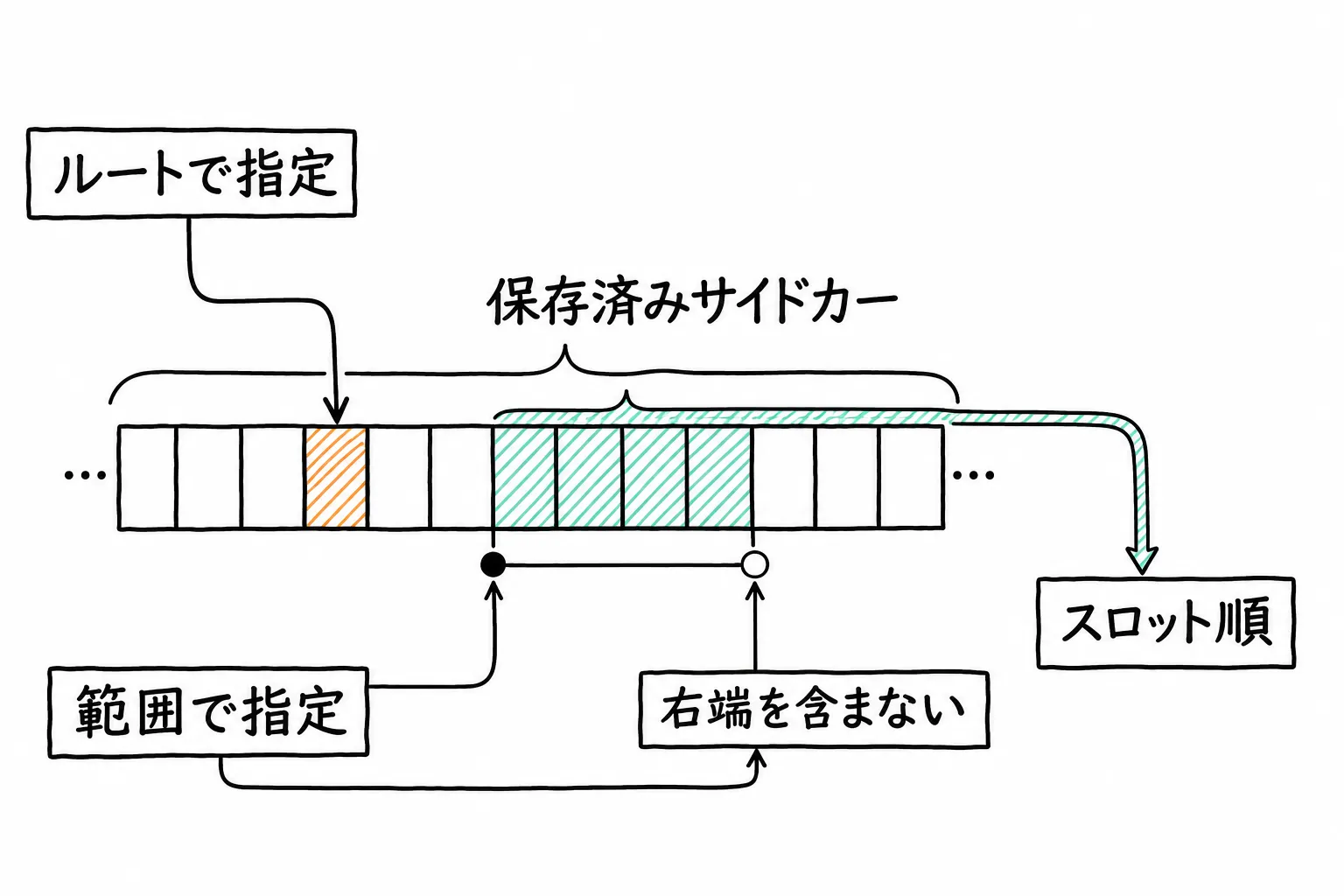
The builder distributes the record early after the bid needed to verify it becomes known. Receiving nodes check the target and timing before forwarding, and request missing records from other nodes. Retrieval supports both specifying known roots and specifying a range of slots.
Sidecar distribution order
The beacon block containing the bid is published first so the record can be verified when it arrives. The record is then delivered separately, and the payload is published. The builder follows these steps.
-
Retrieve the payload and
BALUse
engine_getPayloadV6to obtain the constructed payload and the record at the top level of the response. -
Set the record hash in the bid
Apply
keccak256to theRLP-encodedblockAccessListand place the result inblock_access_list_hash. -
Send the record after the beacon block containing the bid is published
Distribute the
BlockAccessListSidecarreferring to that block on its dedicated topic as early as possible. -
Publish the payload without the record
Distribute the
SignedExecutionPayloadEnvelope, delivering the payload separately from the record.
The builder does not delay sending the sidecar until payload publication. The receiver knows the commitment to the record from the bid and can use the record to prepare while waiting for payload publication. However, even with a prescribed sending order, network arrival order can differ. Receivers therefore still need to defer records referring to unknown blocks and payloads that arrive first.
block_access_list_sidecar
This is a new gossip topic for propagating access records among nodes.
IGNORE denotes a result that skips forwarding, while REJECT denotes rejection of an invalid record.
It distinguishes a record that cannot yet be checked because the target block is missing from one that fails verification against a known bid.
The conditions that must pass before forwarding and the results when they fail are as follows. The expressions in the table are passing conditions, not rejection conditions.
| Passing condition | Result on failure | What is checked |
|---|---|---|
sidecar.slot <= current_slot |
IGNORE |
Check that the slot is not in the future, accounting for the permitted clock disparity. |
sidecar.slot >= compute_start_slot_at_epoch(store.finalized_checkpoint.epoch) |
IGNORE |
Check that the slot is at or after the first slot of the finalized checkpoint's epoch. |
| A valid sidecar for the same root has not already been seen | IGNORE |
Avoid forwarding duplicate valid records. |
The beacon block identified by sidecar.beacon_block_root has been received |
IGNORE |
Check that the target block needed for record verification is available. |
| The corresponding beacon block passes validation | REJECT |
Reject records corresponding to invalid blocks. |
sidecar.slot == block.slot |
REJECT |
Check that the record and block have the same slot. |
keccak256(sidecar.block_access_list) == bid.block_access_list_hash |
REJECT |
Check whether the record hash matches the commitment in the bid. |
When assessing a future slot, account for the permitted clock disparity in MAXIMUM_GOSSIP_CLOCK_DISPARITY.
The age check also accepts a slot equal to the first slot of the finalized checkpoint's epoch.
If a valid record for the same root has already been seen, skip forwarding, limiting accepted records to one per valid beacon root.
An invalid record that arrived first does not count as receipt of a valid record.
If the target block has not arrived, the receiving node may queue the record until the block arrives. Forwarding is deferred because the record cannot yet be checked against the bid. Verification uses the bid in the beacon block matching the sidecar's target root. By contrast, failure to validate the target block or a mismatched slot or record hash results in rejection of the sidecar as invalid.
BlockAccessListSidecarsByRoot
This request specifies known beacon block roots to retrieve the corresponding sidecars from other nodes. A node that wants to process a payload can request the missing records by their target roots. The version 1 protocol identifier and data types are as follows.
- Protocol identifier
/eth2/beacon_chain/req/block_access_list_sidecars_by_root/1/
| Direction | Type |
|---|---|
| Request | List[Root, MAX_REQUEST_PAYLOADS] |
| Response | List[BlockAccessListSidecar, MAX_REQUEST_PAYLOADS] |
Both the request and response are lists bounded by MAX_REQUEST_PAYLOADS.
The identifiers are consensus-layer beacon block roots, not execution block hashes.
Verify that retrieved records correspond to their target blocks before storing or using them for prefetching.
The proposal specifies neither responses in request order nor null placeholders for targets that cannot be found. Use the target roots of the returned sidecars to establish correspondence. The obligation to serve records covers a recent period; this request does not guarantee permanent availability.
BlockAccessListSidecarsByRange
This request specifies a starting slot and range size to retrieve sidecars in that interval. A synchronizing node can request records within the interval without enumerating individual roots. The version 1 protocol identifier and data types are as follows.
- Protocol identifier
/eth2/beacon_chain/req/block_access_list_sidecars_by_range/1/
| Direction | Type |
|---|---|
| Request | (start_slot: Slot, count: uint64) |
| Response | List[BlockAccessListSidecar, MAX_REQUEST_PAYLOADS] |
The requested interval is [start_slot, start_slot + count), inclusive at the start and exclusive at the upper end.
For example, a starting slot of 100 and count of 3 covers slots greater than or equal to 100 and less than 103.
Responses are ordered by slot; independently of the requested range size, the number of returned items is capped at MAX_REQUEST_PAYLOADS.
Not every slot necessarily has a record. Both root-based and range-based requests have a minimum serving period, and older records may have been pruned. Being able to specify an interval alone does not guarantee retrieval of the entire history or automatic recovery of missing records.
Arrival conditions recorded in votes
Committee members use the time at which their own node finishes checking the record to report whether it arrived in time. This reporting is separate from each receiving node storing the record and being able to proceed with payload validation. The one-second interval applies to voting; execution starts based on local storage of the matching record.
Validation must finish at least one second before the deadline
A PTC member may set block_access_list_present to True only if its own node finishes gossip validation of the target sidecar at least one second before the voting deadline.
BLOCK_ACCESS_LIST_LEAD_TIME sets this interval to one second.
Merely finishing network reception of the record does not satisfy this condition.
The member determines whether it can vote affirmatively after learning the target block locally and completing the slot and record hash checks. For example, even if the record arrives early, validation finishes late if the block needed to verify it arrives late. If validation finishes less than one second before the deadline, the member cannot affirm the record's timely arrival.
In EIP7732, PAYLOAD_DUE_BPS, the payload observation deadline, is 50% of the slot; PAYLOAD_ATTESTATION_DUE_BPS, the deadline for PTC voting, is 75%.
The one-second lead time is measured from the latter, not subtracted from the time the payload arrived.
Meeting this voting condition therefore does not guarantee one second of preparation before payload arrival at every node.
Nor does it impose a one-second wait on the execution layer.
Arrival reporting and conditions for starting execution
Committee members independently set whether they observed the payload, whether Blob data was available, and whether they validated the record in time.
An affirmative payload field does not automatically make the record field affirmative.
An affirmative record field does not establish that the payload execution result is correct.
The separate reports make it possible to identify which arrival conditions were not met.
A node validating the payload checks whether its own Store contains the BAL for the same block.
Even if other members report True, the node does not pass the payload to the execution layer unless the record is available locally.
Conversely, even after a member could not affirm timely arrival, a valid record arriving later can satisfy the local storage condition required to process the payload.
EIP8146 introduces no new penalty for this record vote and defines no independent majority threshold for the added list.
The requirement to store the record for payload processing remains in place rather than being replaced by other participants' observations.
Rationale
The bid and payload are linked to the separately delivered record through the same record hash. While preserving that relationship, the proposal distinguishes information exposed by early publication from the period during which historical records can be retrieved.
Commitment shared by the bid and header
The execution block header contains a 32-byte record hash derived from the contents of the BAL.
The bid includes the same keccak256(rlp(BAL)), so the consensus layer can check the received bytes without introducing a separate hash scheme.
A regular builder bid is already signed, so correspondence with the committed record can be checked without adding another BLS signature to the sidecar.
EIP7732 has separate conditions for the case where the proposer builds its own payload, so this signature requirement for regular bids must not be generalized to every bid.
The payload hash in the bid also commits to the execution block header.
Publishing a payload with a different header results in payload.block_hash != bid.block_hash, so verification of the payload against the bid rejects it.
Even if the published header matches the committed payload hash, the execution layer rejects it if the record derived from actual execution does not match the record hash in that header.
Checking correspondence with the bid and checking against the execution result together prevent substitution of a different record.
A Merkle commitment is computed from the values in the structure and used to verify the entire payload.
Moving the record outside the payload structure means later deletion of the sidecar does not change this payload commitment.
The hash_tree_root substitution used for pruned records under the embedded-record approach is also no longer necessary.
The change concerns storage and its relationship to the payload commitment; execution-time BAL validation remains.
Early distribution and information exposure
If a builder reveals the payload early, other parties can see its signed transactions.
The risk that those transactions could be extracted and misused by combining them with another set of transactions within the same slot is a reason for delaying payload publication.
By contrast, the information distributed early in the BAL consists of access locations and post-change values.
Data useful for state preparation can be delivered before the signed transactions themselves are revealed.
EIP7805 defines a mechanism through which committee members building candidates publish lists of transactions they want included in subsequent blocks.
Nodes checking candidates can read post-change nonces and balances from the access record and reconsider transactions that would have remained candidates under stale state.
Because EIP7805 candidate validation uses post-execution state, an early record can inform those decisions.
However, that benefit depends on the record arriving before candidate selection is finalized.
The timing discussion in EIP7805 includes a condition that freezes observations 9 seconds after the slot starts, while the payload observation deadline in EIP7732 is 50% of the slot.
This combination alone therefore does not establish that candidate freezing always occurs before payload publication.
Although early records can be used to reconsider candidates, EIP8146 specifies neither a candidate-update API nor integrated timing for the two proposals.
Record size also depends on the sample and compression conditions.
The 72.4 KiB and approximately 71.7 KiB values in the motivation are averages for 1,000 blocks represented using RLP and compressed with Snappy.
The analysis identifies the block numbers but does not specify a calendar period or the aggregation code.
It cannot be treated as the same measurement as the 92.1 KiB average in a separate October 2026 sample reported in EIP7928.
Sidecar serving period and re-execution
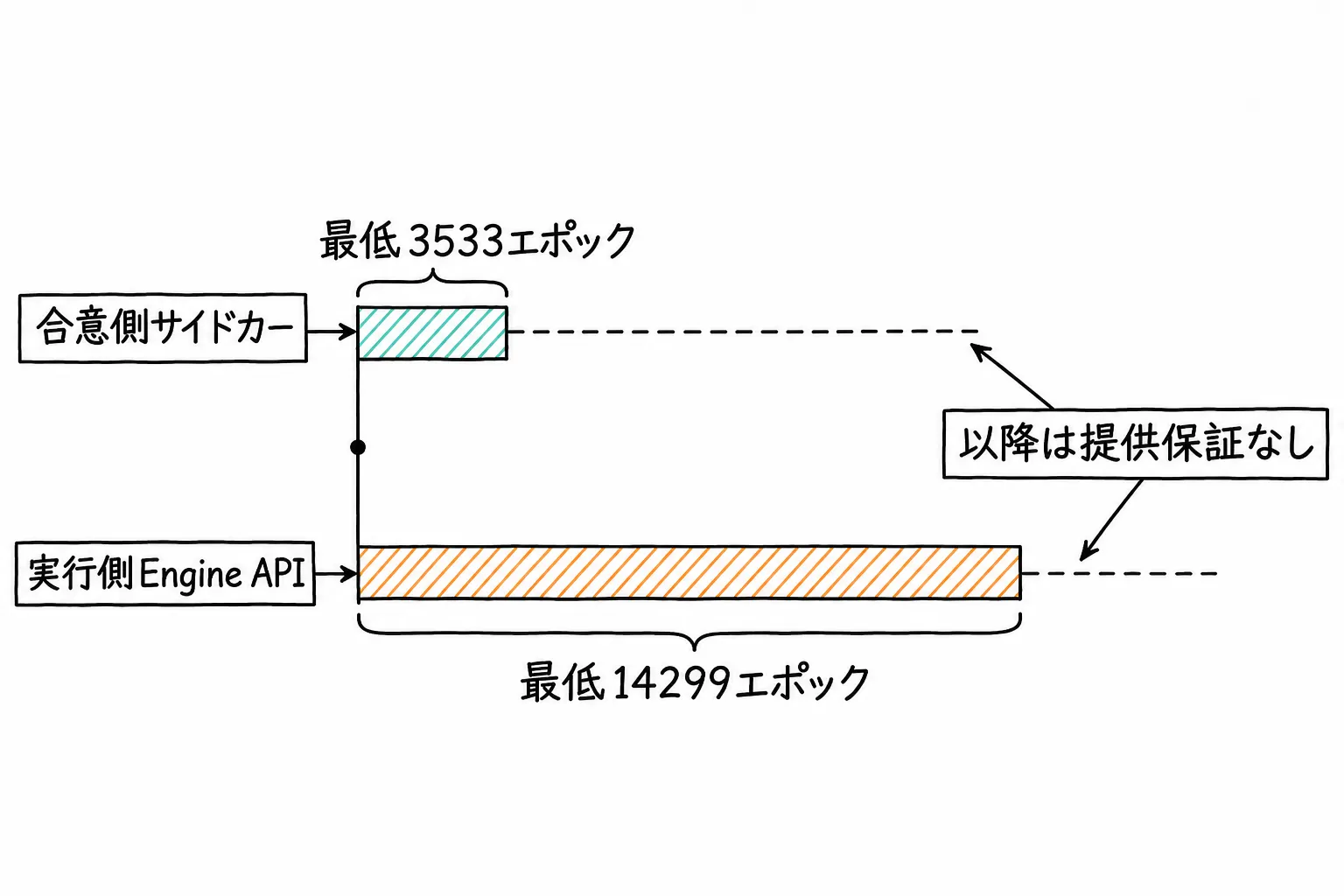
Clients serve sidecars for the most recent 3533 epochs through both the root-based and range-based methods.
MIN_EPOCHS_FOR_BLOCK_ACCESS_LIST_SIDECARS_REQUESTS defines this minimum serving period.
Older sidecars may be pruned, but there is no requirement to delete them immediately when the period expires.
For the separate execution-layer path for retrieving a BAL, EIP7928 requires serving data for at least HISTORY_PRUNE_EPOCHS, or 14299 epochs.
This path uses the Engine API, through which the consensus layer requests payload body data from the execution layer via methods such as engine_getPayloadBodiesByHashV2 and engine_getPayloadBodiesByRangeV2.
It is a different delivery path from the Req/Resp methods used to retrieve sidecars from other nodes.
EIP8146 describes using the same retention period as the execution layer, but its explicit value of 3533 does not match the 14299 in EIP7928.
The minimum serving period for sidecars and the minimum serving period for the execution-layer Engine API should be read as requirements for their respective paths.
Neither value should replace the other to infer a shared pruning time.
Even if an older BAL cannot be retrieved, the record can be regenerated by re-executing the corresponding block.
This requires both the block data and the historical state from which its execution starts.
Because EIP8146 does not guarantee permanent retention of these or a retrieval path for them, the ability to regenerate a record does not by itself ensure that full historical synchronization will always be possible.
Compatibility
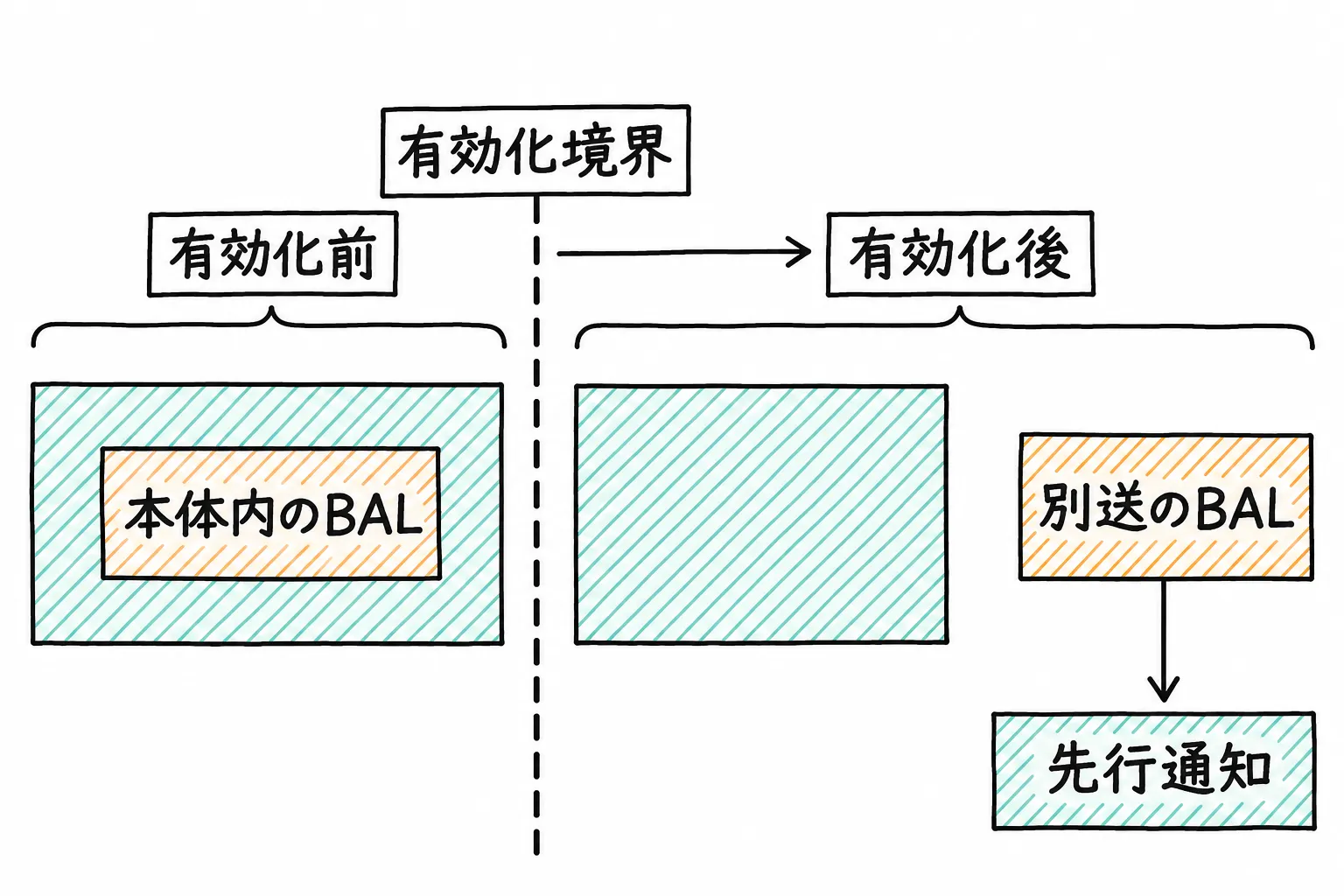
The existing format containing the record in the payload and the new format delivering it separately are distinguished at the activation boundary. Types and notification order must be updated across both layers, while retaining the values read by existing payload validation.
Distribution formats before and after activation
Because the data structures for the payload and bid change, activation requires a backward-incompatible update through a hard fork.
Pre-fork blocks retain the BAL inside the payload and use the existing retrieval methods of EIP7928.
Post-fork blocks use the dedicated sidecar topic and new root-based and range-based retrieval methods.
The receiving node chooses the format according to whether the target block is before or after the fork. It neither retroactively removes records from old payloads nor requires new retrieval methods for blocks predating the introduction of sidecars. The new format requires both removing the field from the payload and notifying the execution layer of the separately delivered record first.
EIP8146 is in Draft status.
Requiring a hard fork does not mean that adoption or an activation date for a particular network has been decided.
The specification's distribution-format change must be distinguished from whether it is active on a live network.
Coordinated type and API updates
The consensus and execution layers must agree on the format used to exchange records. The corresponding type and notification updates are as follows.
| Component | Coordinated update |
|---|---|
ExecutionPayload |
Remove the embedded record field. |
ExecutionPayloadBid |
Add the record hash. |
PayloadAttestationData |
Add the record arrival observation. |
engine_getPayloadV6 |
Return the record at the top level of the response. |
engine_notifyBlockAccessListV1 |
Deliver the validated record before the payload. |
engine_newPayloadV5 |
Remove the embedded record field and combine the payload with the record received earlier. |
Even if one layer removes the record from the payload, the conditions for validation are not met unless the other layer stores the separately delivered record. Align the retrieval location and notification order so the execution layer has the record for the same block first.
When integrating changes into the underlying specification's types, also check the bid's execution_requests_root.
The EIP7732 bid includes this field, which records a commitment to the contents of the payload's execution requests.
The existing verify_execution_payload_envelope compares hash_tree_root(envelope.execution_requests) against bid.execution_requests_root.
However, the bid shown in EIP8146 lacks this field.
Because payload validation is specified to remain unchanged, adding the record hash does not imply removing existing execution request validation.
Clients must check both the types from the underlying specification they adopt and the values referenced by payload validation.
Security
Withholding a record prevents payload validation, while early publication of the record reveals some state changes sooner. Nodes must preserve reception checks and local storage requirements while limiting the cost of hashing records and caching records whose corresponding payloads never arrive.
Validation stops when records are withheld
If the builder does not distribute the sidecar, PTC members cannot affirm that the record was validated in time.
By setting block_access_list_present = False, they allow other participants to observe that failure of arrival.
Receiving this report is distinct from obtaining the BAL the node itself needs for payload execution.
Each node's on_execution_payload_envelope requires the BAL for the same block to be available locally.
Without the record, the node cannot validate the payload or build blocks on top of it.
When a builder withholds the record, its own payload cannot be used.
Even if a payload that arrived first is cached, caching it alone does not establish that the record is available.
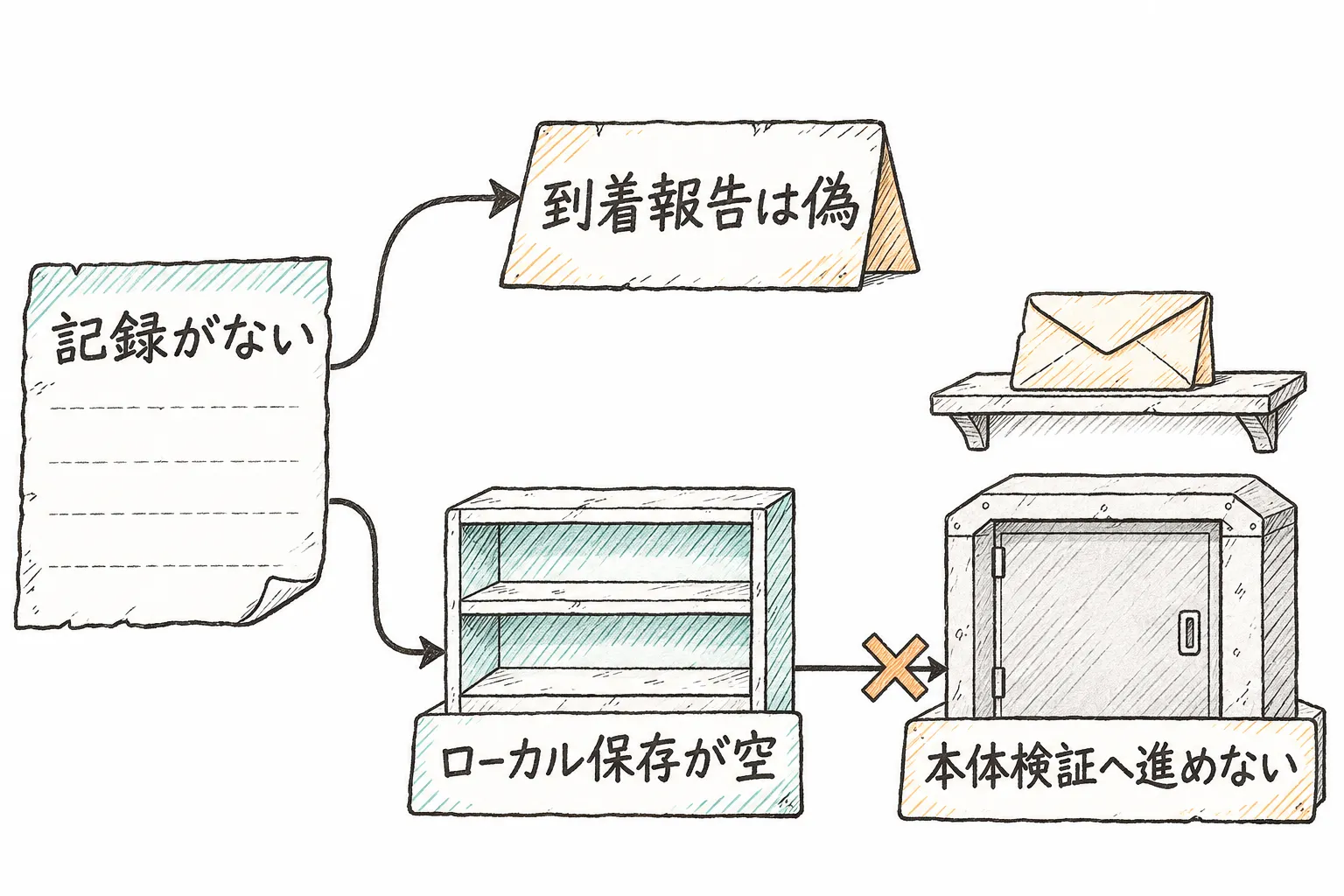
Payload validation stops because the local BAL is missing; this is not replaced by a procedure that stops execution based on other participants' negative votes.
EIP8146 adds no new penalty for arrival votes and does not change the nature of payments in EIP7732.
The proposal does not introduce conditions for new fines or payment reversals arising from withholding the record.
State changes exposed by early publication
From an early BAL, observers learn which contracts and storage locations were touched and their post-change values.
For example, they may observe that a contract's storage value was updated before they see the transactions in the payload.
Some state changes that would otherwise become known from the payload are published earlier in the same slot.
Because the BAL does not contain the signed transactions themselves, it does not distribute standalone signed transaction data that could be extracted and rearranged within the same slot.
It does not, however, provide confidentiality for access locations or balance changes.
Accelerating execution preparation therefore means accepting early disclosure of state changes while delaying publication of the transactions themselves.
The possibility that a malicious proposer incurs existing penalties is separate from adding new penalties for BAL arrival votes.
Not distributing signed transactions alone does not guarantee protection against every misuse of the exposed state changes.
Validation and storage overhead
BAL data moves from the payload topic to a dedicated topic.
The BAL bytes are still distributed, spreading the load previously concentrated after payload publication across another topic and a wider time interval.
When calculating receiving limits, do not assume that aggregate network traffic has been halved.
Sidecar verification applies keccak256 once to a byte sequence of up to 8 MiB.
Consensus clients therefore gain a dependency on this hash computation.
Although it is described as less expensive than payload validation, measured results for the computation are not given.
Processing times and specific speed improvements across all clients are not guaranteed.
gossip accepts one valid record per validated beacon block root.
This rule limits repeated reception of records for the same target, but the execution layer may retain records for targets whose payloads never arrive.
Implementations are encouraged to bound this unmatched cache using the distance from the target slot or the point at which blocks become finalized.
For example, an implementation could stop retaining records for slots that are too far away or clean up unnecessary records as finalization progresses. No mandatory retention count or deletion slot is specified. Both are examples of implementation policies that prevent unbounded accumulation of records whose payloads have not arrived.
Conclusion
EIP8146 separates block access records from the payload and delivers the record checked against the bid to the execution layer first.
By retaining and reprocessing a payload that arrives first, it accelerates execution preparation while preserving the order required to validate the payload using the matching record.
Distinguishing timely arrival reports, local record storage, and payload execution validation makes it possible to track which information can be used early and which results remain unverified.
The changes to distribution and validation are described in the EIP8146 proposal.

The bid payment destination and existing payload validation can be checked in the Ethereum consensus specifications.