Introduction
Hi, I'm cardene, a software engineer and technical writer focused on blockchain and AI.
I've also authored Japanese technical books on specification-driven development with LLMs and decentralized application (DApp) development.

I also build and publish a variety of tools, libraries, and open-source projects.
This article explores ERC7730, a proposal for presenting structured data in a human-readable form so users can safely verify what they are signing.
The following explanation translates, summarizes, and expands on the specification linked below.

I also cover various EIPs, BIPs, SLIPs, CAIPs, ENSIPs, RFCs, and ACPs.

Overview
ERC7730 defines the additional semantic information needed to display data accurately to users in a wallet and to enable machines, such as transaction simulators, to interpret it.
On blockchains, transaction data and messages to be signed are represented as structured data, such as ABI or EIP712 type definitions.
Examples include EVM transaction calldata and structured messages for signing.
However, knowing the types and values does not necessarily reveal what the operation means to a person.
See the following article for more about EIP712.
[EIP712] Understanding typed structured data hashing and signing
ERC7730 attaches supplementary information to structured data, including the following.
- Display formatting information
For example, it distinguishes whether a quantity represented by Solidity's
uint256denotes a token amount, percentage, or time, so the appropriate display format can be selected. - Dynamic value interpolation For token amounts, the value can be converted into human-readable units using the corresponding decimals and displayed with a symbol such as USDC or ETH.
This allows a raw number such as 1000000 to be displayed meaningfully as 1.0 USDC, for example.
The same information is available to automated systems, such as transaction simulation engines, in a machine-interpretable form.
Wallets and automated systems consult this ERC7730 definition file alongside the raw data to be signed (ABI or message). They can use it to construct interfaces and analysis processes suitable for their respective purposes.
This makes the information shown during signing substantially easier to understand and reduces the risk of signing unintended transactions due to frontend tampering or phishing.
Motivation
Verifying the contents of a signature directly on a hardware wallet's screen is known as Clear Signing, a fundamental security practice when using blockchains.
However, data to be signed currently presents several problems.
First, function and message type names are intended for developers and do not necessarily convey the user's intent.
For example, names such as executeSwap or commit do not intuitively tell users what, how much, or where they are sending.
Second, individual data fields are generally represented by primitive types such as uint256 and address, whose meaning varies considerably depending on context.
Even a single integer may represent a token quantity, percentage, or timestamp, each requiring a very different display format.
Furthermore, displaying token amounts requires additional metadata. Specifically, the following information is necessary to present the amount accurately to a human.
| Required information | Description |
|---|---|
decimals |
Number of decimal places for converting base units into human-readable units. |
ticker (symbol) |
Currency symbol such as USDC, DAI, or ETH. |
| Token contract address | Identifies the token to which the information belongs. |
ABI and EIP712 type definitions alone lack the contextual information needed for these displays. As a result, wallets can only display a series of numbers and addresses, making it difficult for users to determine whether they are signing their intended operation.
ERC7730 addresses this problem by providing semantic annotations and display rules for structured data in a standardized format. By describing what each field means and how it should be formatted in JSON, wallets can interpret it and convert the data into a form users can understand.
Application developers who understand how their smart contracts and messages are used are best positioned to provide this detailed formatting information. Defining ERC7730 as an open standard allows a definition file to be prepared once and reused across compatible wallets.
This makes the signing experience more intuitive and secure, substantially reducing the risk of being tricked into signing incorrect contents through frontend tampering or phishing.
Specification
Simple example
Below is an example ERC7730 definition file for clear signing an ERC20 token's transfer function call.
{
    "$schema": "https://eips.ethereum.org/assets/eip-7730/erc7730-v1.schema.json",

    "context": {
        "$id": "Example ERC-20",
        "contract" : {
            "deployments": [
                {
                    "chainId": 1,
                    "address": "0xdAC17F958D2ee523a2206206994597C13D831ec7"
                },
                {
                    "chainId": 137,
                    "address": "0xc2132D05D31c914a87C6611C10748AEb04B58e8F"
                },
                {
                    "chainId": 42161,
                    "address": "0xFd086bC7CD5C481DCC9C85ebE478A1C0b69FCbb9"
                }
            ]
        }
    },

    "metadata": {
        "owner": "Example",
        "contractName": "Example Token",
        "info": {
            "url": "https://example.io/",
            "deploymentDate": "2017-11-28T12:41:21Z"
        }
    },

    "display": {
        "formats": {
            "transfer(address to,uint256 value)": {
                "intent": "Send",
                "interpolatedIntent": "Send {value} to {to}",
                "fields": [
                    {
                        "path": "value",
                        "label": "Amount",
                        "format": "tokenAmount",
                        "params": {
                            "tokenPath": "@.to"
                        }
                    },
                    {
                        "path": "to",
                        "label": "To",
                        "format": "addressName"
                    }
                ]
            }
        }
    }
}
Schema declaration
The $schema key identifies the version of the ERC7730 specification that this JSON follows.
The example specifies the URL of the official version 1 JSON Schema, which wallets and tools consult to validate the structure.
Context
context specifies the constraints defining which data this ERC7730 file applies to.
Wallets must apply the file's display rules only if the conditions specified here are met.
This example indicates that the file applies only to specific smart contracts.
| Field | Meaning |
|---|---|
chainId |
Chain ID (Ethereum Mainnet, Polygon, Arbitrum, etc.). |
address |
Contract address on that chain. |
In other words, the definition is restricted to the same token contract deployed at the specified address on the specified chain.
The wallet uses the display rules described below only if the destination contract of the transaction matches the list.
Metadata
metadata contains constant information that can be trusted when the context matches. Its main purposes are as follows.
- Display a contract or message recipient in a human-readable form.
- Convert enum values and IDs into human-readable names.
- Define constants shared by display formats.
The example defines the following information.
| Key | Description |
|---|---|
owner |
Name of the operator or organization for display. |
contractName |
User-facing token name. |
info |
Additional information such as the official website URL and deployment date. |
Wallets can use these fields to show users which token they are about to transfer.
Display definition
The display section is the core of the definition, specifying how the contents appear on the signing screen.
Identifying the target function
The keys in formats use the human-readable ABI format.
transfer(address to,uint256 value)The wallet extracts the type names from this format to construct
transfer(address,uint256)the signature, hashes it with Keccak-256, and computes the function selector 0xa9059cbb.
It then determines whether the definition applies by checking whether this selector matches the first four bytes of the transaction's calldata.
Displaying intent
intent contains a summary of the operation for the user.
"intent": "Send"This describes the operation as a transfer in human-readable language rather than a developer-oriented function name. Wallets are encouraged to display this string.
Dynamic intent text
interpolatedIntent is a short text template that incorporates parameter values.
"interpolatedIntent": "Send {value} to {to}"A wallet can replace {value} and {to} with the actual argument values to create a single-line display such as Send 1.5 USDC to alice.eth.
This can be used as a simple display when no dedicated layout is available.
Field definitions (fields)
fields specifies in detail how each parameter is displayed.
| path | label | format | Meaning |
|---|---|---|---|
value |
Amount |
tokenAmount |
Displays a token amount using decimals and the symbol. |
to |
To |
addressName |
Resolves the address to a trusted name, such as an ENS name, for display. |
Specifying the reference to the token contract through tokenPath enables the correct decimals and ticker to be retrieved, converting the amount into human-readable notation.
Versioning
ERC7730 explicitly specifies the version of the specification through the $schema URL.
The current specification version is 1, and wallets and tools use this schema to perform the following.
- Validate the JSON structure.
- Handle future version differences.
This allows display rules to be standardized and shared while maintaining compatibility and security as the specification evolves.
Common concepts
Key naming conventions
In ERC7730, keys beginning with $ are internal markers intended to make the specification file easier to read.
Because they are internal, wallets must not treat keys beginning with $ as display rules when constructing the signing UI.
For example, $schema and the $ used for path references ($.metadata...) refer to contents of the specification file; they are not fields presented to the user.
Structured data
ERC7730 applies to structured data, broadly meaning data with defined types and structure that can be broken down into individual fields. The specification refers to data that satisfies at least the following conditions.
| Condition | Meaning |
|---|---|
| Defined type system | All data belongs to a top-level type, such as a function's argument set or a message type. |
| Schema | Available fields and the paths used to reach them are defined. |
| Fields identifiable by paths | A string path such as params.amountIn can identify a specific value. |
The wallet needs to show the contents of this structured data before signing. However, what is actually signed is not the structured data itself, but the enclosing container structure.
Structured data and containers
The distinction between these terms is especially important.
| Term | Definition | Examples |
|---|---|---|
| Structured data | Contents whose meaning the user wants to verify | Contract call arguments and EIP712 message fields. |
| Container structure | Outer structure processed by the signing algorithm | EVM transaction (RLP-serialized) and the EIP712 signing format. |
RLP (Recursive Length Prefix) is an Ethereum encoding format for serializing objects such as transactions into bytes. Here, it can be understood as the method for representing the outer EVM transaction container in a signable form.
The specification describes the following process.
- The wallet receives the entire container structure (for example, an EVM transaction).
- The wallet signs the whole structure according to the signing procedure defined for that container.
- It extracts and decodes the structured data within the container and displays it for user verification.
The figures are reproduced from the original Japanese article; any Japanese labels are retained.
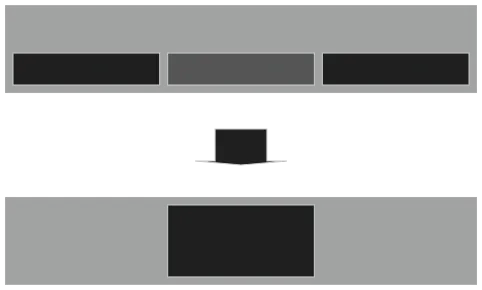
Data covered by the current specification
EVM smart contract calldata
| Field | Contents |
|---|---|
| Type definition source | Solidity |
| Schema | Function ABI (derived from the function fragment matched in display.formats). |
| Container structure | EVM transaction (RLP-encoded). |
The important point is that ERC7730 enables field paths to be determined from the function ABI.
Once the mapping between arguments and fields is known, values can be referenced with paths such as to and value.
EIP712 messages
| Field | Contents |
|---|---|
| Type definition source | EIP712 |
| Schema | Extracted from the type string representation in display.formats. |
| Container structure | The message itself, hashed according to EIP712 (self-contained). |
An EIP712 message is self-contained as signing data and is not assumed to be enclosed in a separate outer format such as an RLP transaction.
Formats and types
ERC7730 display formats depend on the structured data's type.
The format determines whether the same uint256 is displayed as a token amount or simply as a number, for example.
The Reference section of the specification defines which formats are available and which types they support.
Referencing container values
When constructing a field's display, structured data alone may not be sufficient; values from the container structure may be required.
For an EVM transaction, examples include @.from (sender) and @.value (native currency transfer amount).
The Reference section also defines which container values can be referenced.
Path references
ERC7730 uses restricted JSONPath notation to reference values across multiple JSON documents: structured data, the ERC7730 file, and the container.
Restrictions on path notation
The specification imposes the following restrictions.
| Rule | Meaning |
|---|---|
| Dot notation only (including arrays) | Array elements use the form array.[index]. |
| Available selectors | name (key), index, and slice (range) only. |
| No slice step | The step in [start:end:step] is not supported. |
| Slice range | Start is inclusive and end is exclusive. |
| Start/end may be omitted | Examples include [:20] and [-20:]. |
Root identifiers
A root identifier at the beginning distinguishes different reference sources.
| Root | Reference source | Description |
|---|---|---|
# |
Structured data | Decoded function arguments or EIP712 fields. |
$ |
ERC7730 file | The specification file itself after merging includes. |
@ |
Container structure | Transaction or message metadata. |
If the root is omitted, the path is interpreted relative to the structured data currently being displayed.
If there is no enclosing container, a relative path is treated as starting with #..
# Structured data
# references the contents of the signing data (arguments or fields).
Path names match the schema (function signature or message type) specified in display.formats.
Examples:
| Example | Meaning |
|---|---|
#.params.amountIn |
amountIn within the top-level params. |
params.amountIn |
Relative path with the same meaning as above. |
#.details.[] |
The Permit Details array of a PermitBatch message (the array itself). |
$ Merged ERC7730 file
$ references values within the ERC7730 file itself.
When includes are used, it refers to the contents after the consumer, such as a wallet, has merged them.
Examples:
| Example | Meaning |
|---|---|
$.metadata.enums.interestRateMode |
An enum defined within the specification file. |
$.display.definitions.minReceiveAmount |
A shared field definition. |
@ Container
@ references values of the outer container enclosing the structured data.
For an EVM transaction, examples include @.from, @.to, @.value, and @.chainId.
Examples:
| Example | Meaning |
|---|---|
@.value |
Native currency transfer amount in an EVM transaction. |
@.to |
Transaction destination (often a contract address). |
Path slicing
If a structured data field is a variable-length primitive such as Solidity's bytes or string, a slice at the end of the path can reference only part of it.
Similarly, a slice can select part of an array.
Examples:
| Example | Meaning |
|---|---|
#.data.path.[0].path.[-1].to |
to of the last (-1) element of the path array within element 0 of data.path. |
#.params.path.[:20] / #.params.path.[0:20] |
The first 20 bytes of params.path. |
#.params.path.[-20:] |
The last 20 bytes of params.path. |
Value interpolation
interpolatedIntent embeds values in the intent text read by the user.
Instead of presenting intent and fields separately, it creates a display that reads naturally as a single sentence.
Benefits
interpolatedIntent is useful for three reasons.
| Benefit | Description |
|---|---|
| Reduced cognitive load | A single sentence is quicker to understand than disconnected fields. |
| Suitable for limited displays | Can be presented concisely on devices such as hardware wallets. |
| Easier explanation of batch transactions | Multiple operations can be joined into sentences, as with EIP5792. |
See the following article for more about EIP5792.
[EIP5792] Understanding how wallets handle multiple onchain operations together
Interpolation syntax
Interpolation uses {path}.
The path follows the reference rules described above and can use the following sources.
| Reference source | Example |
|---|---|
| Structured data | {to} {params.amountIn} |
| Container values | {@.value} {@.from} |
| Metadata constants | { $.metadata.constants.nativeAssetAddress } (illustrative of the explanation). |
Only fields that are always displayed may be referenced by interpolatedIntent.
Formatting behavior
The rules for processing interpolatedIntent in a wallet define a clear sequence.
- Find every
{path}in the string. - Resolve each
{path}to its value. - Locate the corresponding formatting definition within
fields. - Apply
formatandparamsto format the value. - Replace
{path}with the formatted value. - If any step fails, fall back to displaying
intent.
This fallback restores a minimally readable, safe display if a path cannot be resolved or formatting fails, for example.
Escaping
To display literal { or } characters in intent text, escape them by doubling the braces.
{{displays{.}}displays}.
Simple token transfer
{
    "intent": "Send",
    "interpolatedIntent": "Send {value} to {to}",
    "fields": [
        {"path": "to", "format": "addressName"},
        {"path": "value", "format": "tokenAmount", "params": {"tokenPath": "@.to"}}
    ]
}
Display example: Send 100 USDT to cyberdrk.eth
Swap involving native currency
{
    "intent": "Swap",
    "interpolatedIntent": "Swap {amountIn} for at least {amountOutMinimum}",
    "fields": [
        {"path": "amountIn", "format": "tokenAmount", "params": {"tokenPath": "tokenIn"}},
        {"path": "amountOutMinimum", "format": "tokenAmount", "params": {"tokenPath": "tokenOut"}}
    ]
}
Display example: Swap 1000 USDC for at least 0.25 WETH
Example using container values
{
    "intent": "Wrap ETH",
    "interpolatedIntent": "Wrap {@.value} ETH for WETH",
    "fields": [
        {"path": "@.value", "format": "amount"}
    ]
}
Display example: Wrap 0.5 ETH for WETH
Example displaying literal braces
{
    "interpolatedIntent": "Execute {{function}} with {amount} tokens"
}
Display example: Execute {function} with 100 tokens
Organizing files
Smart contracts and EIP712 messages often reuse common interfaces and types. ERC7730 supports includes to reduce this duplication.
Meaning of includes
includes contains a URL (or path) to another ERC7730 file.
The included file must also conform to the ERC7730 specification.
"includes": "./example-erc20.json"Basic merging rules
When handling includes, wallets are encouraged to merge the files into a single reference file. If the same key conflicts, the including file takes precedence.
Merging the fields array
Because fields is an array, replacing it wholesale would disrupt ordering and partial overrides.
Wallets are therefore encouraged to merge it according to the following rules.
-
Merge elements with the same
pathinto a single element.- Use the included file's settings as a base, overriding them with parameters from the including file.
-
Append elements whose
pathis absent from the included file to the resulting array. -
Example
Common ERC20 approve definition (generic file)
This file defines only approve.
It contains neither binding information for a specific contract (context) nor contract-specific metadata.
{
    "display": {
        "formats": {
            "approve(address spender,uint256 value)": {
                "intent": "Approve",
                "fields": [
                    {
                        "path": "spender",
                        "label": "Spender",
                        "format": "addressName"
                    },
                    {
                        "path": "value",
                        "label": "Amount",
                        "format": "tokenAmount",
                        "params": {
                            "tokenPath": "@.to",
                            "threshold": "0x8000000000000000000000000000000000000000000000000000000000000000",
                            "thresholdLabel": "Unlimited"
                        }
                    }
                ]
            }
        }
    }
}
Here, threshold and thresholdLabel are formatting parameters used to display an approve amount above a particular threshold as Unlimited, for example.
File including the generic definition and binding it to a specific contract
The following file imports the generic definition above through includes and binds it to a USDT contract (as an example) through context.
It also overrides only the threshold of the value field.
{
    "context": {
        "$id": "Example Contract",
        "contract" : {
            "deployments": [
                {
                "chainId": 1,
                "address": "0xdAC17F958D2ee523a2206206994597C13D831ec7"
                }
            ]
        }
    },

    "includes": "./example-erc20.json",

    "metadata": {
        "owner": "Example",
        "contractName": "Example Token",
        "info": {
            "url": "https://example.io/",
            "deploymentDate": "2017-11-28T12:41:21Z"
        },
        "token": {
            "ticker": "STABLE",
            "name": "Example Stablecoin",
            "decimals": 6
        }
    },

    "display": {
        "formats": {
            "approve(address spender,uint256 value)": {
                "fields": [
                    {
                        "path": "value",
                        "params" : {
                            "threshold": "0xFFFFFFFFFFFFFFFFFF"
                        }
                    }
                ]
            }
        }
    }
}
Context section
The context section of ERC7730 is a set of conditions that strictly constrains which transactions or messages may use the ERC7730 definition file.
The wallet must verify that the structured data to be signed and its enclosing container satisfy the conditions defined by context.
If the conditions are not met, the ERC7730 file must not be applied.
The current version of ERC7730 supports two kinds of context.
- EVM smart contracts (calldata)
- EIP712 messages
Every context may contain a $id key as a human-readable identifier.
This is a display name and is not directly involved in validation logic.
EVM smart contract binding (calldata)
context.contract defines conditions binding the ERC7730 file to specific smart contract calls.
contract.deployments
deployments is a list of contract deployments for which the ERC7730 definition is valid.
The wallet must verify that the transaction to be signed exactly matches both of the following properties of one list entry.
- Chain ID
- Destination contract address
Each element has the following structure.
| Key | Meaning |
|---|---|
chainId |
Chain identifier defined by EIP155. |
address |
Contract address on that chain. |
See the following article for more about EIP155.
[EIP155] Understanding replay protection on Ethereum
contract.abi (deprecated)
This ABI definition key is retained for backward compatibility.
The current approach is to define types and displays in display.formats; the deprecated key should not be used in new files and is scheduled for removal in a future version.
contract.factory
factory provides a mechanism for targeting contracts deployed through a factory contract.
A factory contains the following two pieces of information.
| Key | Contents |
|---|---|
deployEvent |
Signature of the Solidity event emitted during deployment. |
deployments |
Addresses at which the factory itself is deployed. |
The wallet verifies that all the following conditions are satisfied.
- The destination address of the current transaction appears in the event log for
deployEvent. - The event emitter is one of the factory addresses specified in
factory.deployments.
This allows the wallet to verify that the target contract of the transaction was created by an authorized factory.
EIP712 message binding (messages)
context.eip712 binds the ERC7730 definition to specific EIP712 message types and domains.
eip712.schemas (deprecated)
A legacy schema definition scheduled for future removal.
Types are now defined within display.formats.
eip712.domain
domain defines constraints on the keys and values included in the EIP712 Domain Separator.
The wallet must verify that the values in the message's domain object match every key specified here.
Common domain keys include the following.
| Key | Meaning |
|---|---|
name |
Name of the message verifier. |
version |
Version. |
chainId |
Target chain ID. |
verifyingContract |
Address of the verifying contract. |
The message's domain may contain additional keys not specified here.
eip712.deployments
deployments constrains the combination of chainId and verifyingContract in the domain.
The wallet must verify the following.
- The message domain contains
chainIdandverifyingContract. - The combination matches one entry in
eip712.deployments.
The structure is the same as for EVM contracts.
| Key | Meaning |
|---|---|
chainId |
EIP-155 chain ID. |
address |
Address of the verifyingContract. |
eip712.domainSeparator
domainSeparator directly specifies the EIP712 domain hash itself.
The wallet must verify the following.
- Hash the message domain according to EIP712.
- Confirm that the resulting hash matches
domainSeparator.
This method can identify the correct verifier even when the smart contract contains only the domain hash in its code rather than the individual domain components.
EIP712 context example
{
    "context" : {
        "eip712": {
            "domain": {
                "name": "Permit2"
            },
            "deployments": [
                {
                    "chainId": 1,
                    "address": "0x000000000022D473030F116dDEE9F6B43aC78BA3"
                },
                {
                    "chainId": 42161,
                    "address": "0x000000000022D473030F116dDEE9F6B43aC78BA3"
                }
            ]
        }
    }
}
This definition means that the ERC7730 file applies only to messages that satisfy both of the following conditions.
domain.nameis Permit2.domain.chainIdand domain.verifyingContract identify the Permit2 contract on Ethereum Mainnet or Arbitrum.
Metadata section
metadata contains trusted constant information about the contract or message identified by the context.
Wallets can use this information for UI presentation, value validation, and formatting.
metadata.owner
The display name of the organization responsible for the contract or verifying contract. Wallets can use it to identify the counterparty on the signing screen.
metadata.contractName
The contract's display name. This is a human-readable name, such as the token or protocol name.
metadata.info
Additional structured information.
| Key | Meaning |
|---|---|
deploymentDate |
Deployment date and time. |
url |
Official website URL. |
metadata.token (ERC20 only)
Supplementary information for ERC20 contracts that do not implement name(), symbol(), or decimals().
These values can normally be obtained onchain, so they should not be specified for contracts that implement the functions.
| Key | Contents |
|---|---|
name |
Token name. |
ticker |
Symbol. |
decimals |
Number of decimal places. |
metadata.constants
A collection of constants reused by formatters.
Reference them using paths such as $.metadata.constants.KEY_NAME.
{
    "metadata": {
        "constants": {
            "nativeAssetAddress": "0xEeeeeEeeeEeEeeEeEeEeeEEEeeeeEeeeeeeeEEeE"
        }
    }
}
This example defines a pseudo-address representing the native currency as a constant.
metadata.maps (context-dependent constants)
A mechanism for handling constants that differ by chain, for example.
The structure is as follows.
| Key | Description |
|---|---|
keyPath |
Value used to select an entry (e.g., @.chainId). |
values |
Mapping from selection keys to the actual constant values. |
Example:
{
    "metadata": {
        "maps": {
            "underlyingToken": {
                "keyPath": "@.chainId",
                "values" : {
                    "1": "0xaabbccddeeff...",
                    "17000": "0x112233445566..."
                }
            }
        }
    }
}
The wallet automatically selects the address corresponding to the value of @.chainId
and uses it through $.metadata.maps.underlyingToken.
If there is no match, the ERC7730 file is considered invalid.
metadata.enums (display names for enum values)
A mapping that converts numeric values or codes into human-readable strings.
{
    "metadata": {
        "enums": {
            "interestRateMode": {
                "1": "stable",
                "2": "variable"
            }
        }
    }
}
Reference this mapping using the enum format.
{
  "display": {
    "formats": {
      "repay(address asset,uint256 amount,uint256 interestRateMode)": {
        "intent": "Repay loan",
        "interpolatedIntent": "Repay {amount} of {interestRateMode} rate loan",
        "fields": [
          {
            "path": "amount",
            "format": "tokenAmount",
            "params": { "tokenPath": "asset" }
          },
          {
            "path": "interestRateMode",
            "format": "enum",
            "params": { "$ref": "$.metadata.enums.interestRateMode" }
          }
        ]
      }
    }
  }
}
In this case, interestRateMode is displayed as stable when its value is 1, and as variable when it is 2.
Display section
The display section of ERC7730 is the core of the definition: it specifies which fields of correctly bound structured data to display, in what order, and using which formats.
The section is broadly divided into two parts.
display.definitions, which contains shared formatting definitions.display.formats, which defines display rules for individual functions and EIP712 messages.
Shared definitions
display.definitions defines reusable formatting components shared across multiple fields.
Each subkey is a field display template referenced through a path such as $.display.definitions.NAME.
Typically, path is omitted here, and only the label, format, and parameters are defined.
The actual field to which the template applies is specified in display.formats.
Example
{
    "display": {
        "definitions": {
            "sendAmount": {
                "label": "Amount to Send",
                "format": "tokenAmount",
                "params": {
                    "tokenPath": "fromToken",
                    "nativeCurrencyAddress": "$.display.constants.addressAsEth"
                }
            }
        }
    }
}
The example demonstrates the following.
- A shared rule for displaying a transfer amount is defined under the name
sendAmount. - Individual fields can reuse the rule by referencing
$.display.definitions.sendAmount.
Format definitions
display.formats defines display specifications for actual structured data, such as individual smart contract functions and EIP712 messages.
Writing contract function keys
For EVM contracts, the key must be a human-readable ABI fragment.
Example:
transfer(address to,uint256 value)
submitOrder((address token,uint256 amount) order,bytes32 salt)
The rules are strict and require the following.
| Rule | Requirement |
|---|---|
| Type names | Use canonical names such as uint256, address, and bytes32 only (uint is prohibited). |
| Formatting | Exactly one ASCII space between a type and its argument name. |
| Commas | No space after a comma. |
| Arrays | type[] or type[N]. |
| Tuples | The form (type name,...). |
| Argument names | Must exactly match the subsequent path references. |
Matching the selector
The wallet determines which format to use as follows.
- Construct the type signature by removing argument names from the key.
Example:
transfer(address,uint256) - Hash the signature with keccak256 and take the first four bytes.
- Compare them with the first four bytes of the transaction calldata.
- Use the matching definition.
If multiple definitions have the same type signature, the definition file itself is considered invalid.
Structured data format definitions
Each value in display.formats is an object containing the display specification for one function call or one EIP712 message type.
$id
A human-readable identifier. It is not directly used for display processing.
intent
A field that explains what the user is about to do in a short, natural-language phrase.
Two forms are supported.
- Simple string
"intent": "Send"- Structured, labeled display
"intent": {
    "Native Staking": "Withdraw",
    "Rewards": "Consensus & Exec"
}
In this case, wallets are expected to present the content with its label, as shown below.
Native Staking: Withdraw
Rewards: Consensus & Exec
interpolatedIntent
A single-sentence form that interpolates field values into the intent.
"interpolatedIntent": "Send {value} to {to}"{value}and{to}must match paths defined infields.- When displayed, each value is formatted using the format and params specified for that field before interpolation.
- Wallets display either
intent + fieldsorinterpolatedIntent, or both.
Example:
{
    "intent": {
        "Action": "Approve",
        "Type": "Batch"
    },
    "interpolatedIntent": "Approve {spender} to spend up to {amount} on your behalf until {deadline}",
    "fields": [
        {"path": "spender", "format": "addressName"},
        {"path": "amount", "format": "tokenAmount"},
        {"path": "deadline", "format": "date"}
    ]
}
fields
fields is an array defining how individual arguments or message fields are displayed.
Each element takes one of the following three forms.
- Individual field definition
{ "path": "amount", "label": "Amount", "format": "tokenAmount" }- Reference to
display.definitions($ref)
{
    "path": "account",
    "$ref": "$.display.definitions.sendTo",
    "params": { "type": "eoa" }
}- Field group (recursive structure)
{
    "path": "param",
    "fields": [
        { "path": "name", "$ref": "$.display.definitions.itemName" },
        { "path": "value", "$ref": "$.display.definitions.itemReference" }
    ]
}
However, the specification treats recursive structures as a means of improving readability and recommends flattening them as shown below in practice.
{ "path": "param.name", "$ref": "$.display.definitions.itemName" }
{ "path": "param.value", "$ref": "$.display.definitions.itemReference" }
Field formatting specification
Each field contains the following information.
| Key | Meaning |
|---|---|
path / value |
Location in the structured data or a constant. |
label |
Display label. |
format |
Display conversion rule (defined in the Reference section). |
params |
Additional format-specific settings. |
visible |
Visibility condition (always / never / optional / conditional expression). |
separator |
Separator used when displaying an array. |
$id |
Internal identifier. |
Visibility conditions with visible
| Value | Meaning |
|---|---|
always |
Always displayed. |
never |
Never displayed. |
optional |
May be displayed. |
ifNotIn |
Displayed only when the value is not among the specified values. |
mustMatch |
An error occurs if the value does not match a specified value. |
Group specification
Groups control the display order of multiple fields and how arrays are expanded.
iteration modes
| Mode | Display order |
|---|---|
sequential |
All elements of array A, followed by all elements of array B. |
bundled |
A[0],B[0],A[1],B[1]… |
In bundled mode, mismatched array lengths cause an error.
Path slices
Slices are appended to the end of a path.
Slicing a byte sequence
"tokenPath": "params.path.[0:20]"Only the first 20 bytes are treated as an address.
Slicing an array
"path": "pools.[-1]"Only the last element is displayed.
Applying a rule to every element
"path": "details.[]"The same display rule is applied to every element of the array.
Embedded calldata
If a function argument contains the calldata of another function call, its contents can be decoded and displayed as well.
{
    "display": {
        "formats": {
            "permitAndCall(bytes permit,bytes action)": {
                "intent": "Execute with permit",
                "fields": [
                    {
                        "path": "action",
                        "label": "Swap",
                        "format": "calldata",
                        "params": {
                            "calleePath": "@.to"
                        }
                    }
                ],
                "required": ["action"],
                "excluded": ["permit"]
            }
        }
    }
}
This configuration performs the following operations.
- Recursively interpret
actionas an internal function call. - Identify the called contract using
calleePath. - Apply the ERC7730 definition for that contract.
When the ETH transfer amount or the approving party depends on the parent transaction, provide that information as shown below.
"params": {
    "calleePath": "target",
    "amountPath": "@.value",
    "spenderPath": "@.to"
}
This allows users to verify the meaning of the transactions executed internally in a human-readable format, even on a hardware wallet.
Reference
This section lists the container values that ERC7730 can reference and the formats that define how each field is converted into a human-readable representation. Wallets use these reference paths and display formats to visualize transactions and EIP712 messages safely.
Container values
EVM transactions
When an EVM transaction is the container, the following values can be referenced under the @ root.
| Path | Description |
|---|---|
@.from |
Transaction sender address. |
@.value |
Amount of native currency (such as ETH) transferred. |
@.to |
Destination address (the contract being called). |
@.chainId |
EIP-155 chain ID. |
EIP712 messages
For EIP712 messages, the @ root is likewise used, but the values have the following meanings.
| Path | Description |
|---|---|
@.from |
Signer address. |
@.value |
Generally treated as zero because there is no native currency transfer. |
@.to |
Address of the verifying contract (verifyingContract). ERC7730 cannot be applied if it is unknown. |
@.chainId |
Chain ID of the verifying contract. ERC7730 cannot be applied if it is unknown. |
Field formats
The following display conversion rules can be specified in fields[].format.
Integer formats (uint / int)
raw
Displays an integer directly.
| Item | Description |
|---|---|
| Display | Natural, localized integer notation. |
| Example | 1000 → 1000 |
amount
Interprets the value as an amount of native currency and adds the appropriate unit and ticker.
| Example | Display |
|---|---|
0x2c1c986f1c48000 |
0.19866144 ETH |
tokenAmount
Displays an ERC20 token amount.
Scales the value according to decimals and appends the symbol.
| Parameter | Meaning |
|---|---|
tokenPath / token |
Token contract address. |
nativeCurrencyAddress |
Address treated as native currency. |
threshold |
Threshold at or above which a special display is used. |
message |
Text displayed when the threshold is exceeded (Unlimited by default). |
Examples:
| Condition | Display |
|---|---|
| 1000000, DAI(6dec) | 1 DAI |
| 0xFFFFFFFF, with a threshold configured | Unlimited DAI |
| Value corresponding to ETH | 0.002 ETH |
nftName
Displays an NFT collection's token ID together with its name. If the name cannot be retrieved, only the ID is displayed.
date
Displays an integer as a date and time.
| encoding | Meaning |
|---|---|
timestamp |
Unix timestamp. |
blockheight |
Converts a block height into an estimated time. |
duration
Displays a number of seconds in HH:MM:SS format.
unit
Displays a numeric value with a unit.
| Parameter | Description |
|---|---|
base |
Unit symbol (h, s, %, bps, etc.). |
decimals |
Number of decimal places. |
prefix |
Whether to use an SI prefix. |
Example: 36000 s → 36 ks
enum
Converts enum values into human-readable strings according to the definitions in metadata.enums.
String formats
raw
Displays the value directly as a UTF-8 string.
Byte sequence formats
raw
Displays the value as a hexadecimal string.
calldata
A special format for data containing the calldata of another function call. The wallet recursively interprets the contents using ERC7730.
| Parameter | Description |
|---|---|
calleePath / callee |
Called contract. |
selectorPath / selector |
Function selector. |
chainIdPath |
Target chain. |
amountPath |
Native currency amount. |
spenderPath |
Approving address. |
Address formats
raw
Displays the address in EIP55 format.
See the following article for more about EIP55.
[EIP55] Understanding Ethereum address checksums
addressName
Displays a trusted name such as an ENS name if available; otherwise, displays the address.
| Parameter | Description |
|---|---|
types |
Expected address types. |
sources |
Name resolution sources (ens, local, etc.). |
senderAddress |
Special handling when the address matches the sender. |
Examples:
| Value | Display |
|---|---|
0xd8dA...6045 |
vitalik.eth |
| Uniswap pair | Uniswap V3: WBTC-USDC |
| The user themselves | Sender |
tokenTicker
Displays an ERC20 token address using the token symbol.
Example: 0xaabbcc... → MYTOKEN
Address types and trusted sources
Address types
| Type | Meaning |
|---|---|
wallet |
The user's own wallet. |
eoa |
Externally owned account. |
contract |
Known smart contract. |
token |
Known ERC20 token. |
collection |
Known NFT collection. |
Trusted sources
| Source | Description |
|---|---|
local |
Name registered locally by the user. |
ens |
Ethereum Name Service |
Wallets must not resolve names using sources other than those specified, and are expected to warn or reject when the address does not match the specified type.
Additional notes
Human readability
A major challenge for ERC7730 adoption is whether developers have sufficient incentive to justify the effort of writing specification files. Merely providing the mechanism is insufficient; developers need a reason to create these files for widespread adoption to occur.
With this in mind, ERC7730 takes the following design approaches.
First, defining the format as an ERC standard enables both hardware and software wallets to handle files in the same format. This provides a strong incentive for application developers: a single ERC7730 file can be reused across many wallets.
Second, the specification emphasizes direct readability and editability by human developers. Although the JSON structure is complex, types, paths, and display rules are explicit, allowing developers to understand and edit the contents manually without relying on tools.
Open-source tools for visualizing and editing ERC7730 files are also planned for the future. These will allow developers to preview how information appears in wallets and adjust their definitions accordingly.
Wallet constraints
ERC7730 is designed with all wallets, particularly hardware wallets, in mind.
Hardware wallets have limited display space, memory, and computing power, and security requires the displayed information to match the signing data exactly. Consequently, complex UI representations cannot simply be incorporated into the specification.
These constraints inform the following design decisions in ERC7730.
First, complex display controls such as layouts, detailed UI structures, and field rearrangement are deferred to a future wallet-specific section. The current specification standardizes only a minimal common representation that wallets can implement safely.
Second, even complex data structures can be expanded into a flat sequence of fields. Recursive messages can ultimately be displayed as one-dimensional lists, simplifying implementation on hardware wallets in particular. This flattening is strongly recommended during initial adoption.
Advanced formatters requiring recursive interpretation, such as calldata, are initially expected to have limited support.
Hardware wallets in particular are expected to start with implementations that can be verified safely rather than fully displaying every nested structure.
Internationalization
ERC7730 deliberately does not address multilingual support or localization.
All display strings, including intent descriptions, labels, field names, and enum values, are expected to be written in English. This reflects a phased approach that prioritizes stabilizing a commonly interpretable standard before considering internationalization when the need becomes clear.
A standardized internationalization layer may be added if the specification gains widespread adoption and multilingual display becomes necessary in the ecosystem, but it is not included in the current specification.
Batch transactions (EIP5792)
Batch transactions defined by EIP5792 execute multiple operations together using a single signature. Users need an intuitive representation of what will happen overall.
ERC7730 recommends generating an intent description for each operation with interpolatedIntent and joining them with " and ".
Consider the following individual operations.
[
    {
        "function": "permit",
        "interpolatedIntent": "Approve {spender} to spend {value} USDC"
    },
    {
        "function": "swapExactTokensForTokens",
        "interpolatedIntent": "Swap {amountIn} for at least {amountOutMin}"
    }
]
Joining them produces a single sentence displayed in the wallet as follows.
Approve Uniswap Router to spend 1000 USDC and Swap 1000 USDC for at least 0.25 WETHFor a more complex example combining approval, a swap, and NFT minting,
Approve DEX Router to spend 2000 USDC and Swap 2000 USDC for at least 0.5 ETH and Mint 2 NFT(s) from NftProjectthe operations are combined into a naturally readable sentence like the one above.
The following process is suggested for wallet implementers.
- Generate
interpolatedIntentfor each operation in the batch. - Join them with
" and ". - Display the resulting summary sentence.
- Provide detailed views of individual operations as needed.
- If any interpolation fails, fall back to the regular
intentdisplay.
This lets users safely review both the overview and individual details within limited screen space.
Extensibility to other structured data formats
ERC7730 is expected to support additional structured data formats in the future, including the following.
- EIP2771 meta-transactions.
- ERC4337 UserOperations.
- EIP5792 batch transaction payloads.
interpolatedIntent is particularly suitable for summarizing multiple operations in a single sentence and is designed to be reusable for batch execution and account abstraction.
See the following article for more about EIP2771.
[ERC2771] Understanding meta-transactions that allow another address to pay gas fees
See the following article for more about ERC4337.

[ERC4337] Understanding account abstraction without protocol changes
Standardizing common terminology
DeFi already has many operations with broadly understood meanings, such as Swap, Supply, Borrow, Repay, Stake, Unstake, Mint, and Burn.
ERC7730 itself does not standardize operation names for DEXs or lending protocols, but using the same terms for the same kinds of operations is desirable for security and readability.
Accordingly,
- align intent terminology across similar protocols,
- define a recommended glossary in Clear Signing registries, and
- eventually build mechanisms to validate and enforce consistent terminology.
These are examples of recommended standardization at a layer above ERC7730.
This would allow users to see phrases such as
「Approve」「Swap」「Stake」
and immediately recognize their meaning across protocols, further reducing the risk of misunderstanding caused by phishing or fraudulent interfaces.
Security considerations
ERC7730 provides a powerful mechanism for displaying transactions and EIP712 messages in a human-readable form, but it also introduces a new attack surface: the presentation itself. A malicious third party could theoretically manipulate formatting rules to make a dangerous transaction appear safe.
The anticipated threats include the following.
- Parameter injection attacks that reuse a legitimate format for a well-known contract while replacing its arguments.
- Registry poisoning through the registration of syntactically valid but intentionally misleading ERC7730 files.
- Frontend or CDN tampering that causes users to sign transactions involving unexpected contracts or arguments.
With these threats in mind, ERC7730 incorporates multiple defensive layers.
Binding context
The context section strictly constrains the targets to which an ERC7730 file may be applied.
Application developers must define the scope as narrowly as possible, and wallets are responsible for validating every condition.
Specifically, the following are required.
- Exact matches for contract addresses, chain IDs, EIP712 domains, and other applicable conditions.
- Display rules are cryptographically bound to the signing data and have not been tampered with in transit or storage.
- Verification logic is not omitted, even in constrained environments such as hardware wallets.
This prevents legitimate display definitions for one contract from being reused for a different malicious contract.
Registry poisoning
Registries that aggregate and distribute ERC7730 files are outside the scope of the specification itself, but in practice they are attack targets. Secure registries therefore need the following properties.
| Safeguard | Description |
|---|---|
| Provenance verification | Attach cryptographic signatures or proofs to each ERC7730 file and its administrator. |
| Auditable history | Publish tamper-resistant records of additions, approvals, and revocations. |
| Ownership binding | Verifiably associate contract ownership or administrative authority with ERC7730 definitions. |
| Governance | Establish operations with multisignature approvals, anomaly detection, and automated monitoring. |
These measures make large-scale registration or replacement of seemingly legitimate but deliberately misleading definition files substantially more difficult.
Trustworthiness of external data resolution
ERC7730 displays often depend on resolving external data.
Major examples include the following.
| Type | Examples |
|---|---|
| Token metadata | Token name, symbol, and decimals. |
| NFT information | Collection and token names. |
| Address resolution | Name resolution through ENS or similar systems. |
| Enums | Human-readable meanings of numeric parameters. |
| ABI | Interpretation of function types. |
Tampering with these data sources can lead to the following consequences.
- A counterfeit token is displayed as genuine USDT.
- A malicious address is displayed under a trusted name.
- An NFT collection name is spoofed.
- The meaning of an enum value is substituted.
- A replacement ABI causes arguments to be misinterpreted.
Attack examples
| Scenario | Description |
|---|---|
| Token name impersonation | A counterfeit token returns the ticker USDT, making the transaction appear to be a legitimate transfer. |
| ENS tampering | An attacker's address resolves to a name such as vitalik.eth. |
Countermeasures
Wallets are expected to adopt the following measures.
| Requirement | Description |
|---|---|
| Known-entity lists | Maintain allowlists of well-known tokens, contracts, and NFTs. |
| Combined display | Show both the resolved name and full address in some form. |
| Trust indicators | Identify the source and trust level of names and metadata. |
| Warnings | Warn whenever information cannot be resolved or verified. |
| No impersonation | Do not present unverified data as trusted. |
Interpolated intent security
interpolatedIntent is useful, but string interpolation also creates opportunities for display manipulation.
Anticipated attacks
- Distorting a sentence by including a phrase such as
to vitalik.ethin a token name. - Concealing the actual destination behind an ENS name.
- Pushing important information off-screen with an extremely long string.
Required safeguards
Wallets must satisfy the following requirements.
| Requirement | Description |
|---|---|
| Consistent formatting | Use exactly the same formatter for interpolation and regular display. |
| Path validation | Reference only existing fields and prohibit cycles and infinite recursion. |
| Mandatory field definitions | Do not interpolate paths that are not defined in fields. |
| Fallback | Always fall back to intent plus the individual field display on failure. |
| No partial display | Do not display an incomplete interpolation result. |
Display fallback behavior
If interpolation fails, the wallet performs the following operations.
- Display the static
intent. - Display every field individually using its regular format.
- Notify the user that the dynamic description could not be generated, if necessary.
Resource-constrained devices
Devices such as hardware wallets may choose not to implement interpolatedIntent.
Even in that case, intent must exist so that a minimally safe display remains available.
Testing and verification recommendations
Authors of ERC7730 files are encouraged to verify their displays for at least the following cases.
- Minimum and maximum values (zero, maximum uint, unlimited approval, and so on).
- Boundary dates and times (expired and far-future deadlines).
- Extremely long ENS names and token names.
- Maximum array lengths.
Future extensions
In the future, combining measures such as
- cryptographic binding between frontends and contract definitions,
- multisignature approval and automated auditing for ERC7730 registries, and
- monitoring infrastructure that detects fraudulent interfaces and substitutions
is expected to substantially increase the cost of attacks such as
- phishing,
- parameter injection, and
- frontend tampering.
References
Laurent Castillo (@lcastillo-ledger), Derek Rein (@arein), Pierre Aoun (@paoun-ledger), Arik Galansky (@arikg), Bartosz Rozwarski (@llbartekll), Kaan Uzdogan (@kuzdogan), "ERC-7730: Structured Data Clear Signing Format [DRAFT]," Ethereum Improvement Proposals, no. 7730, February 2024. [Online serial]. Available: https://eips.ethereum.org/EIPS/eip-7730.
Conclusion
This article covered ERC7730, a proposal for presenting structured data in a human-readable form so users can safely verify what they sign. I hope this explanation was useful.
If you have any questions, feel free to contact me through Twitter direct messages at the link below.
I also publish content through other platforms; feel free to explore the links below.


