Introduction
Hi, I'm cardene, a software engineer and technical writer focused on blockchain and AI.
I've also authored Japanese technical books on specification-driven development with LLMs and decentralized application (DApp) development.

I also build and publish a variety of tools, libraries, and open-source projects.
This article examines Alchemy Supernode and Vox Nodi.
Choosing node infrastructure is an important part of developing blockchain applications. Understanding the underlying technology helps explain why many large projects use Alchemy.
Challenges with blockchain nodes
Problems with conventional node infrastructure
When building blockchain applications, many developers simply put their nodes behind a load balancer. However, this architecture has a fundamental problem.
The traditional Web 2.0 approach to scaling infrastructure uses multiple, indistinguishable servers managed by a load balancer. With blockchain, however, applications can't treat nodes indistinguishably because each node syncs and stores data from the blockchain asynchronously.
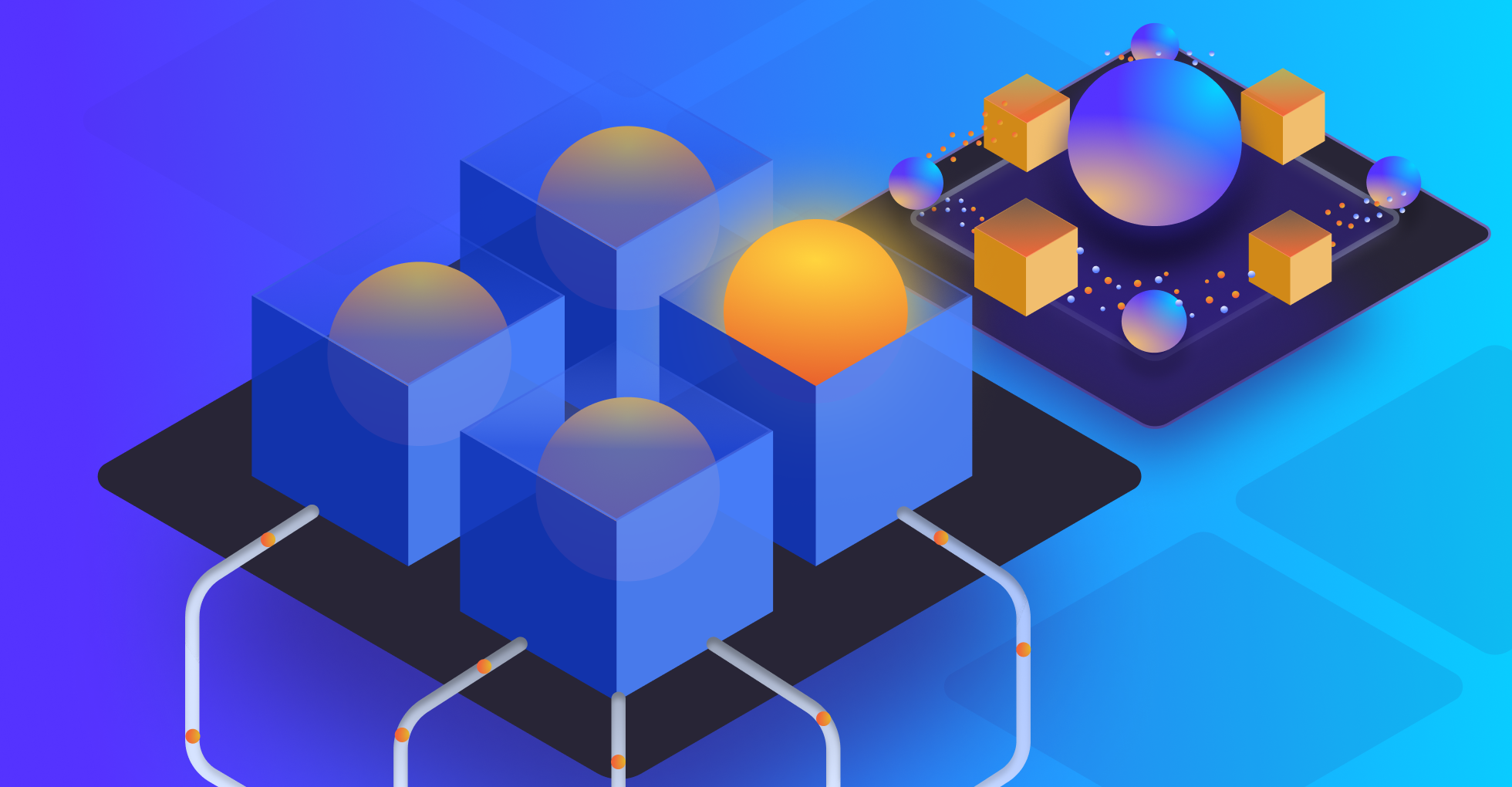
Each blockchain node synchronizes and stores data from the network asynchronously. In a peer-to-peer network, information does not arrive at every node simultaneously. It is therefore common for one node to have reached block 100 while another is still at block 99.
The following diagram illustrates how data inconsistency arises in a conventional load-balancer setup.
sequenceDiagram
    participant Client as Client
    participant LB as Load balancer
    participant Node1 as Node 1<br/>(Block #100)
    participant Node2 as Node 2<br/>(Block #99)

    Client->>LB: eth_blockNumber (first request)
    LB->>Node1: Forward request
    Node1-->>LB: Block #100
    LB-->>Client: Block #100

    Client->>LB: eth_blockNumber (second request)
    LB->>Node2: Forward request
    Node2-->>LB: Block #99
    LB-->>Client: Block #99 (inconsistent!)
When a client requests the block number twice in succession, the load balancer may send the requests to different nodes, producing inconsistent results. If the first request returns Block #100 and the second returns Block #99, the application appears to move backward in time, potentially triggering unexpected errors.
Problems caused by inconsistent data
Data inconsistency can have serious consequences.
| Problem | Impact |
|---|---|
| Inconsistent block numbers | User transactions fail |
| Incorrect nonce values | Transactions are rejected |
| Missing transaction logs | Event monitoring does not work correctly |
| Stale balance data | Users see incorrect balances |
Data inconsistencies force developers to introduce tons of complicated workarounds and lead to inevitable errors that crash applications and ruin user experience. Without a new approach to blockchain infrastructure, developers are forced to choose between scale, reliability, and correct data.
In an Alchemy benchmark, more than one million eth_blockNumber queries were sent to Ethereum mainnet over 24 hours. Its competitor Quicknode returned 712 inaccurate block numbers, compared with zero for Alchemy.
After more than 1 million eth_blockNumber queries in 24 hours, the results showed that Quicknode returned 712 inaccurate block numbers compared to Alchemy which returned zero incorrect block numbers.
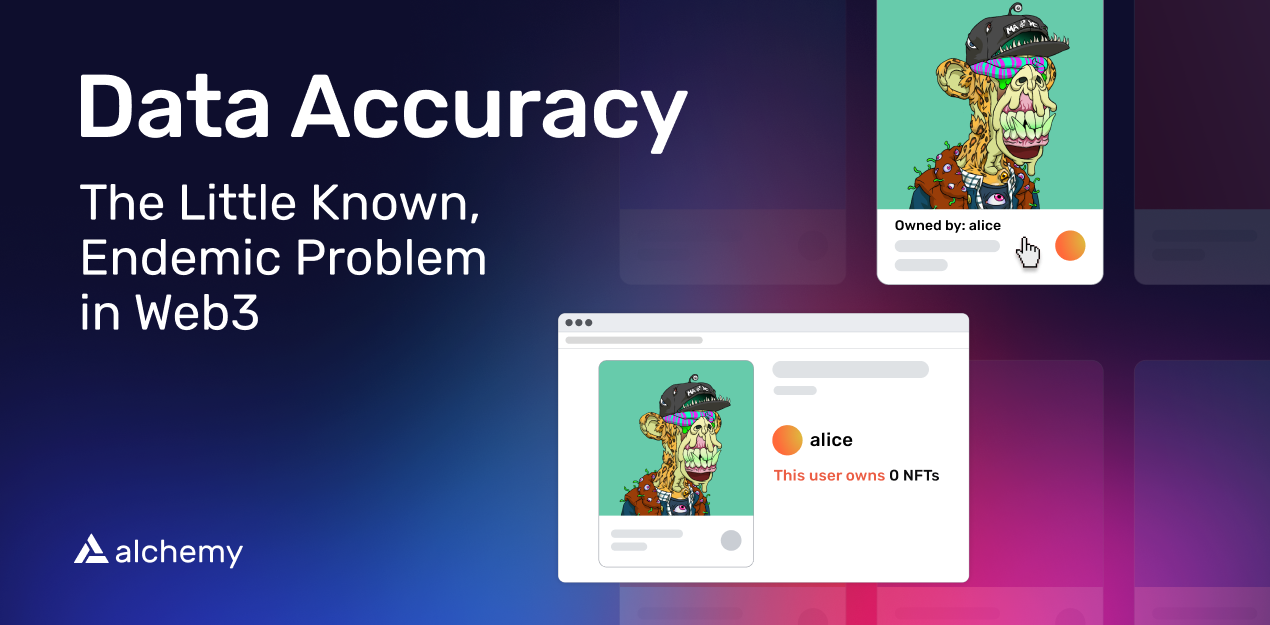
You can reproduce the benchmark using the following tool.
https://benchmark.alchemyapi.io/
What is Supernode?
Overview and purpose
Supernode is an infrastructure engine developed by Alchemy for Web3.
Alchemy Supernode is an infrastructure engine specifically designed for Web 3.0. The blockchain-native architecture delivers peak reliability by powering each piece of node functionality with dedicated, distributed infrastructure — the same kinds of systems used by Facebook and Amazon for achieving massive scale.
Rather than a simple node cluster, it consists of custom-built, scalable distributed systems. Alchemy describes this architecture as allowing its API to behave like a single node and thereby resolving data accuracy issues.
Supernode is much more than just a bunch of connected nodes - it's a combination of custom, scalable and distributed systems that essentially allow the API to act as a single node, which solves accuracy issues.
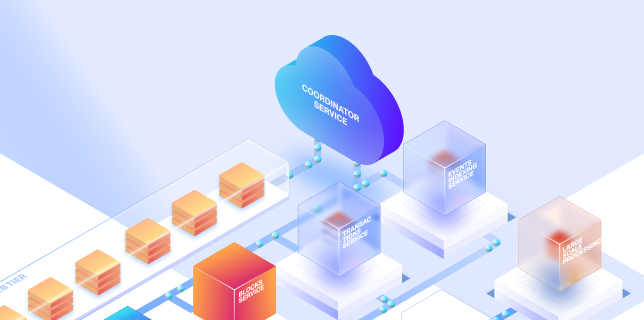
Architecture overview
According to Alchemy's official documentation, Supernode powers each piece of node functionality with dedicated distributed infrastructure.
The blockchain-native architecture delivers peak reliability by powering each piece of node functionality with dedicated, distributed infrastructure.
The following diagram is an architectural overview inferred by the author from public information. The actual internal implementation has not been disclosed, so treat the diagram as illustrative.
graph TB
    subgraph Client["Client"]
        App[Application]
    end

    subgraph Supernode["Supernode (inferred architecture)"]
        Coordinator[Coordinator service<br/>Vox Nodi]

        subgraph NodeClients["Multiple client implementations"]
            Geth[Geth]
            Erigon[Erigon]
            Parity[Parity]
        end
    end

    App --> Coordinator
    Coordinator --> Geth
    Coordinator --> Erigon
    Coordinator --> Parity
Client requests pass through a coordinator service (Vox Nodi) and are distributed across multiple Ethereum client implementations. According to Alchemy, it runs different Ethereum client implementations in parallel.
Alchemy runs different implementations of the Ethereum client, including geth, Erigon and Parity. This essentially triples the backend maintenance work required, but it is hugely valuable in service of heterogeneity: the chance that these clients have the same bug is essentially zero.
If a particular client has a bug, other implementations can compensate, improving overall system reliability.
The role of the coordinator service
At the core of Supernode is a proprietary coordinator service developed by Alchemy.
Alchemy Supernode also ensures the data is always correct, real-time, and in sync across every corner of the system thanks to a proprietary coordinator service. This allows Alchemy Supernode to scale quickly, gracefully, and infinitely so developers never need to worry about maintaining infrastructure again.
The coordinator service is responsible for the following functions.
flowchart TB
    subgraph Coordinator["Coordinator service"]
        Sync[Data synchronization management]
        Route[Query routing]
        Validate[Data validation]
        Scale[Scaling control]
    end

    subgraph Functions["Key functions"]
        F1[Maintain real-time synchronization]
        F2[Route to appropriate nodes]
        F3[Verify data accuracy]
        F4[Scale dynamically with load]
    end

    Sync --> F1
    Route --> F2
    Validate --> F3
    Scale --> F4
The diagram illustrates four key functions of the coordinator service. Synchronization management keeps the overall system in sync in real time, while query routing directs requests to appropriate nodes. Data validation checks the accuracy of returned data, and scaling control expands the infrastructure dynamically in response to demand.
How Vox Nodi works
What is Vox Nodi?
Vox Nodi, Latin for 'voice of the nodes', is a consistency layer developed by Alchemy.
Alchemy built an explicit consistency layer called Vox Nodi (the voice of the nodes). Vox Nodi's responsibility is to guarantee that any blockchain request will return a consistent result.
https://akalankapathirage.medium.com/vox-nodi-aka-voice-of-the-nodes-290bfb949a08
How the consensus algorithm works
Vox Nodi runs a consensus algorithm across Alchemy's infrastructure. Each infrastructure component can vote on the correct state of the blockchain.
This works by essentially running a consensus algorithm across the infrastructure, where each piece of the infrastructure can vote on the correct state of the blockchain. By correctly routing and tweaking queries, this system ensures that despite various nodes having different views of transaction data at any given time, the results are always consistently accurate.
https://akalankapathirage.medium.com/vox-nodi-aka-voice-of-the-nodes-290bfb949a08
The voting process can be illustrated as follows.
sequenceDiagram
    participant Client as Client
    participant VoxNodi as Vox Nodi
    participant Node1 as Node 1
    participant Node2 as Node 2
    participant Node3 as Node 3

    Client->>VoxNodi: Data request
    VoxNodi->>Node1: State query
    VoxNodi->>Node2: State query
    VoxNodi->>Node3: State query
    Node1-->>VoxNodi: Block #100
    Node2-->>VoxNodi: Block #100
    Node3-->>VoxNodi: Block #99
    VoxNodi->>VoxNodi: Tally votes and reach agreement
    VoxNodi-->>Client: Block #100 (verified)
The diagram illustrates how Vox Nodi reconciles state across nodes. The nodes vote on the data they have received, and data is returned to the client only after its accuracy has been confirmed. In this example, nodes 1 and 2 return Block #100, while node 3 returns Block #99. Vox Nodi accepts Block #100 as the correct value by majority vote and returns it to the client.
How data consistency is maintained
Vox Nodi, Supernode's coordination layer, runs constant system checks to ensure the secondary infrastructure has the latest data, and therefore, any requests for data (e.g., block number, txn logs, txn receipts) will be accurate.
Vox Nodi continuously checks that the secondary infrastructure has the latest data. Alchemy describes these checks as ensuring the accuracy of data requests, including block numbers, transaction logs, and transaction receipts.
The following table summarizes the key technical elements used to maintain consistency.
| Element | Description |
|---|---|
| Continuous system checks | Continuously monitor whether all nodes have the latest data |
| Query routing | Direct requests to appropriate nodes |
| Vote-based validation | Verify data accuracy through agreement among multiple nodes |
| Real-time synchronization | Detect and resolve discrepancies between nodes immediately |
The following conceptual diagram illustrates how Vox Nodi maintains data consistency.
flowchart TB
    subgraph Monitor["Continuous monitoring"]
        Check[System checks]
    end

    subgraph Nodes["Nodes"]
        N1[Node 1<br/>Block #100]
        N2[Node 2<br/>Block #100]
        N3[Node 3<br/>Block #99]
    end

    subgraph Action["Consistency actions"]
        Detect[Detect lag]
        Sync[Wait for synchronization or exclude]
    end

    Check --> N1
    Check --> N2
    Check --> N3
    N3 --> Detect
    Detect --> Sync
Vox Nodi continuously monitors all nodes, detects lagging nodes (node 3 in this example), and either temporarily excludes them from request routing or waits for them to finish synchronizing.
Query routing in detail
Vox Nodi's query routing differs from ordinary load balancing. It selects an appropriate node based on the type of request and how fresh the requested data needs to be.
flowchart LR
    subgraph Request["Request classification"]
        R1[Latest block lookup]
        R2[Historical block lookup]
        R3[Transaction submission]
    end

    subgraph Routing["Routing decisions"]
        Latest[Only up-to-date nodes]
        Archive[Archive node]
        Broadcast[Broadcast to all nodes]
    end

    R1 --> Latest
    R2 --> Archive
    R3 --> Broadcast
The diagram illustrates routing decisions based on request type. Requests for the latest block are routed to the most up-to-date nodes, while historical block data is retrieved from archive nodes. Transaction submissions are broadcast to multiple nodes to improve the likelihood of successful processing.
Additional features
Smart WebSockets
Supernode provides enhanced WebSocket functionality for event monitoring.
Alchemy includes enhanced API methods and upgraded WebSockets to continuously listen for changes and automatically handle reconnection and backfilling missed events.
With a conventional WebSocket connection, any events that occur while the connection is down may be missed. Smart WebSockets address this problem.
sequenceDiagram
    participant App as Application
    participant WS as Smart WebSocket
    participant Node as Node

    App->>WS: Start event subscription
    WS->>Node: Establish connection
    Node-->>WS: Event A
    WS-->>App: Event A

    Note over WS,Node: Disconnected (e.g. network failure)

    WS->>Node: Automatic reconnection
    Node-->>WS: Event B, C (missed events)
    WS-->>App: Event B, C (backfill)
    Node-->>WS: Event D
    WS-->>App: Event D
The diagram illustrates automatic reconnection and backfilling in Smart WebSockets. Events that occur while the connection is down (Events B and C) are automatically backfilled after reconnection. However, some events may be missed if the connection remains down for 120 blocks (approximately 20 minutes) or longer.
Archive data access
Supernode provides unlimited access to historical blockchain data.
Archive data is data on the blockchain that is older than 128 blocks, which is approximately 4 epochs or 25.6 minutes old.
A typical full node retains state for only the most recent 128 blocks. Accessing older state requires an archive node, which is expensive to operate.
graph LR
    subgraph FullNode["Full node"]
        Recent[Last 128 blocks<br/>About 25 minutes]
    end

    subgraph ArchiveNode["Archive node"]
        All[Entire history from genesis]
    end

    subgraph Supernode["Supernode"]
        Both[Access to both<br/>Available on the free plan]
    end
The diagram illustrates the difference in data retention between full nodes and archive nodes, and shows that Supernode can access both. Archive data is available through Supernode even on the free plan, making it possible to fork the entire chain from the genesis block (the first block).
Evolution to Cortex
From Vox Nodi to Cortex
Vox Nodi proved successful as a consistency layer and was handling large volumes of traffic for projects such as OpenSea, 0x, and Polymarket by 2021. Alchemy subsequently expanded the infrastructure across multiple regions, building on Vox Nodi.
Architected from the ground up over the last 2 years, Cortex was trained on data from 7 years powering hundreds of billions in transactions for the top crypto companies worldwide.
As of this article's publication, a new engine called Cortex powers the entire developer platform. Cortex supports all of its services, including the RPC API, Data API, Gasless Transactions, and Rollups.
Cortex features
Alchemy has built Cortex, the first intelligent blockchain engine, designed to deliver what other providers can't.
Alchemy positions Cortex as the world's first intelligent blockchain engine. It uses AI trained on seven years of production data and trillions of requests to fundamentally change how applications interact with blockchains.
Alchemy launched Cortex, an AI-powered blockchain engine that reduces latency to under 50 ms and boosts node throughput by up to 1000x.
The following table lists the improvements attributed to Cortex.
| Metric | Improvement | Source |
|---|---|---|
| Speed | 2.5x faster | Alchemy |
| Reliability | 5x improvement | Alchemy |
| Throughput | Up to 1,000x | The Block |
| Average response time | Under 50 ms | Alchemy |
The following diagram illustrates Cortex's layered architecture.
graph TB
    subgraph Intelligence["Intelligence layer"]
        AI[AI routing<br/>Trained on trillions of queries]
    end

    subgraph Infra["Infrastructure layer"]
        Bare[Bare-metal servers]
        Dark[Dark fiber connections]
        Multi[Multi-region]
    end

    subgraph Reliability["Reliability layer"]
        Failover[Automatic failover]
        Threat[AI threat detection]
    end

    AI --> Bare
    AI --> Dark
    AI --> Multi
    Bare --> Failover
    Multi --> Failover
    Failover --> Threat
The diagram depicts three main layers of Cortex. At the intelligence layer, AI determines the optimal routing for requests. At the infrastructure layer, bare-metal servers and dark fiber connections provide high-speed communication. At the reliability layer, automatic failover and AI-based threat detection help maintain availability.
AI-based routing
Smart routing algorithms trained on trillions of global queries and intelligent request segmentation deliver up to 2.5x faster queries, all around the world.
Cortex uses AI-driven traffic optimization. Context-aware routing directs requests to the most appropriate nodes.
Cortex employs AI-driven traffic optimization and context-sensitive routing to manage increases in global activity without experiencing downtime or reduced performance.
The AI routing system is trained on trillions of queries and maintains high throughput and low latency even at peak times.
flowchart TB
    subgraph AIRouting["AI routing system"]
        Input[Incoming request]
        Analysis[Request analysis<br/>Method type / data requirements / region]
        ML[Machine learning model<br/>Trained on trillions of queries]
        Decision[Select optimal node]
    end

    subgraph Factors["Factors considered"]
        F1[Current node load]
        F2[Geographic distance]
        F3[Synchronization status]
        F4[Historical response times]
    end

    Input --> Analysis
    Analysis --> ML
    F1 --> ML
    F2 --> ML
    F3 --> ML
    F4 --> ML
    ML --> Decision
The diagram illustrates how the AI routing system makes decisions. It analyzes incoming requests and uses a machine learning model to evaluate factors including current node load, geographic distance, synchronization status, and historical response times before selecting the most appropriate node.
Production results (2024)
During the 2024 U.S. Presidential election, Polymarket processed $3.3 billion in bets with 125,000 concurrent users, at one point handling 20% of all transactions on the Polygon network. Not a single transaction failed due to infrastructure.
During the 2024 US presidential election, Polymarket processed $3.3 billion in transactions using Cortex. It handled 125,000 concurrent users and, at one point, 20% of all transactions on the Polygon network, without a single infrastructure-related failure, according to Alchemy.
Architecture in detail
Shuffle Sharding
Shuffle Sharding is a technique for minimizing interference between tenants in a multi-tenant environment. It was originally developed by AWS and is also used by Supernode.
Its shuffle sharding architecture isolates tenants to prevent performance degradation caused by noisy neighbors.
Conventional sharding divides nodes into fixed groups. Shuffle Sharding instead assigns each tenant a random combination of nodes, much like dealing a hand of cards.
A standard deck of cards has 52 different playing cards and 2 jokers. If we shuffle a deck thoroughly and deal out a four card hand, there are over 300,000 different hands.
graph LR
    subgraph Traditional["Conventional sharding"]
        T1A[Tenant A] --> S1[Shard 1]
        T1B[Tenant B] --> S1
        T1C[Tenant C] --> S2[Shard 2]
        T1D[Tenant D] --> S2
    end

    subgraph Shuffle["Shuffle Sharding"]
        T2A[Tenant A] --> N1[Node 1]
        T2A --> N2[Node 2]
        T2B[Tenant B] --> N2
        T2B --> N3[Node 3]
        T2C[Tenant C] --> N3
        T2C --> N4[Node 4]
    end
The diagram illustrates the difference between conventional sharding and Shuffle Sharding. With conventional sharding, tenants assigned to the same shard affect one another. With Shuffle Sharding, each tenant has a different combination of nodes, statistically minimizing the impact on other tenants when one tenant encounters a problem.
In a pool of 52 servers with a shard size of 4, we can accommodate 270,725 shards (i.e., 270,725 clients) with virtually no impact of one client on another.
For example, a pool of 52 servers with a shard size of 4 allows for 270,725 combinations. The probability that two randomly selected tenants do not share exactly the same set of instances is very high.
Alchemy Edge Proxy
Alchemy Edge Proxy is Alchemy's in-house DDoS protection and routing layer. It removed the last third-party dependency from the critical path.
Purpose-built bare-metal hardware, dark fiber connections, and elastic scaling deliver throughput far beyond industry standards.
Bringing Edge Proxy in-house has the following benefits.
| Improvement | Description |
|---|---|
| Lower latency | Routing takes place closer to users |
| Greater reliability | Eliminates a category of vendor-level failures |
| Greater control | Allows stricter reliability guarantees |
During the global Cloudflare outage on November 18, 2024, Alchemy's services were largely unaffected. This illustrates how Cortex was designed to withstand such reliability scenarios.
Integration with Kubernetes
The Cortex engine runs on bare-metal servers, not generic cloud infrastructure. Alchemy optimized the system with Kubernetes pod co-location and Istio for locality-aware routing.
Cortex incorporates extensive system-level engineering. It runs on bare-metal servers rather than generic cloud infrastructure, avoiding virtualization overhead.
Key optimizations in its Kubernetes integration include the following.
- Pod co-location Kubernetes affinity is used to run latency-sensitive workloads on the same machine.
- Istio locality-aware routing Prioritizes traffic within a node and reduces unnecessary network hops.
- GitOps-style routing configuration Provides configuration management for safe rollouts.
Reliability features
Multi-region infrastructure, autonomous failovers, and AI-based threat detection keep apps performant even under extreme conditions.
Cortex achieves 99.995% uptime, supported by the following reliability features.
- Regional failover Immediately reroutes traffic when a region degrades.
- Isolated emergency backup stack Handles edge-case failures.
- Strict versioning and replication logic Prevents stale reads.
- Multi-layer failover Maximizes availability through failure handling at multiple layers.
Conclusion
This article examined Alchemy Supernode and Vox Nodi.
Supernode is more than a collection of nodes. It is carefully engineered infrastructure designed to achieve data consistency, scalability, and reliability together. Vox Nodi's consensus-based consistency guarantees and Cortex's next-generation intelligent routing help developers build blockchain applications with confidence.
For further details, refer to the following official resources.