Introduction
Hi, I'm cardene, a software engineer and technical writer focused on blockchain and AI.
I've also authored Japanese technical books on specification-driven development with LLMs and decentralized application (DApp) development.

I also build and publish a variety of tools, libraries, and open-source projects.
This article introduces bug bounty programs and their role in smart contract security. The platform descriptions and statistics reflect the original article's December 2022 context, rather than current offerings.
What is a bug bounty?

A bug bounty program rewards people for reporting security vulnerabilities in a product or service.
The Japanese Wikipedia article describes a system in which companies receive vulnerability reports from external researchers and compensate eligible submissions. Finding and fixing vulnerabilities before exploitation helps prevent security incidents. Its examples include Mozilla, Facebook, Yahoo!, Google, Microsoft, Cybozu, Pixiv, and LINE.
Source: Japanese Wikipedia: Bug bounty programs
In simple terms, organizations invite researchers to find bugs and pay rewards for qualifying reports. Although researchers may have specialized expertise, many programs are open to anyone who meets their participation requirements.
The perspective of an attacker can reveal weaknesses that developers overlook. Organizations may adopt bug bounties because they have limited internal security staff, want to supplement their existing security budget, or need additional perspectives on bugs their own team has missed.
Bug bounties for smart contracts

For an introduction to smart contracts, see:
https://japancryptocoin.org/2019/11/23/smart-contract-vending-machine/
Smart contract bug bounty programs similarly reward ethical security researchers for reporting eligible vulnerabilities.
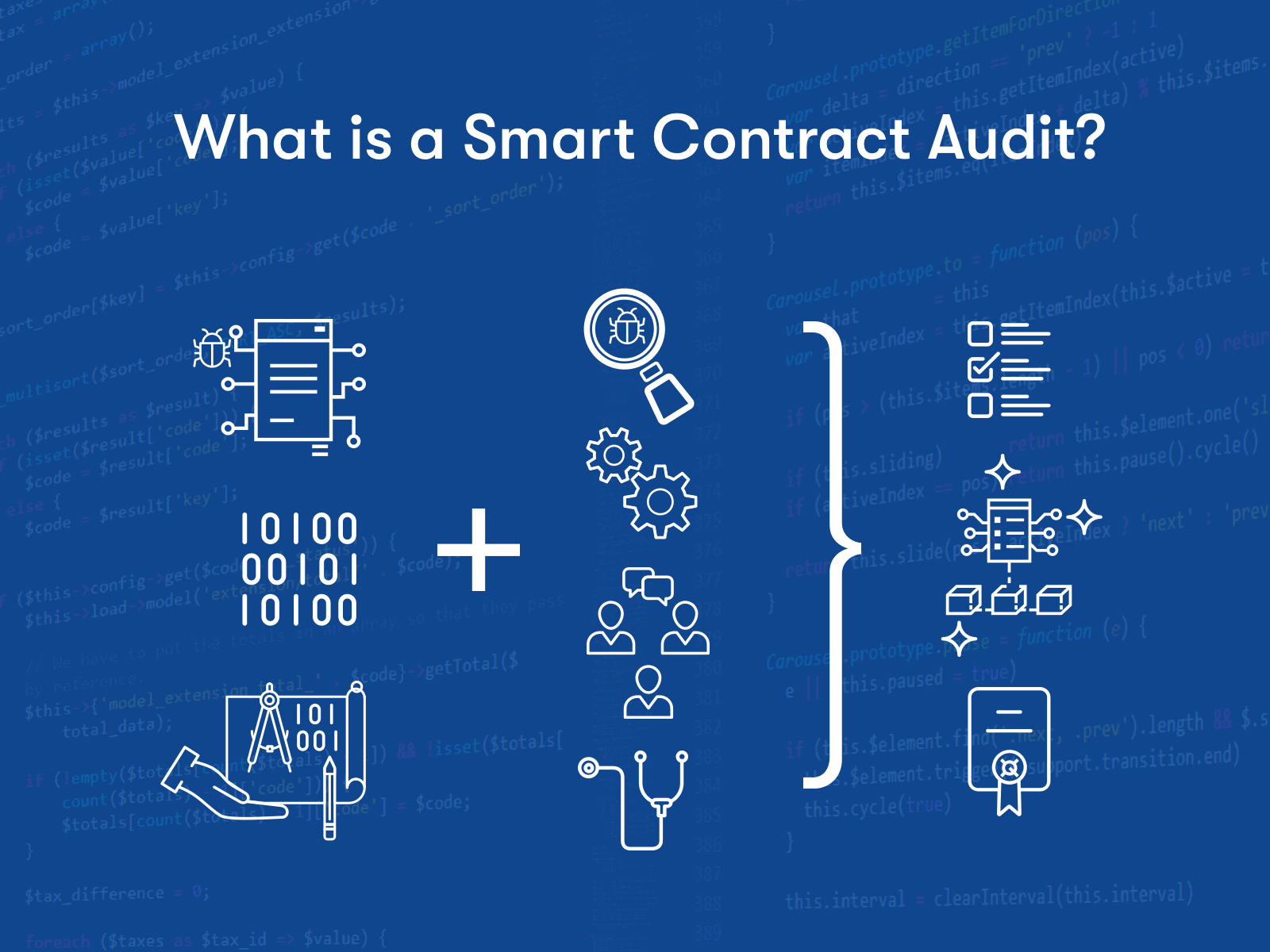
Another important term is a smart contract audit: a systematic examination of contract code and behavior to identify vulnerabilities, often before deployment.
Two common approaches to external security review are hiring an audit firm and organizing a public security review or bug bounty. A conventional bug bounty and a time-limited competitive audit are related but distinct formats.
A specialized audit firm may appear more reliable than an open group of researchers, but it also has limitations.
Potential limitations of audit firms
- The identity of each reviewer may not always be disclosed.
- The number of reviewers assigned to a project is finite.
- Liability for missed vulnerabilities depends on contractual terms; an audit is not a guarantee against exploitation.
- Individual researchers may receive less public recognition for findings attributed to the firm.
The original article cites a 2022 discussion about transparency and security incidents involving previously audited projects.

Competitive reviews and public bounty programs can address some of these limitations.
Potential advantages
- Public rankings or reports can identify participating researchers.
- Open competitions can attract many reviewers; some historical contests attracted more than 100 participants.
- Diverse reviewers may find additional vulnerabilities, although neither participation counts nor a bounty guarantee comprehensive coverage.
- Researchers may receive individual recognition for qualifying findings.
These formats can complement professional audits rather than replace them. Both sponsors and researchers can benefit from broader participation and independent perspectives.
Why are smart contract audits necessary?

A blockchain's consensus security does not ensure that applications running on it are secure.
Applications interact with blockchains through smart contracts. Vulnerabilities can lead to unauthorized transfers or other losses even when the underlying blockchain operates correctly.
Small implementation mistakes can put substantial assets at risk, and confirmed blockchain transactions are generally difficult or impossible for users to reverse unilaterally. Security review is therefore important. Users may also place more confidence in applications that publish credible audit reports, although an audit is not proof of safety.
The smart contract audit process

Audit firms
A typical engagement follows several stages.
1. Understand the specification
The audit team studies the project and its architecture. Good documentation helps reviewers understand expected behavior and identify deviations from the intended design.
Developers and auditors agree on a code-freeze point or a fixed revision. Developers should resolve known defects and unexpected behavior before handing over the agreed scope.
2. Perform manual and automated testing
Reviewers examine individual functions and interactions between components. Tests help developers and auditors establish a shared understanding of expected behavior.
Automated vulnerability detection tools can identify common problems and reduce repetitive work, allowing reviewers to devote more attention to complex bugs and unfamiliar vulnerability patterns.
3. Perform expert analysis
Automated tools can detect common issues but may not understand the developer's intentions or economic assumptions. Expert analysis is necessary to investigate vulnerabilities beyond the tools' coverage.
4. Prepare the audit report
The audit team documents findings and communicates them to the development team.
5. Address feedback and prepare the final report
Auditors and developers discuss findings. Developers incorporate appropriate fixes, and reviewers follow up on remediation. This reduces remaining risk without guaranteeing that all vulnerabilities have been eliminated.
Competitive audits and bug bounties
The following historical example uses Code4rena to illustrate a competitive audit workflow.
1. Apply to organize a contest
Prepare the prize pool, contest dates, GitHub repository, project documentation, and review scope.
2. Run the contest
The historical duration described in the original article was approximately three to seven days.
3. Sponsor review and feedback
The historical target was day five, while the reported average was around day fourteen.
4. Complete judging and announce results
The target was day nine, compared with a reported average of days 25–34.
5. Distribute awards and resolve findings
The target was day fourteen, compared with a reported average of days 32–44.
6. Publish the audit report and contest findings
The target was day twenty-one, compared with a reported average of days 42–60.
The original article noted that the platform was analyzing delays to improve its workflow. These figures are historical examples, not current service commitments.
Examples of security incidents
The loss figures below are historical estimates from the original article and may differ from later assessments or net losses after recoveries.
Poly Network
Reported amount involved: approximately $600 million.
The incident affected contracts on BSC, Polygon, and Ethereum and exposed weaknesses in cross-chain contract security. Contemporary accounts report that the attacker returned funds and declined an offer of a security consulting role.
Ronin
Reported loss: approximately $550 million in the original article's valuation.
The Ronin bridge allowed Axie Infinity players to move assets between networks. The theft involved more than 173,000 ETH and 25 million USDC following compromise of validator infrastructure associated with Sky Mavis and the Axie DAO. This illustrates risks arising from bridge authorization and validator security.
Grim Finance
Reported loss: approximately $30 million.
A reentrancy vulnerability affected deposit accounting. The original article notes that the project had previously received an audit from Solidity Finance and that protection against reentrancy was incorrectly assessed. Auditors must examine the actual effectiveness of safeguards.
Meerkat Finance
Reported loss: approximately $31 million.
The incident occurred shortly after launch and involved privileged contract operations affecting user funds. The original article reports losses of approximately 73,000 BNB and 14 million BUSD. Privileged access and administrative authority are important audit subjects.
Vee Finance
Reported loss: approximately $35 million.
The incident involved weaknesses in slippage checks for leveraged trading. It illustrates the need to validate economic constraints and transaction outcomes.
PancakeBunny
Reported loss: approximately $45 million.
Manipulation of token pricing affected the protocol's economic behavior. Price sources and assumptions form part of a protocol's security model.
Compound
Reported amount involved: approximately $150 million in the original article.
A faulty token distribution mechanism led to unintended COMP distributions. The original account describes an initial amount of approximately $80 million followed by a further $68.8 million while governance procedures delayed remediation. This illustrates the importance of accounting correctness and the operational constraints of governance-controlled upgrades.
Smart contract audit firms

These descriptions reflect the original article's historical research. Verify current offerings and track records separately.
Hacken
The company had audited more than 700 projects according to the original article. Its coverage included Ethereum, Solana, Avalanche, Polygon, and other EVM-compatible networks. It also offered products intended to improve smart contract security.
SlowMist

A blockchain security company founded in 2018 by a team with extensive network security experience. It cooperates with security organizations to monitor stolen assets. The original article reported more than 60 customers and approximately $1 billion in recovered assets.
SolidProof

The company uses manual and automated approaches to vulnerability identification and offers KYC-related services for DeFi projects. The original article reported more than 500 contract audits within a year.
Consensys Diligence

The original article described more than 100 reviewed projects, supported by experienced auditors and security analysis tools. Examples included Uniswap, 0x, Balancer, and Aave.
OpenZeppelin
OpenZeppelin is known for its widely used Solidity contract libraries. The original article cited more than $10 billion in protected assets and work involving Aave, Compound, Coinbase, and the Ethereum Foundation. It also described Defender as a service for automating contract operations, including a free offering at that time.
Bug bounty platforms

Code4rena
The original article recommended this competitive audit platform as a starting point for researchers seeking their first rewards.
Sherlock

The platform was described as offering security reviews involving independent experts in addition to competitive audits. The original learning path suggested exploring it after gaining experience in Code4rena contests.
Immunefi

The original article reported that Immunefi programs covered more than $25 billion in funds across projects including Synthetix, Chainlink, SushiSwap, PancakeSwap, Bancor, Cream Finance, Compound, Alchemix, and Nexus Mutual.
Its blockchain security programs span multiple chains and networks. The original learning path suggested exploring these programs after participating in competitive audits. This is a possible progression, not a mandatory ranking of platforms or their current difficulty.
Learning to audit smart contracts

Smart contract security requires knowledge of Solidity, token standards, protocol behavior, and vulnerability analysis. These resources provide a starting point.
Learning path
- Learn Solidity fundamentals.
- Study Solidity vulnerability patterns in authorized learning environments.
- Learn ERC-20 and ERC-721.
- Study DeFi protocols.
- Practice with deliberately vulnerable training contracts.
- Participate in authorized competitive audits or bug bounty programs.
Always check current program scope and testing restrictions before interacting with real systems. I plan to cover these topics in future articles.
Conclusion

Bug bounty programs give external security researchers a way to report vulnerabilities and receive rewards. Combined with professional audits, development testing, and ongoing security practices, they help improve smart contract security.
I hope this introduction helps you get started. Feel free to reach out on Twitter with questions. I regularly share information about Solidity, blockchains, and Web3, including articles I find useful.
References

https://medium.com/immunefi/why-auditors-should-hunt-bugs-on-immunefi-5196b6d82552
https://academy.binance.com/en/articles/what-is-a-smart-contract-security-audit