Introduction
Hi, I'm cardene, a software engineer and technical writer focused on blockchain and AI.
I've also authored Japanese technical books on specification-driven development with LLMs and decentralized application (DApp) development.

I also build and publish a variety of tools, libraries, and open-source projects.
Overview of Cloudflare Wallets
Cloudflare Wallets was announced as a wallet that lets agents use funds provided by an owner to purchase APIs and content within specified conditions.
The intended division of responsibilities is for the owner to set a budget and the agent to select the providers needed for research or development.
For example, consider asking a research agent to investigate a market using paid statistical data. When a human handles purchases on the agent's behalf, they register for each unfamiliar API, configure a payment method, and pass the resulting API key to the agent. Even a one-off data request requires this initial setup.
The Wallets concept is to let the owner define budgets and approved sellers while delegating individual small purchases to the agent.
An Account Wallet manages the funds, a Virtual Wallet supports the agent's operations, and cloudflare.pay provides a persistent name.
However, the official information checked on November 12, 2026, indicated that only name reservations were available.
A reserved name is associated with a Cloudflare account, and the public page displays only the reserved Handle.
Reserving a name does not activate custody, sending, or receiving of funds.
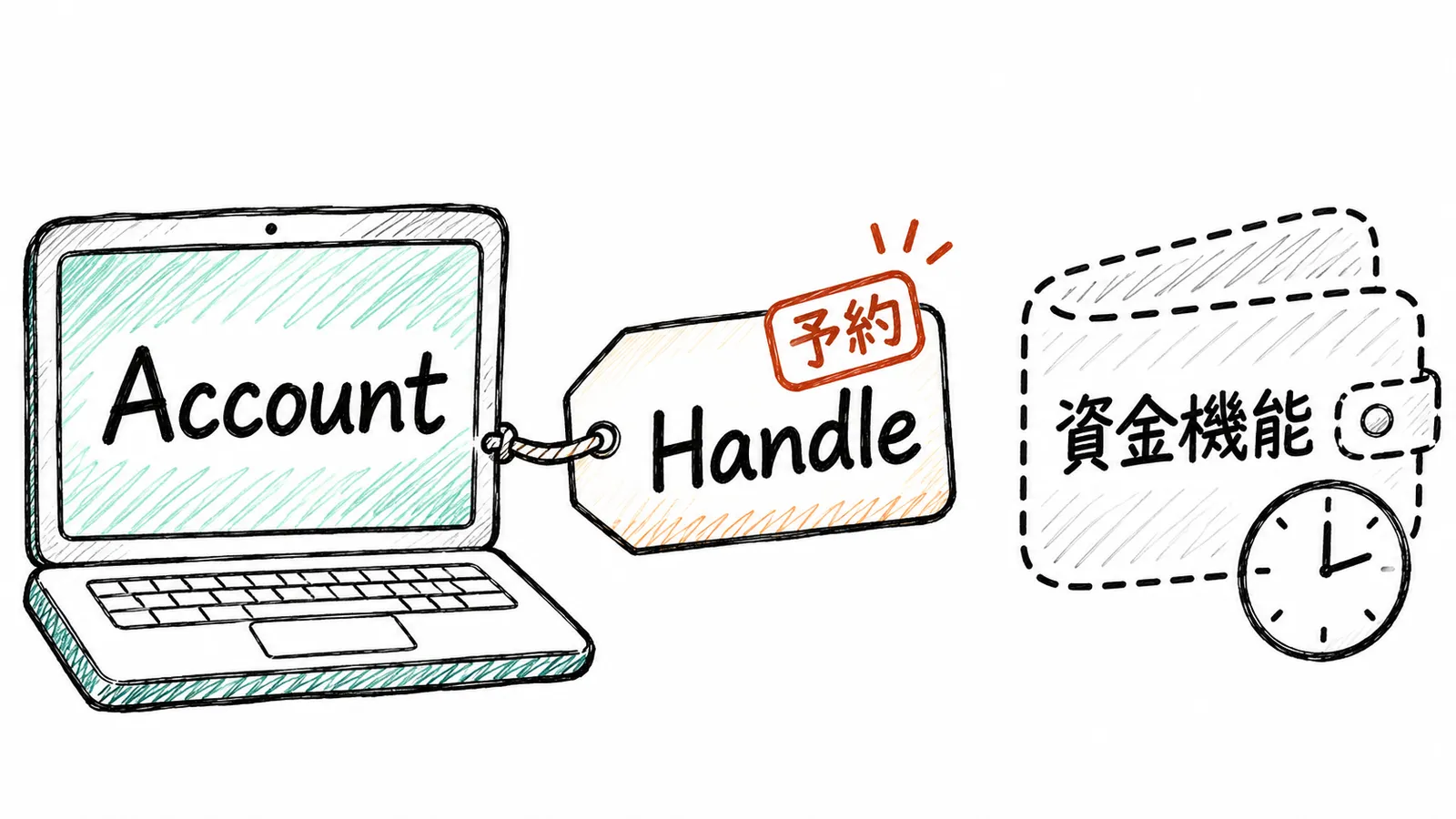
The original illustrations are retained in this translation and contain Japanese labels.
Some components for integrating purchases, including an available SDK and a closed-beta payment service, are already available.
Wallet Architecture
Even when the same owner operates a research agent and a development agent, the products they should purchase may differ.
The owner may want to authorize statistical data for the research agent and inference APIs for the development agent, assigning each a separate budget.
Wallets is designed to separate these purchasing permissions from the owner's fund management.
The owner adds funds to the Account Wallet, withdraws funds, and delegates spending to agents.
The first planned funding capabilities are holding, sending, and receiving stablecoins.
An agent operates its Virtual Wallet using an API key and makes purchases within the owner's specified conditions.
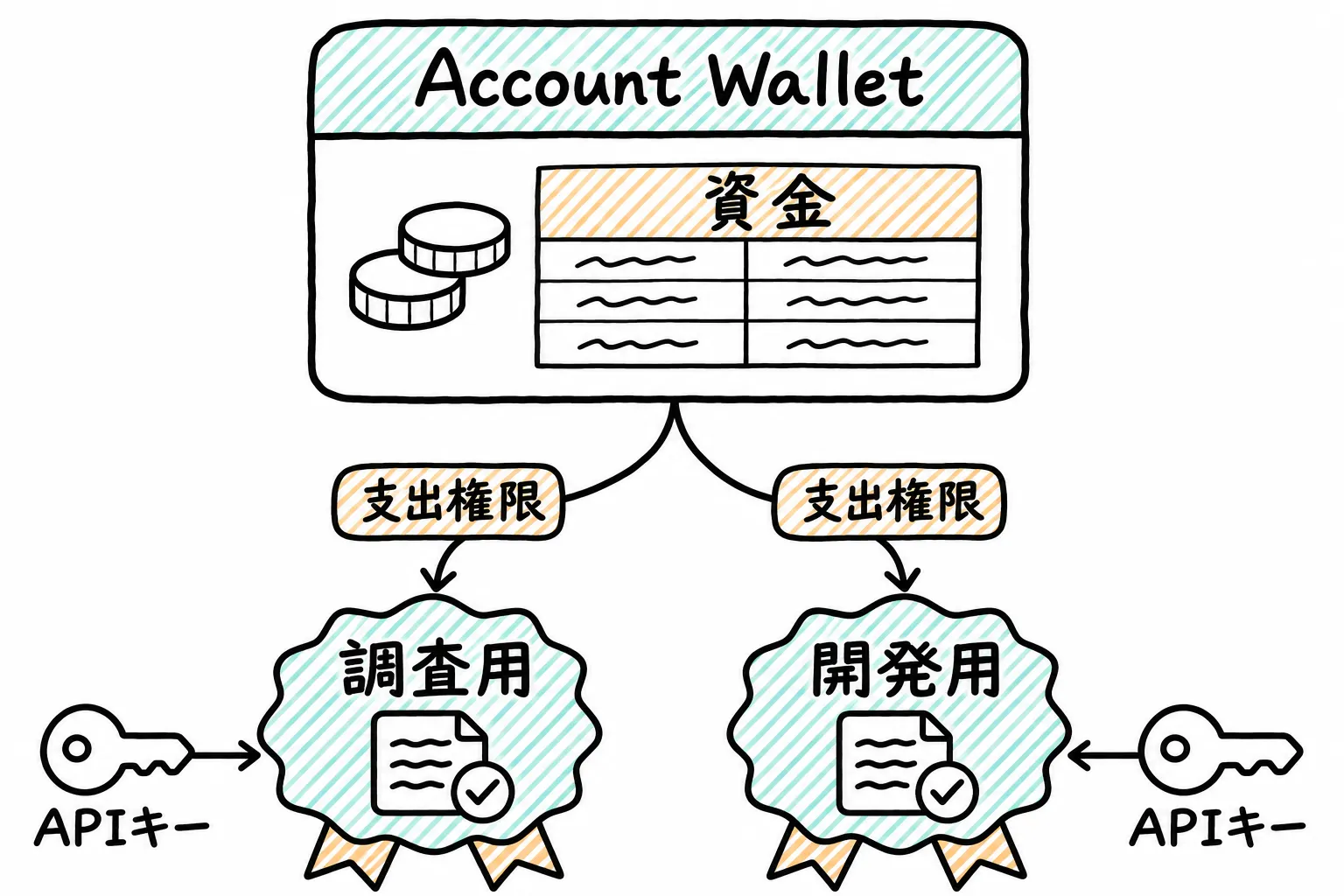
This division lets the owner consolidate fund management while delegating purchases according to each agent's responsibilities. Changing a research instruction alone is not intended to grant the agent unlimited spending or access to arbitrary sellers. The central idea is to configure the work assignment separately from the permission to spend money.
On the other hand, the public documentation does not establish whether each Virtual Wallet has an independent on-chain address or whether funds are transferred into separate balances.
The announced design describes the separation of fund management from spending authority; it does not establish that internal transfers between accounts have been implemented.
Spending Policies
To delegate purchasing, owners must decide both how much an agent can spend and whom it can buy from. The announced conditions include an aggregate allowance, approved sellers, and a maximum amount per transaction. The aggregate limit restricts cumulative small purchases, while the per-transaction limit restricts individual expensive purchases.
Suppose an owner configures a research agent with a weekly budget of $100, a $1 maximum per purchase, and Data Provider A as its only approved seller. If A's API costs $0.01 per call, five calls cost $0.05 in total. The total falls within the weekly budget, and each purchase falls within the per-transaction limit.
Even with the same budget, different requests encounter different policy constraints.
| Purchase request | Relationship to the conditions |
|---|---|
| Buy from A for $0.01 | Both the seller and per-transaction amount are permitted |
| Buy from A for $2 | Exceeds the $1 per-transaction limit |
| Buy from B for $0.01 | The seller is not approved, despite the low amount |
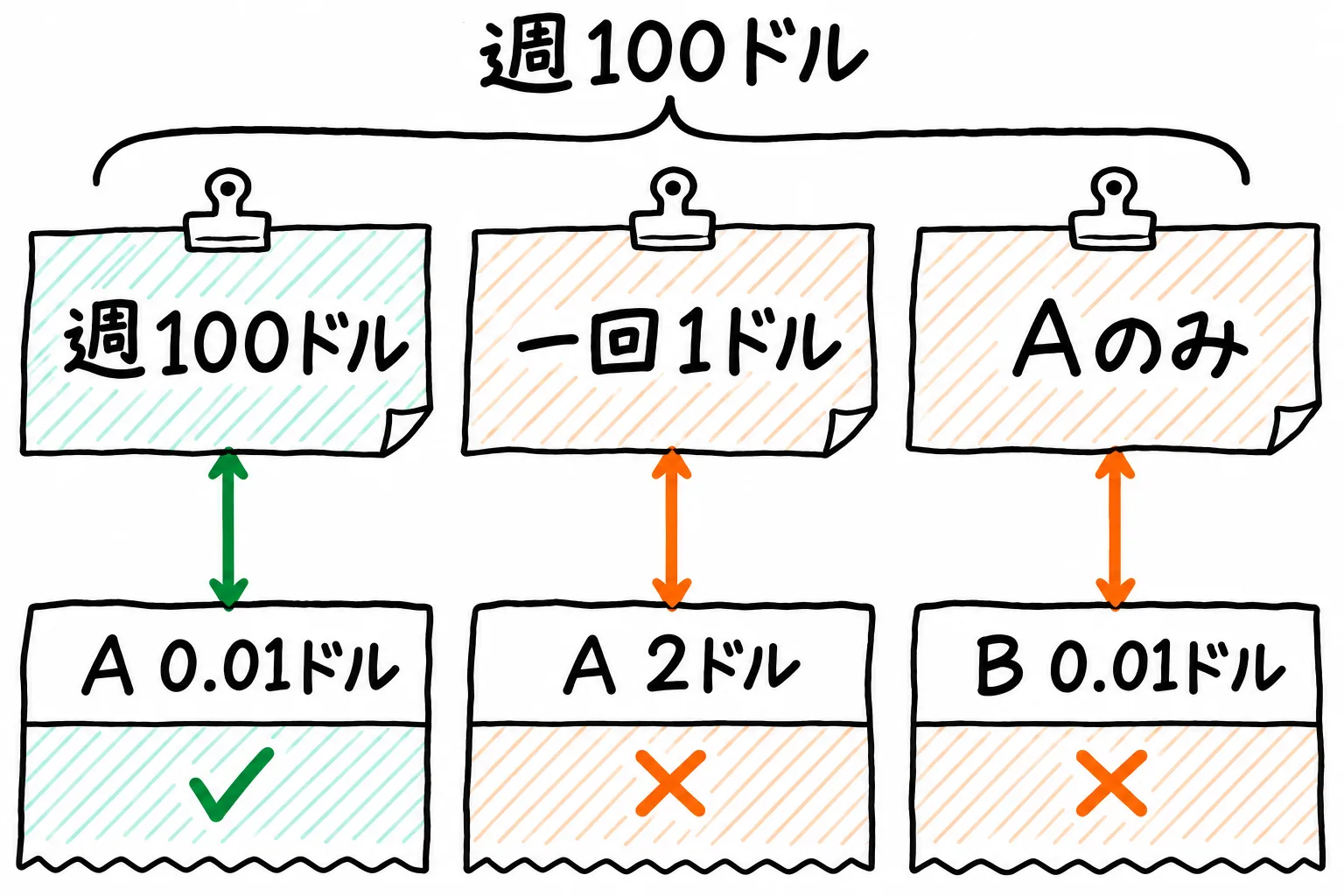
A separate seller constraint prevents requests to pay an unrelated provider merely because the purchase is inexpensive. These calculations illustrate the announced conditions. They do not assume particular product implementations for fee accounting, weekly reset times, or reserving balances for concurrent purchases.
Additional purchases after exhausting the budget return to the owner's or administrator's discretion. The responsible person reviews the spending and decides whether to raise the limit or authorize a one-time exception. This can reduce the burden of manually handling each small purchase while leaving decisions about expanding purchasing authority with humans.
These conditions constrain spending. Whether the purchased data is accurate and how the agent uses it in its response require separate checks.
Agent Identification
When sellers want to adjust terms for returning customers, identifying the buyer behind a request can make that decision easier.
For example, when a research agent belonging to the same owner returns, the seller can associate it with past activity instead of treating it as a different anonymous client every time.
cloudflare.pay is a proposed naming mechanism for this persistent identification.
In the announced example research.example.cloudflare.pay, a human can recognize a research agent named research belonging to the owner example.
Buyers may optionally present their names, and sellers can choose policies such as offering particular terms to known buyers or requesting additional verification from anonymous buyers.
Presenting a name alone does not establish that the request actually came from the same entity.
In the existing Web Bot Auth mechanism, bots sign HTTP requests, and verifiers use public keys to verify the request's origin.
A human-readable name and the verification of a cryptographic signature serve different purposes.
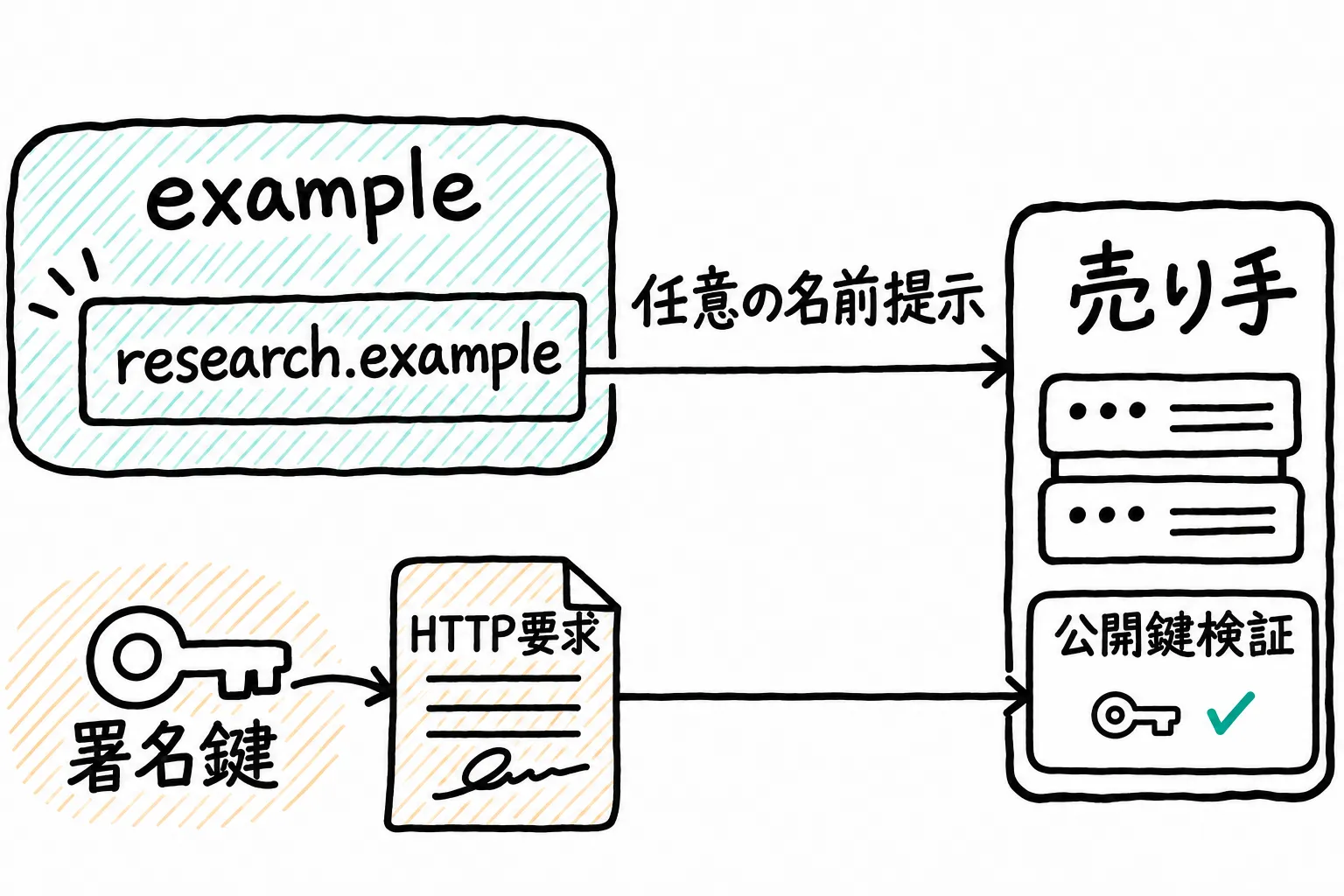
The Wallets announcement indicates an intention to associate key-based identification with readable names.
However, the complete formats for binding a name to an account and verifying delegated spending authority for a Virtual Wallet have not been published.
Verifying an HTTP request signature alone does not establish authority to spend funds or prove the identity of a real-world organization.
API Purchases and Sellers
When a research agent discovers an API costing $0.01 per call, the buyer's budget and the seller's price are determined by different parties.
The buyer determines whether the request meets its spending conditions, while the seller configures a price and receiving wallet for the relevant URL.
The seller-side component responsible for monetizing the resource is the Monetization Gateway.
Buyers and sellers use x402, which exchanges payment requirements and payment authorizations over HTTP.
The requested API returns a price, allowing the buyer to determine the cost of the request before consuming the resource.
Requesting a resource and purchasing it are connected through the same HTTP exchange.
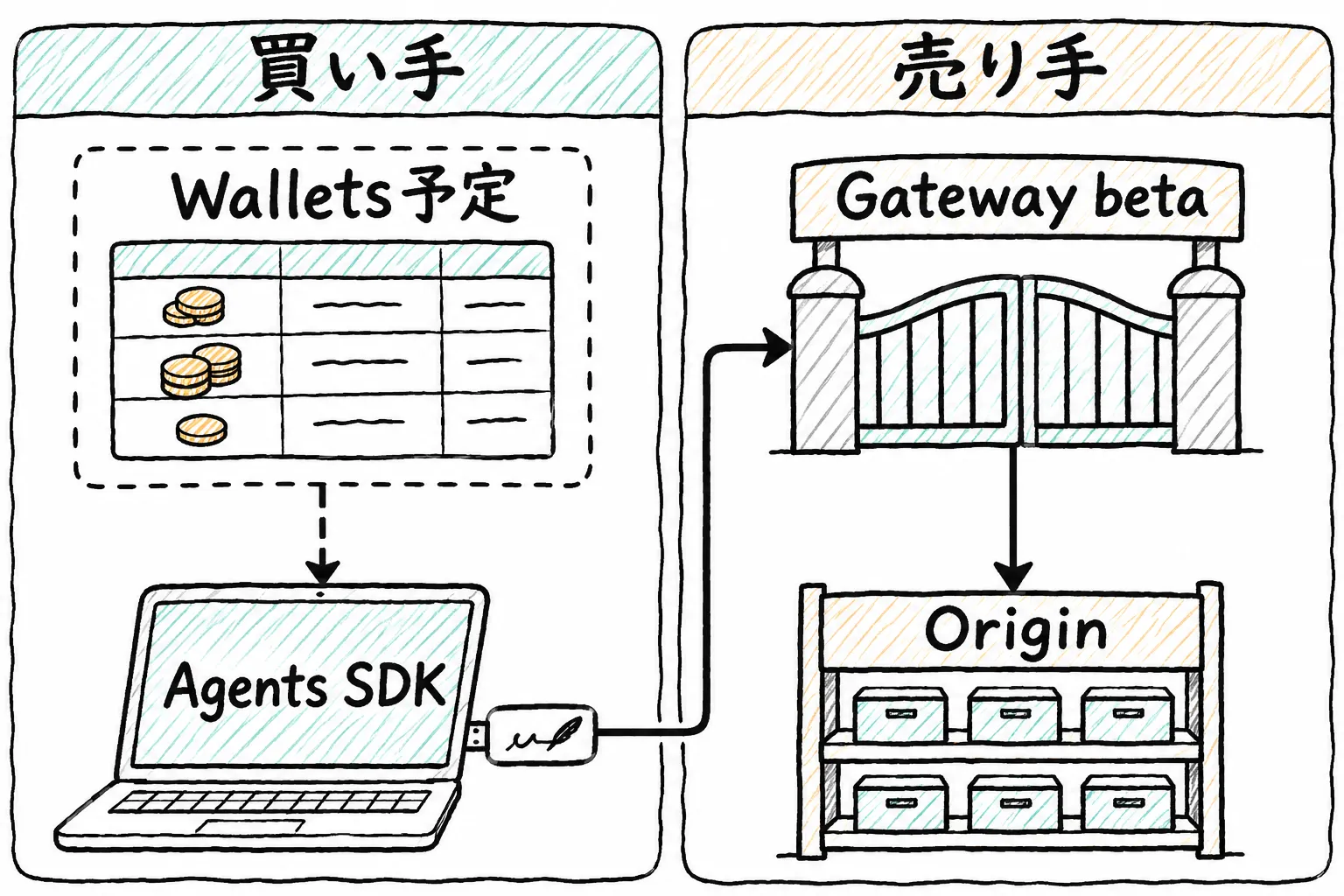
The Gateway is in closed beta for US-based buyers and sellers.
The following describes the published purchase flow for this Gateway.
It is distinct from an executed example using the planned funding APIs of Wallets.
Payment Requirements and Resource Delivery
When the buyer first sends a request to a paid API, the Gateway returns 402 Payment Required and a PAYMENT-REQUIRED header.
The JSON contained in this header includes the requested resource and payment options for purchasing it.
The buyer reads these options and checks not only the price but also whether it can pay using the specified network and asset.
The accepts array lists one or more payment options. A fixed-price option contains the following fields.
{
  "scheme": "exact",
  "network": "<提示されたネットワーク>",
  "asset": "<提示された資産の識別子>",
  "amount": "10000",
  "payTo": "<売り手の受取ウォレット>"
}
The example retains its original Japanese placeholders for the offered network, offered asset identifier, and seller's receiving wallet.
exact is a scheme for paying the specified fixed amount.
In the Gateway pricing table, one atomic unit represents $0.000001, so 10000 represents $0.01.
In addition to the amount, the buyer checks the following payment requirements.
| Field | Condition specified |
|---|---|
network |
Network used for payment |
asset |
Asset used for payment |
payTo |
Seller's receiving address |
The buyer pays using the selected conditions rather than substituting a different asset simply because the nominal amount matches.
After selecting the requirements, the buyer signs a payment authorization and requests the same API again with the PAYMENT-SIGNATURE header.
What is transmitted here is authorization to settle the payment under those conditions.
A signature is not proof that the funds have already been transferred.
The Gateway verifies the authorization before forwarding the request to the original API server, the origin.
After the origin prepares the data, the Gateway settles the payment through the Coinbase x402 Facilitator and returns the resource to the buyer upon success.
Requests that fail authorization verification or settlement do not receive the protected resource.
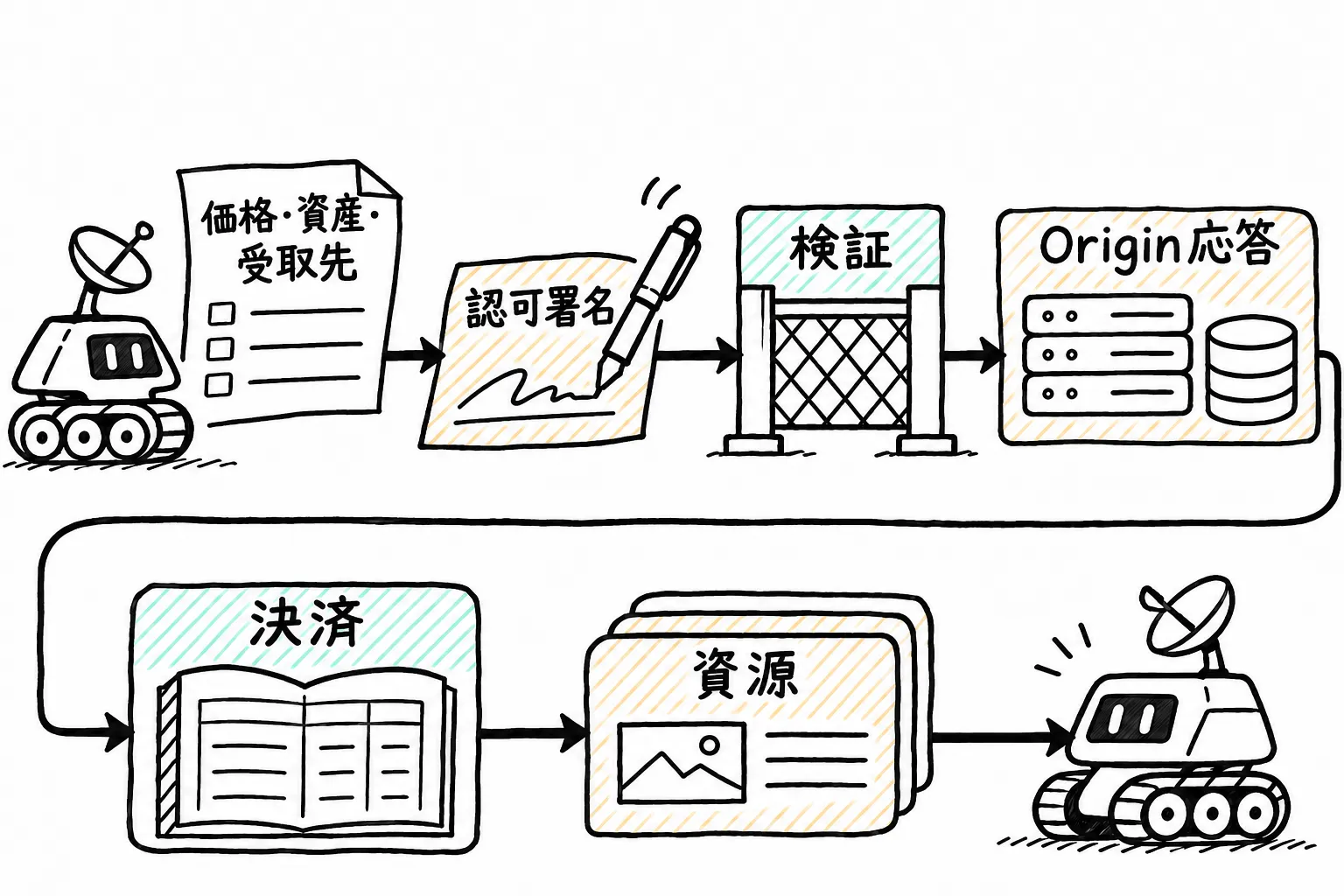
This exchange lets an agent discover the required API, read its price, select the conditions, and complete the purchase.
However, if the connection is interrupted, the buyer's inability to see a response does not mean settlement did not occur.
The buyer should check the HTTP and x402 results before deciding to retry and avoid generating a new payment authorization solely because of a communication failure.
The specific query and retransmission contracts of Wallets remain to be verified when its funding capabilities become available.
Seller Pricing and Access Control
Sellers can choose between providing resources for a fixed price and determining the price from actual usage.
With the fixed-price exact scheme, the buyer settles the amount offered.
For example, for an API costing $0.01, the buyer authorizes 10000 atomic units.
When usage cannot be determined before processing, the upto scheme allows authorization of a maximum amount.
If the buyer authorizes up to $0.10 and actual usage costs $0.03, the origin reports 30000 as the final amount against a maximum of 100000.
The buyer determines its maximum exposure before processing, and the seller calculates the price from actual usage afterward.
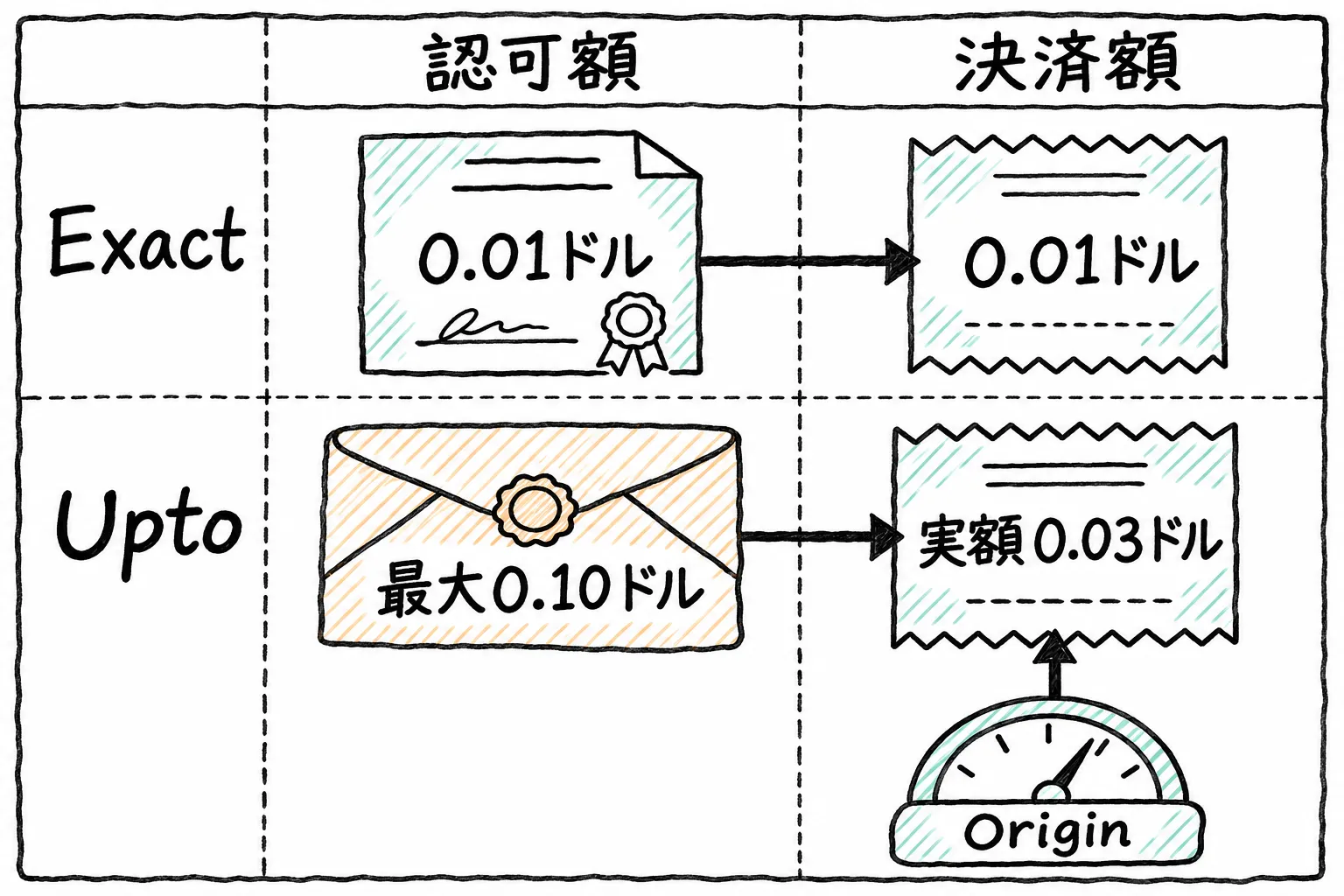
To report the actual amount, the origin sets the amount in the PAYMENT-SETTLEMENT header of a successful upto response.
The Gateway settles that amount, removes this internal header, and constructs the receipt information for the buyer.
The origin does not add this final-amount header to an exact response.
In the current Gateway described by the article, if the amount reported by the origin exceeds the authorized maximum, the maximum amount is settled. If the reported amount is zero, no settlement occurs.
The seller therefore checks how the calculated price is converted into atomic units and how it relates to the maximum amount.
This maximum is the amount authorized for a single purchase, distinct from the planned aggregate weekly budget of a Virtual Wallet.
The origin also verifies whether the incoming request is authorized to receive the paid resource.
The Gateway provides the verification result in a PAYMENT-CONTEXT header as a JWT signed by Cloudflare.
A JWT is a format whose signature can be verified to detect tampering with its contents.
The origin retrieves the public key from a predetermined key source and verifies the Ed25519 signature.
It also verifies that aud identifies the expected audience and that the time validity conditions are met, generating paid data only for successfully verified requests.
It does not trust a request merely because the header is present; it stops processing if the header is missing or verification fails.
Separating the buyer's payment authorization from the verification result passed by the Gateway to the origin prevents the origin from returning data based solely on a claim of payment.
The seller integrates authorization and settlement verification with the Gateway, while its own API handles resource generation and calculation of the actual amount.
Availability and Integration Decisions
Reserving a Wallets name associates a Handle with the account and displays the name at HANDLE.cloudflare.pay.
Reservations are free and limited to one per account.
Changing, releasing, or transferring names to another account is not yet available, and reservation holders are also registered to receive launch notifications.
A reservation establishes a name. It does not activate funding functionality or establish eligibility for the eventual general release. To try stablecoin-based purchases immediately, developers should examine the integration methods of separately available SDKs.
With the existing Agents SDK, developers can pass a signing account and network they provide to withX402Client and connect to paid MCP tools.
MCP is a way for agents to connect to external tools.
The specified account provides the operation for signing payment authorizations, and the MCP client holds the connection information for the tool being purchased.
A verification callback can be passed to callTool to evaluate the offered payment requirements and return whether the purchase is allowed.
Passing null selects the automatic-payment path.
Even when automating purchases, the developer decides which execution environment holds the signing key and which spending conditions to enforce in the verification logic.
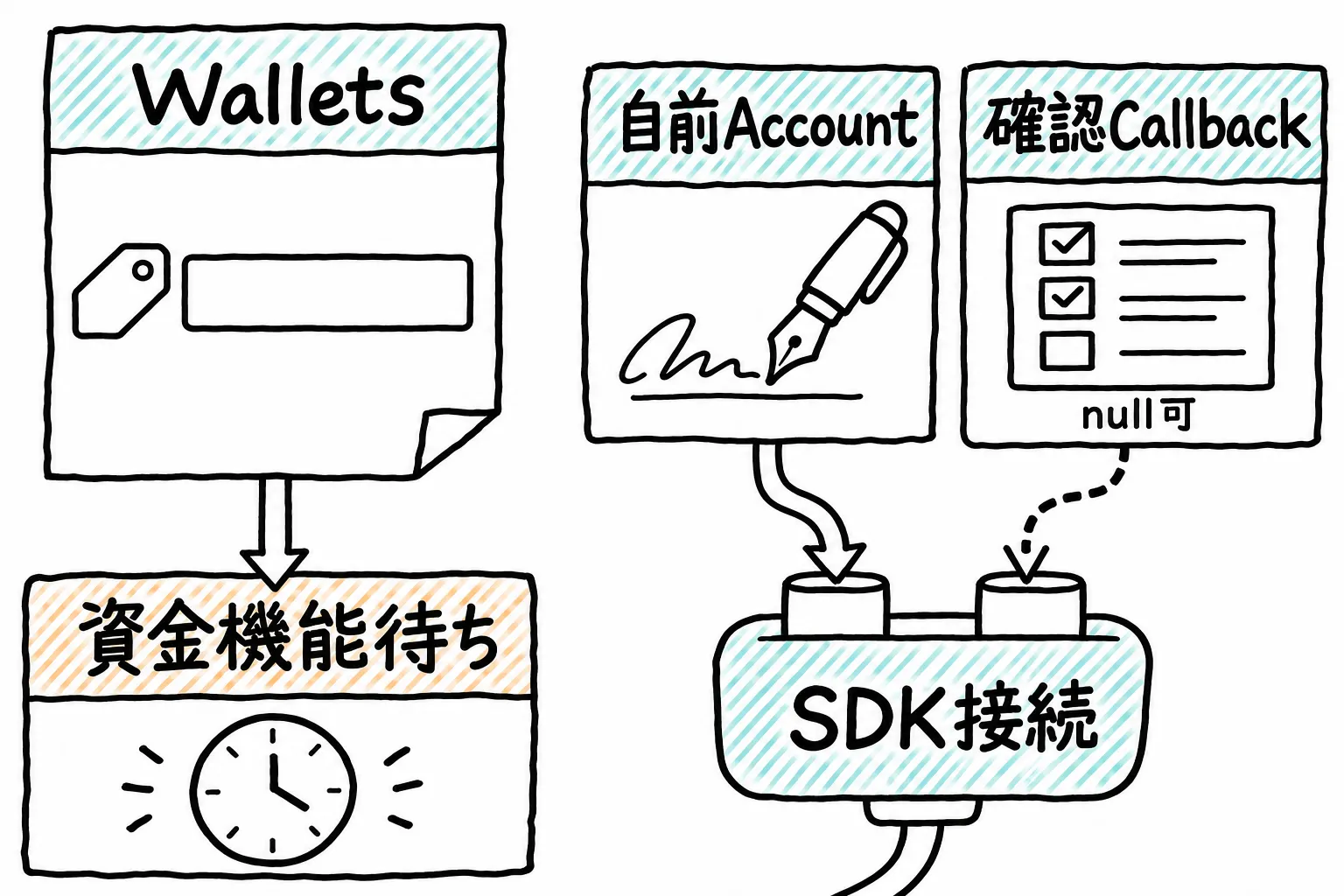
Connecting a developer-managed signer to this SDK does not issue a Wallets Virtual Wallet.
In the self-managed purchasing approach, the developer operates the keys and spending conditions.
Wallets, by contrast, is a planned product for managing funds and delegation from the owner's account. After its release, developers will need to verify supported assets and regions, API key revocation, and how to query transactions when the outcome of a request is unknown.
When expanding the set of approved sellers, decide who updates that set and who investigates unusual spending.
Mapping the person responsible for the environment using the API key to the person authorized to add budget makes it possible to return decisions to humans when an agent exceeds its conditions.
Sellers using the Gateway should verify its US closed-beta eligibility separately from reserving a Wallets name.
Conclusion
Cloudflare Wallets is designed to delegate conditional spending authority from owner-managed funds to individual agents.
In an API purchase, the spending conditions are connected to the seller's price offer, the buyer's payment authorization, the origin generating the resource, and settlement.
Separately checking the availability of name reservations, the existing SDK, and the Gateway helps identify which purchase flows can be tested and which depend on the release of the funding features.
The official documentation describes Wallets reservations and planned funding capabilities.

Seller-side pricing and access control are described in the official Monetization Gateway documentation.

The payment integration of the existing SDK and the verification of request origin through signatures are described in their respective official documentation.

