Introduction
Hi, I'm cardene, a software engineer and technical writer focused on blockchain and AI.
I've also authored Japanese technical books on specification-driven development with LLMs and decentralized application (DApp) development.

I also build and publish a variety of tools, libraries, and open-source projects.
ERC-2255 proposes improving the initial connection experience for dApps by allowing them to ask users for multiple permissions at once, such as access to wallet addresses and the ability to request signatures.
This article translates, summarizes, and expands on the proposal below.

I also cover other EIPs.

Overview
ERC-2255 introduces two RPC endpoints, wallet_getPermissions and wallet_requestPermissions.
These are wallet-namespaced endpoints that provide a standard interface for applications to inspect and request user permissions from Web3 wallets.
A decentralized application (dApp) can therefore present its permission requirements together in a form that makes it clear which permission is needed for each operation.
Motivation
Web3 wallets currently ask users for confirmation each time an application attempts an operation. Although this is useful for security, repeated prompts can significantly disrupt the user experience.
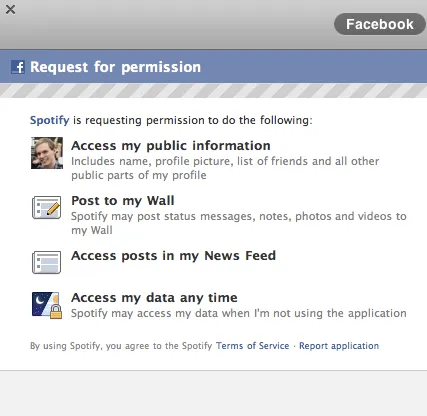
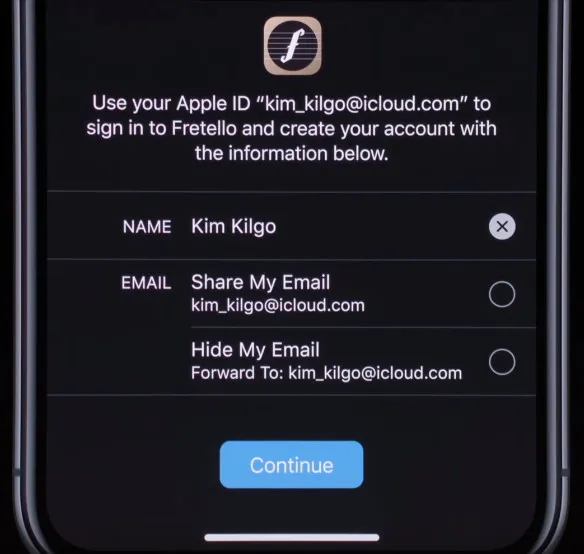
For example, many dApps repeatedly request confirmation for the following operations.
- Disclosing wallet addresses
- Switching networks
- Signing messages or data
- Granting token allowances
- Sending transactions to smart contracts
These operations often require separate confirmations, creating a cumbersome and confusing process for users.
In Web2, however, mechanisms such as OAuth2 are widely used to request permissions together. Facebook and Apple login screens, for instance, can present multiple permissions on initial sign-in, allowing users to grant or deny each permission individually.
ERC-2255 proposes bringing this Web2 convention to Web3. On the initial connection, a site could present a human-readable explanation such as this site wants to access your address, request signatures, and obtain token allowances, allowing users to configure those permissions in place.
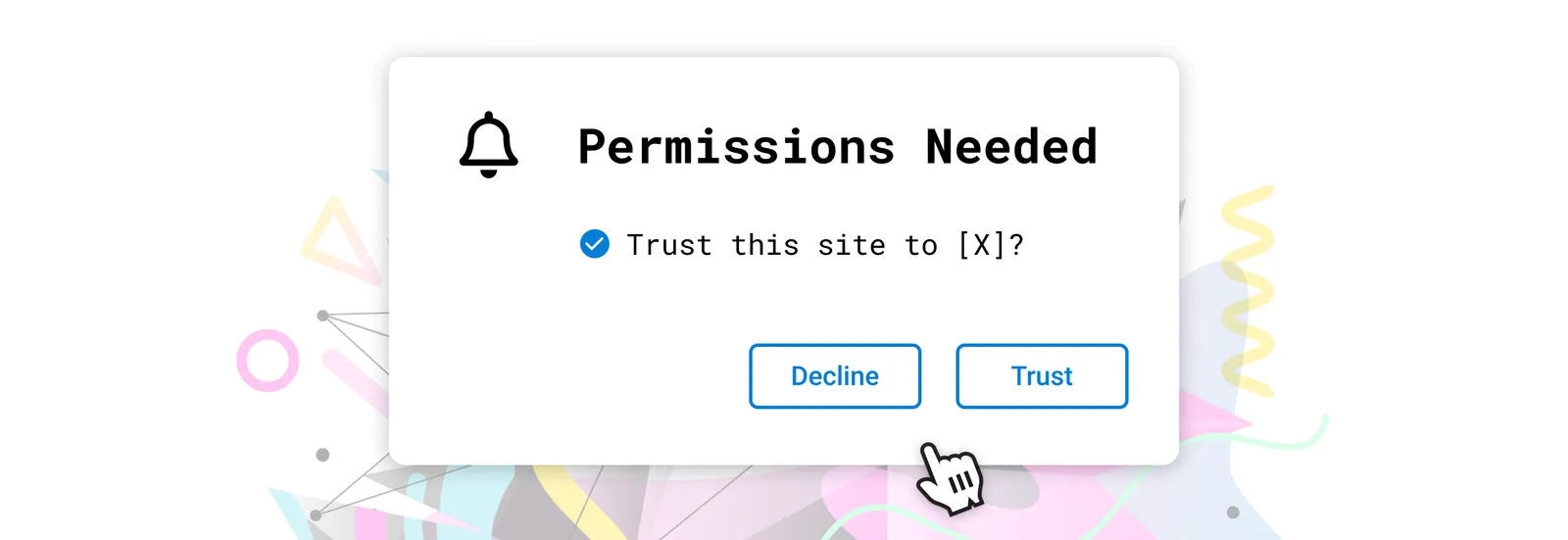
Users could deny individual permissions, set expiration times, or impose quantity limits. The aim is to improve the user experience substantially while maintaining security.
The screenshots are reused from the original Japanese article; their on-screen content has not been translated.
Specification
ERC-2255 adds two methods to the Web3 wallet provider API: wallet_getPermissions and wallet_requestPermissions.
They provide a standard interface for web applications to explicitly ask which operations wallet users will authorize and to check the resulting permissions.
An application can request permission to perform an operation and execute a particular feature only if the user grants it. Requests for operations that have not been authorized are treated as errors.
wallet_getPermissions
The wallet_getPermissions method retrieves the permissions already granted to the current dApp.
It takes no arguments and returns an array of Permission objects.
The returned Permission objects have the following structure.
interface Caveat {
  type: string;
  value: any;
}

interface Permission {
  invoker: string;
  parentCapability: string;
  caveats: Caveat[];
}invokeris the URI identifying the dApp (for example, https://your-site.com).parentCapabilityidentifies the authorized method (for example,eth_accounts).caveatslists restrictions on the use of that method.
Each Caveat consists of a type identifying the kind of restriction and a value specifying the restriction's value.
How the value is interpreted depends on the type.
wallet_requestPermissions
The wallet_requestPermissions method is used when a dApp requests new permissions from the wallet.
It takes one PermissionRequest object as an argument and, on success, returns an array of RequestedPermission objects.
The request has the following structure.
interface PermissionRequest {
  [methodName: string]: {
    [caveatName: string]: any;
  };
}
For example, this structure supports a request with the following fields.
- Method name
eth_accounts
- Caveat name
requiredMethods
- Value
["signTypedData_v3"]
This allows a specific request such as grant this dApp access to eth_accounts, subject to the requirement that only signTypedData_v3 be permitted within that capability.
If the requested method is restricted in the current state, its invocation fails.
The application must therefore call wallet_requestPermissions first and obtain user approval.
If the user rejects the request, an exception is thrown with error code 4001, as specified by EIP-1193.
Return value of wallet_requestPermissions
The method returns an array of objects in the following format.
interface RequestedPermission {
  parentCapability: string;
  date?: number;
}parentCapabilityidentifies the authorized method (for example,eth_accounts).dateis a Unix timestamp representing when the request was accepted.- This field is optional and may be absent.
This makes it possible to record and inspect which permissions the user granted, for which methods, and when.
Further considerations
Traditional Web3 wallets have protected users by displaying a confirmation dialog for each operation requested by an application. While this approach provides a high degree of security, it also interrupts the user every time an operation is performed, making the wallet cumbersome to use.
ERC-2255 seeks to improve the experience significantly by moving to grouped, human-readable permission requests.
For example, if an application can request accounts that meet a particular condition, such as accounts capable of signing, the wallet can present only accounts that satisfy that condition.
The design accounts for hardware wallets and other devices that may not support particular signing methods, such as signTypedData_v3.
Applications can request accounts with the capabilities they need, and wallets can present only suitable accounts while protecting users' privacy and key management arrangements.
Test cases
ERC-2255 includes test examples illustrating the basic behavior of wallet_requestPermissions and wallet_getPermissions.
First, the following example shows an application requesting permission to use eth_accounts.
provider.request({
  method: 'requestPermissions',
  params: [
    {
      'eth_accounts': {
        requiredMethods: ['signTypedData_v3']
      }
    }
  ]
});
The request does more than ask for access to an account: it requires that the account support the specific signing capability signTypedData_v3.
This illustrates how declaring the required capabilities in advance can help a dApp offer users meaningful choices.
If the user approves, a Permission object is returned together with the corresponding account information.
To retrieve the current permissions, the application then calls getPermissions, as shown below.
provider.request({
  method: 'getPermissions'
});
This retrieves information about all currently granted permissions, including whether particular methods can be used and the conditions imposed by caveats.
Through these test cases, dApps can handle permission-based interactions appropriately, and users can control the scope of access according to their preferences. The result is a more refined access control mechanism designed to balance security and usability.
Security
SSRF (Server-Side Request Forgery)
One security risk associated with ERC-2255 is Server-Side Request Forgery (SSRF). It can arise when wallets send requests to external URLs to retrieve information such as a website's favicon.
An SSRF attack induces unauthorized requests to network resources inside a server that should not be accessible from outside.
For example, if a wallet sends requests to supplied URLs without restrictions, an attacker could induce it to access an internal address such as http://localhost:6379 (a local Redis database).
This could result in unintended data retrieval or modification, or unauthorized interactions with services.
Wallet implementations should therefore avoid sending requests to user-supplied URLs without restrictions. Recommended measures include the following.
- Define an allowlist of permitted URL schemes, such as
https://, and port numbers, such as443. - Block access to addresses belonging to internal networks, including
localhost,127.0.0.1, and169.254.*.*(link-local addresses).
These measures help prevent wallets from being induced to access malicious URLs and protect users' local environments and internal systems. SSRF is also a common attack technique against web applications, and Web3 wallets require similar precautions.
Citation
Dan Finlay (@danfinlay), Erik Marks (@rekmarks), Gavin John (@Pandapip1), "EIP-2255: Wallet Permissions System," Ethereum Improvement Proposals, no. 2255, August 2019. [Online serial]. Available: https://eips.ethereum.org/EIPS/eip-2255.
Conclusion
This article covered ERC-2255, which proposes improving the initial dApp connection experience by letting applications request multiple permissions at once, including access to addresses and signing capabilities.
If you have questions, feel free to contact me via Twitter DM.
I also publish on the following platforms.


