Introduction
Hi, I'm cardene, a software engineer and technical writer focused on blockchain and AI.
I've also authored Japanese technical books on specification-driven development with LLMs and decentralized application (DApp) development.

I also build and publish a variety of tools, libraries, and open-source projects.
The original diagrams are retained and contain Japanese labels.
EAS Overview
Consider an event organizer who gives an attendee a record of attendance, which another application uses to determine eligibility for a benefit. Even if the organizer and the benefits application maintain separate databases, the attendee can carry the same record between them if they share its format and a way to verify its issuer.
Ethereum Attestation Service (EAS) provides a mechanism for recording and verifying who attested to what, and for whom. An attestation in this context is data representing an issuer's claim. If the issuer records that someone attended event 42, an application can verify the issuer and the contents of that record.
Cryptography alone, however, cannot establish that someone physically attended an event. The organizer checks the person's identity at reception, and the benefits application decides whether to accept the organizer's record. EAS makes the relationship between the issuer and the record verifiable, while leaving responsibility for establishing real-world facts and deciding whether to use the record with the respective parties.
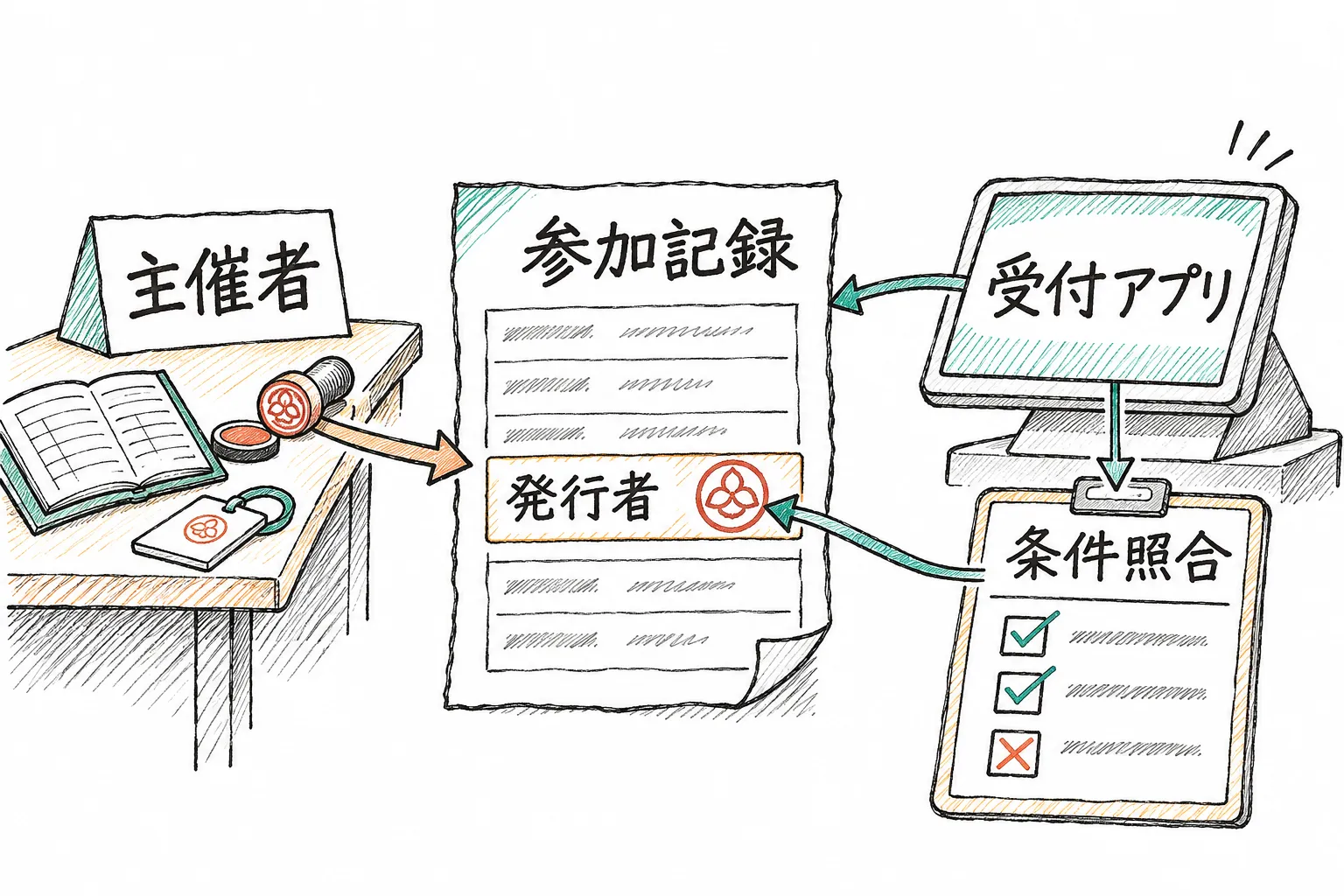
Use an address representing the attendee as the recipient of the attestation, and represent attendance with eventId = 42 and attended = true.
The organizer can choose between onchain issuance, which records the data on a blockchain, and offchain issuance, which gives the attendee signed data.
In both cases, the consuming application checks the issuer, recipient, contents, expiration, and revocation status.
Attestation Data
If the organizer stores 42 as an event number but the benefits application interprets it as an attendance count, the two cannot share the record meaningfully.
EAS uses schemas to share field names and types, and individual attestations are issued according to those definitions.
The SchemaRegistry contract stores schema definitions, while the EAS contract stores onchain attestations.
For an event with 100 attendees, the organizer can issue 100 attendance attestations using the same schema. There is no need to register a separate schema for every attendee. Conversely, even when the field types are identical, accepted an application and attended the event in person mean different things. Issuers and consuming applications must also share the meaning of the fields.
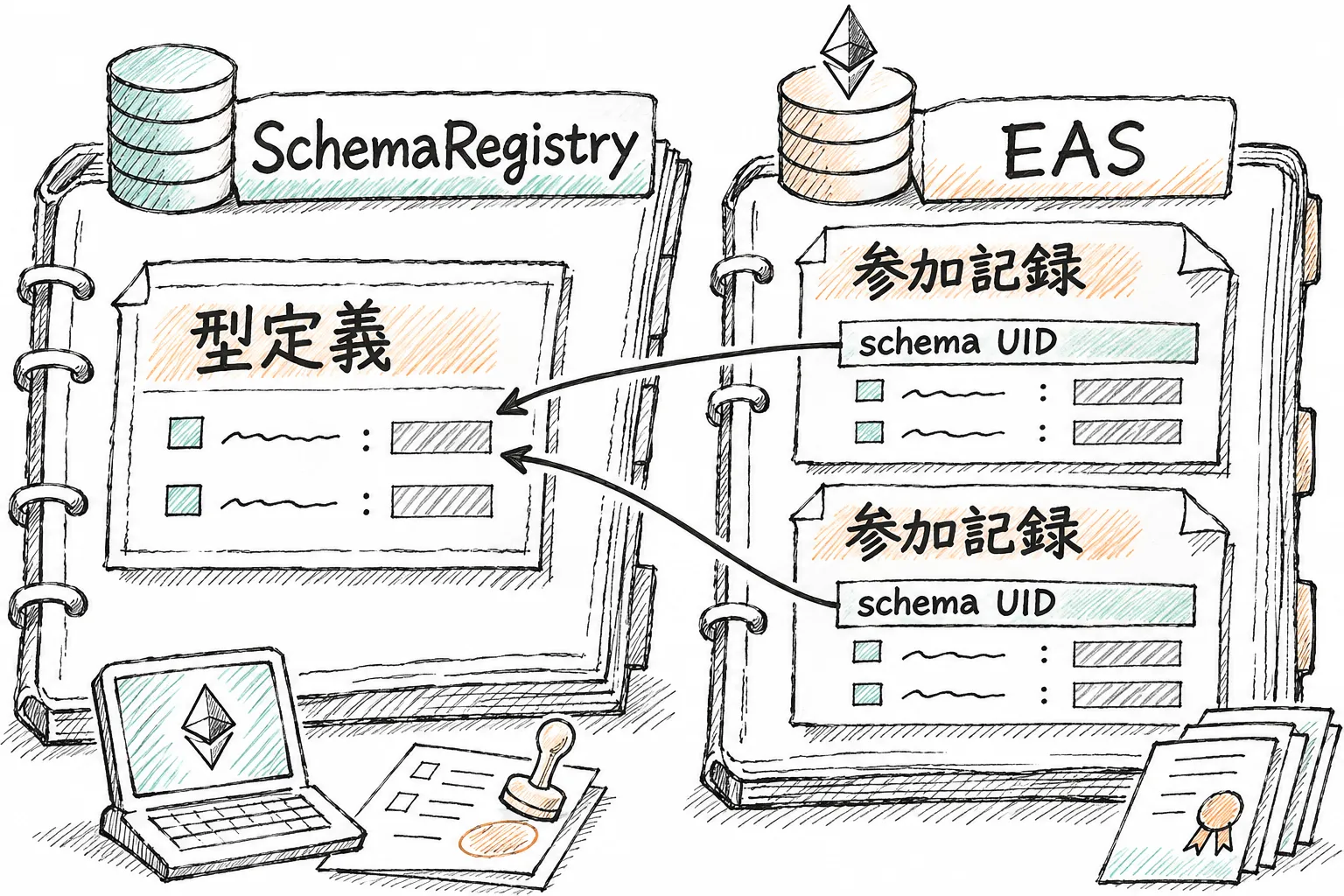
Registering a Schema
Define the attendance schema as uint256 eventId, bool attended.
eventId is the event number, and attended indicates whether the person attended.
When registering a schema, specify its definition string, the address of a Resolver that performs additional checks, and whether revocation is permitted.
| Registration field | Meaning for the attendance attestation |
|---|---|
| Schema string | The types and order used to represent the event number and attendance flag |
Resolver address |
A contract that checks additional conditions during issuance and revocation |
revocable |
Whether attestations using the schema may be configured as revocable |
Registration determines the schema's unique identifier, or UID.
In the implementation examined here, the schema string, Resolver address, and revocability flag are concatenated and used to generate a fixed-length hash.
This is not a sequential display number containing the creator's name. Registering the same combination again is rejected.
There is no function for rewriting a registered schema definition.
To add an arrival timestamp, register a different schema and update the set of schemas the consuming application accepts. This lets the application distinguish the old and new formats even when they describe the same event.
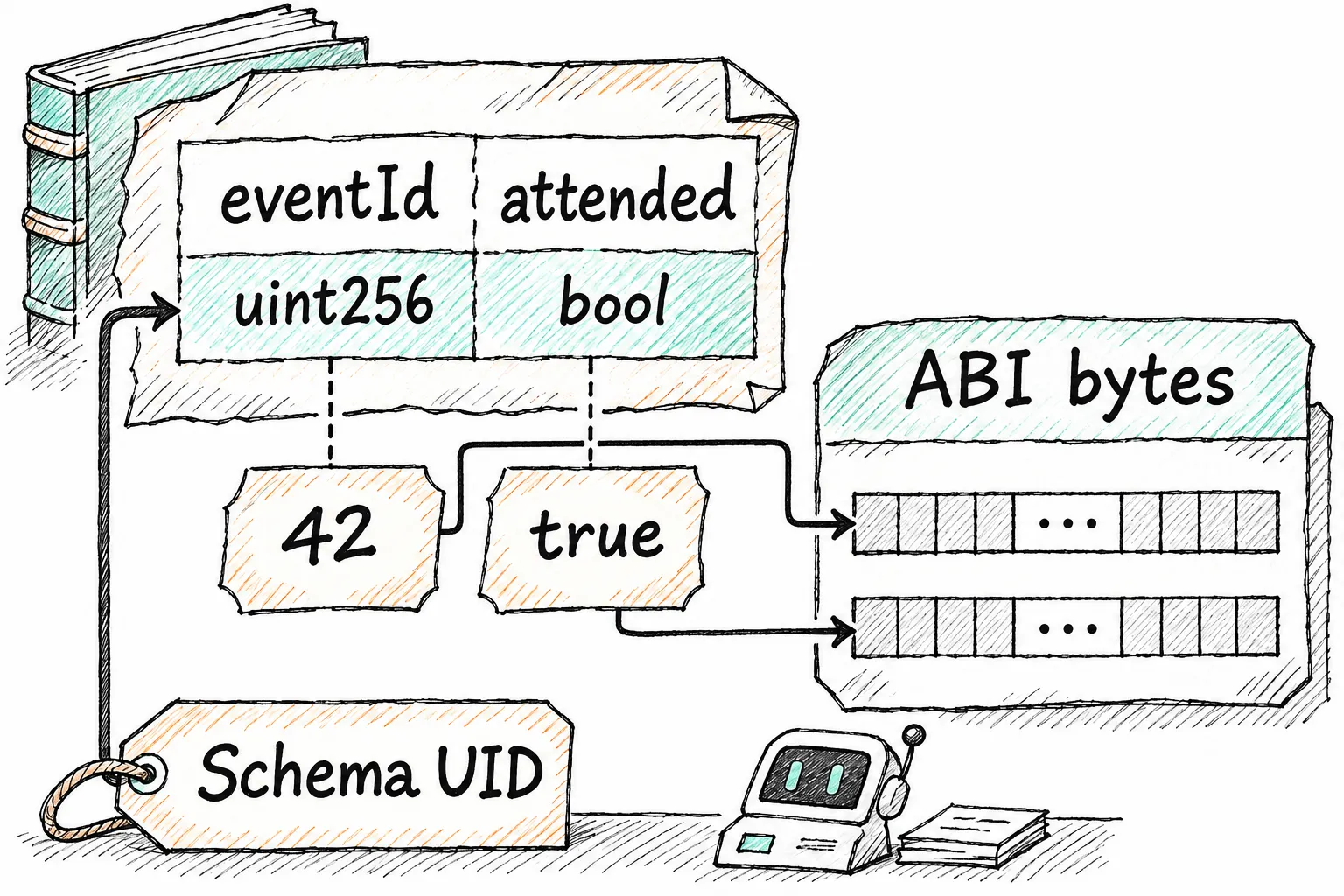
Individual records are ABI-encoded according to the schema.
The ABI defines how typed values are passed between contracts.
When using the SDK's SchemaEncoder, provide field names, types, and values that match the definition.
import { SchemaEncoder } from "@ethereum-attestation-service/eas-sdk";

const encoder = new SchemaEncoder("uint256 eventId, bool attended");
const encodedData = encoder.encodeData([
  { name: "eventId", type: "uint256", value: 42n },
  { name: "attended", type: "bool", value: true },
]);
encodedData is a byte sequence representing 42 and true according to their types.
EAS itself does not interpret arbitrary schema strings to determine whether a value is the correct event number.
To enforce semantic constraints at issuance, decode the data and check those conditions in a Resolver.
Related Attestations
You can also design separate records: attestation A for the event name and date, and attestation B for an individual attendee.
Setting B's refUID to A's UID lets the application follow the attendance record back to the event information.
This avoids repeating the same event information in every attendee's data.
For onchain issuance with a nonzero refUID, EAS checks that the referenced attestation exists.
It does not check whether that attestation is true, unexpired, or unrevoked.
Revoking A does not automatically revoke B, so applications that depend on A's status must verify both.
If the intended reference is a schema, its identifier cannot simply be placed in the recipient field.
The recipient has type address, whereas the schema UID has type bytes32.
To record a custom association with a schema, define a field with the appropriate type and meaning in the attestation data.
The Attestation Record
Whereas a schema UID identifies a format, an attestation UID identifies one record issued by the organizer to an attendee. The consuming application retrieves the record by its attestation UID and uses the embedded schema UID to determine how to decode its data.
| Field | Contents and reason for checking |
|---|---|
schema |
Whether the record uses an accepted attendance schema |
attester |
Whether the record was issued by a trusted organizer |
recipient |
Whether the address belongs to the attendee applying for the benefit |
time |
When the attestation was issued |
expirationTime |
Whether the attestation remains unexpired, if an expiration time is set |
revocationTime |
Whether a revocation timestamp has been recorded |
revocable |
Whether this attestation is configured to permit revocation |
refUID |
Whether the record references another attestation |
data |
Whether the payload represents attendance at event 42 |
attester and recipient are distinct roles.
When the organizer issues a record to an attendee, the organizer is the attester and the attendee is the recipient.
Being named as the recipient does not mean that the attendee has submitted a signature consenting to the contents of the record.
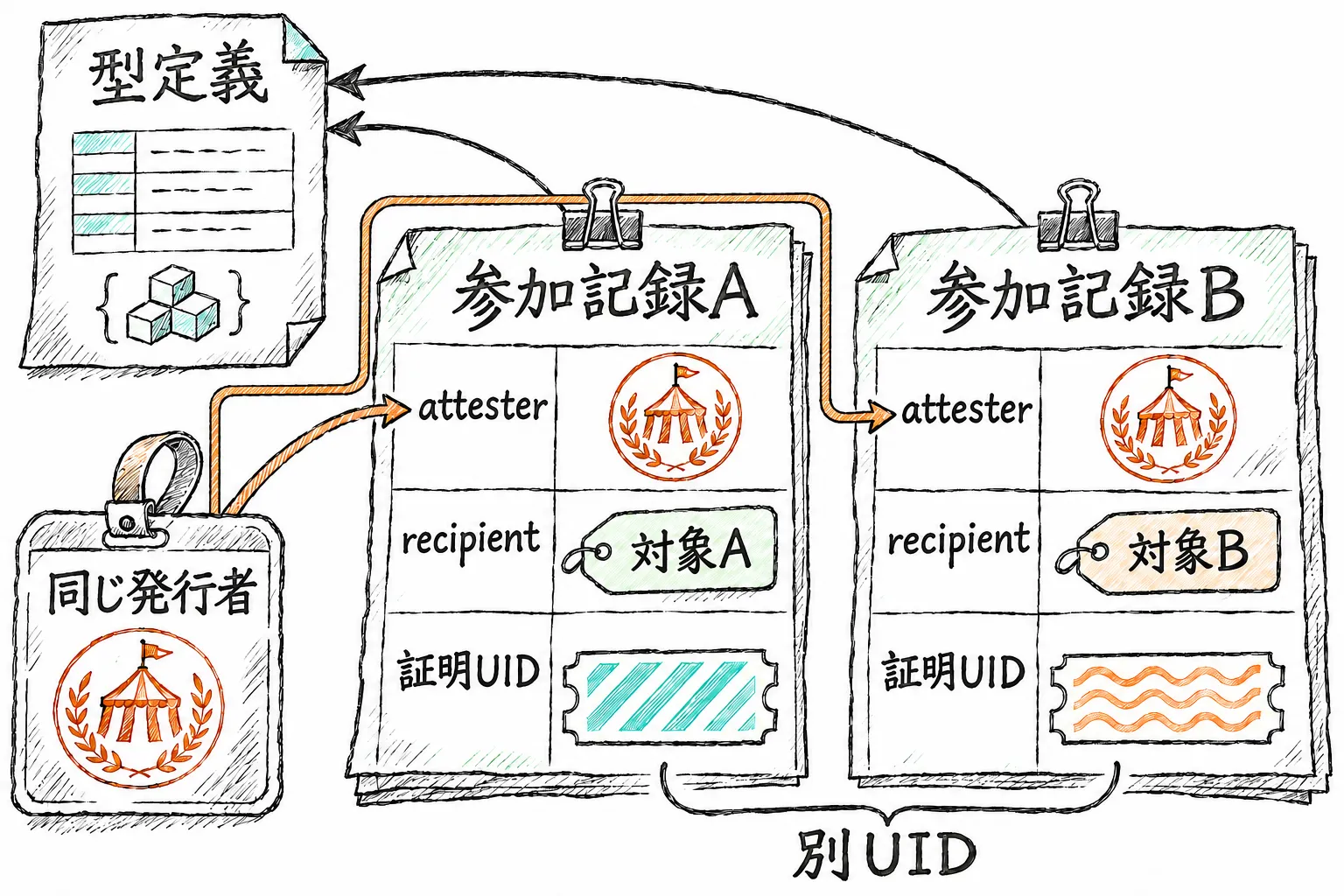
In the contract implementation examined here, the attestation UID is calculated using the schema, recipient, attester, issuance time, expiration, revocability, reference UID, data, and a value used to avoid collisions. An application receiving a UID uses it as a key to retrieve the actual record. It does not decode the event number or issuer from the UID string itself.
The attester of an onchain record depends on the call path. For direct issuance, the caller is recorded; for delegated issuance, the attester whose signature was verified is recorded. Not every onchain attestation stores a separate, standalone signature.
Onchain Issuance
The organizer issues an attestation by specifying the registered schema UID, attendee address, encoded values 42 and true, expiration, and revocability.
For direct issuance, the organizer's account sends a transaction to EAS.
When using the SDK, connect a signing account to an instance configured with the EAS address on the target chain.
EAS checks that the schema exists and that the supplied values satisfy the issuance requirements. If an expiration time is specified, it must be later than the issuance time. If the schema permits revocation, an individual attestation can be configured as revocable. If revocation is prohibited by the schema, it cannot be enabled for an individual issuance.
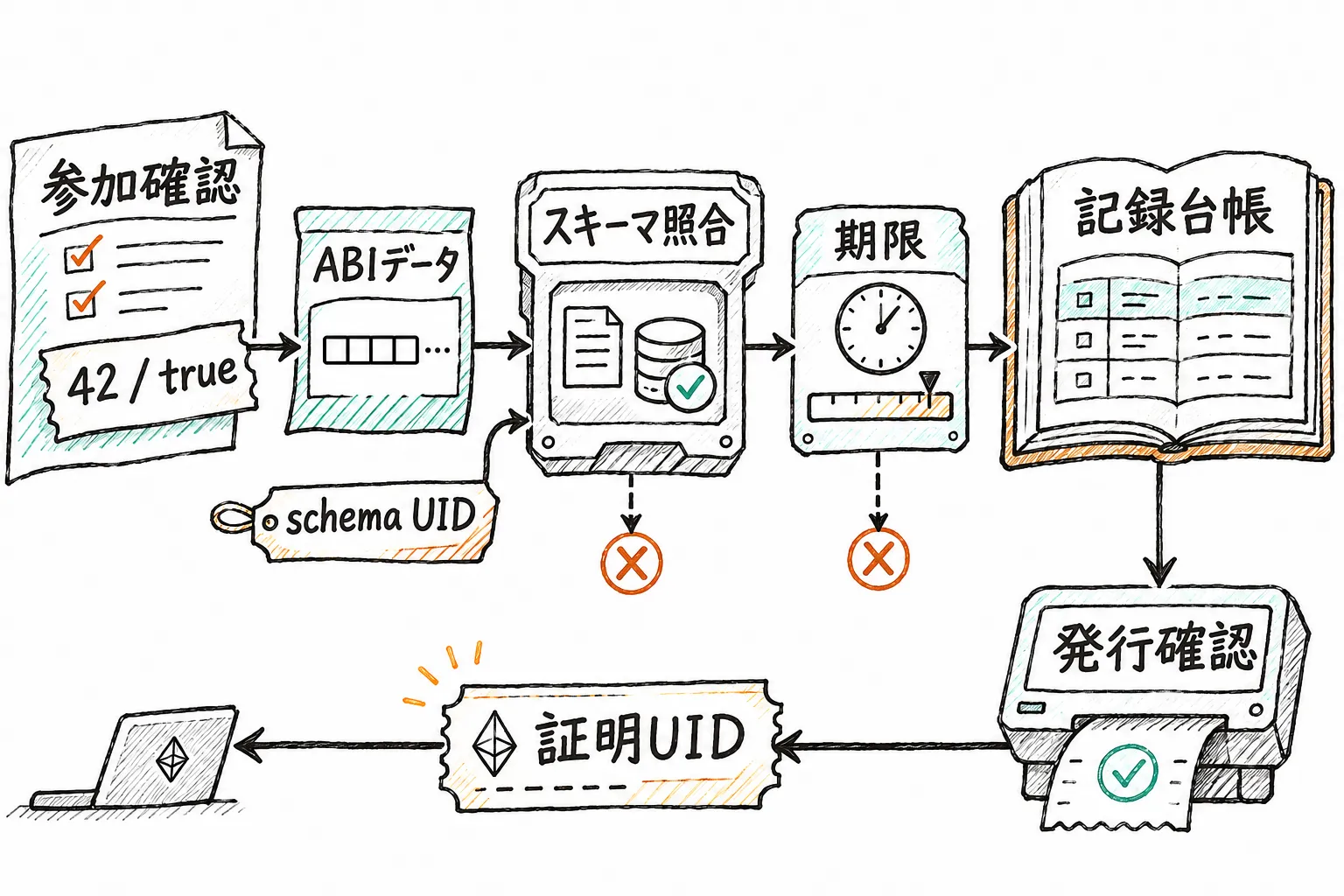
On successful execution, the attestation is stored and an issuance event is emitted. The consuming application distinguishes a submitted transaction from an attestation whose issuance has been confirmed onchain. Treating a record as final immediately after the organizer's interface displays submitted would overlook subsequent failures.
If connectivity is interrupted and the application cannot determine the submission status, immediately issuing the same record again may also create duplicates. Check the status of the submitted transaction and whether an attestation has already been issued before deciding whether to retry. Maintaining attendee and event records in the application helps distinguish issuance processing from business-level duplication.
Additional Checks at Issuance
Registering a schema alone does not restrict its use to the event organizer.
Even for attestations with the expected format, the benefits application checks that the attester is the organizer's address.
To restrict issuance itself, specify a Resolver when registering the schema.
A Resolver is a contract invoked by EAS.
For attendance attestations, it can check whether the issuer is on the organizer's allowlist and whether the event number in the data is accepted.
The schema defines how the data is interpreted; the Resolver executes the conditions under which issuance using that schema is allowed.
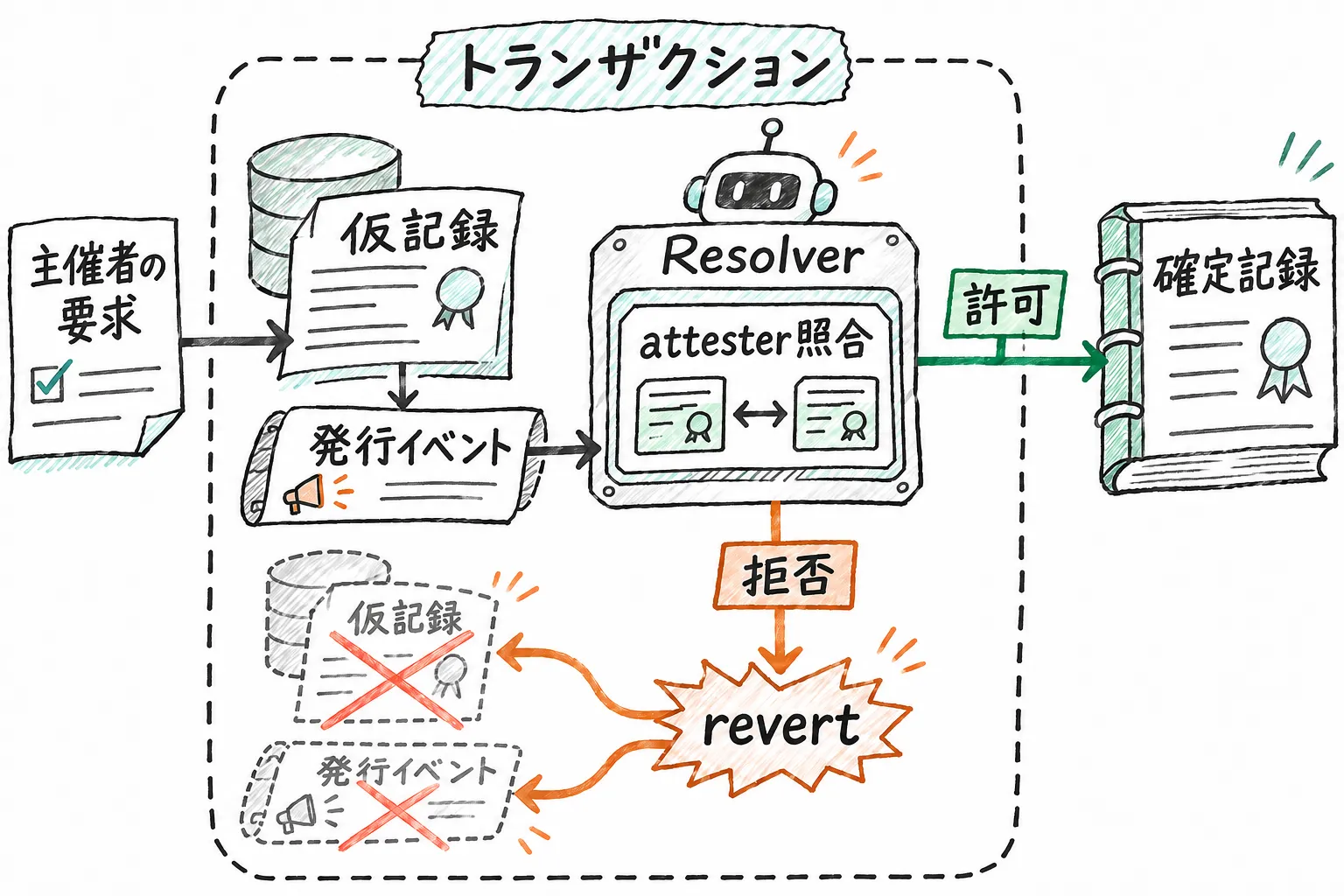
In EAS contract source version 1.4.0, EAS stores the attestation and emits the issuance event before invoking the Resolver.
However, if the Resolver returns false or reverts, the entire transaction rolls back.
Neither the preceding storage write nor the event is finalized: the system cannot retain the attestation while only the additional check fails.
The Resolver is also invoked during revocation.
A design can reject revocation when the Resolver conditions are not met, even for a revocable attestation.
Explain the conditions that can prevent revocation to consuming applications as well as the conditions for issuance.
The Resolver address registered with a schema is fixed.
However, if the contract at that address allows configuration changes or upgrades, the underlying validation logic may change.
An application relying on attendance attestations over time should also determine who administers the Resolver and what they can change.
Delegated Submission and Batch Issuance
The organizer can sign an issuance request and let another party submit the transaction through delegated issuance.
In this case, the transaction sender paying the gas fees is distinct from the organizer recorded in the attestation's attester field.
This allows an operator's submission service to handle transactions without charging attendees for gas.
The organizer's signature authorizes a particular issuance request, including its schema, recipient, data, and expiration.
The implementation also checks a per-attester nonce and a deadline after which the signature may no longer be executed.
These checks prevent replay of the same signature and delegated execution after the deadline.
The signature deadline is separate from the expiration of the issued attestation.
For example, the organizer could require the delegated transaction to be submitted by the end of today while allowing the attendance attestation to remain usable until the end of next month. Receiving the signature does not complete onchain issuance. Confirm that the delegated transaction succeeds before treating the attestation UID as issued. Direct issuance does not require a separate delegated-issuance signature in addition to the ordinary transaction signature.
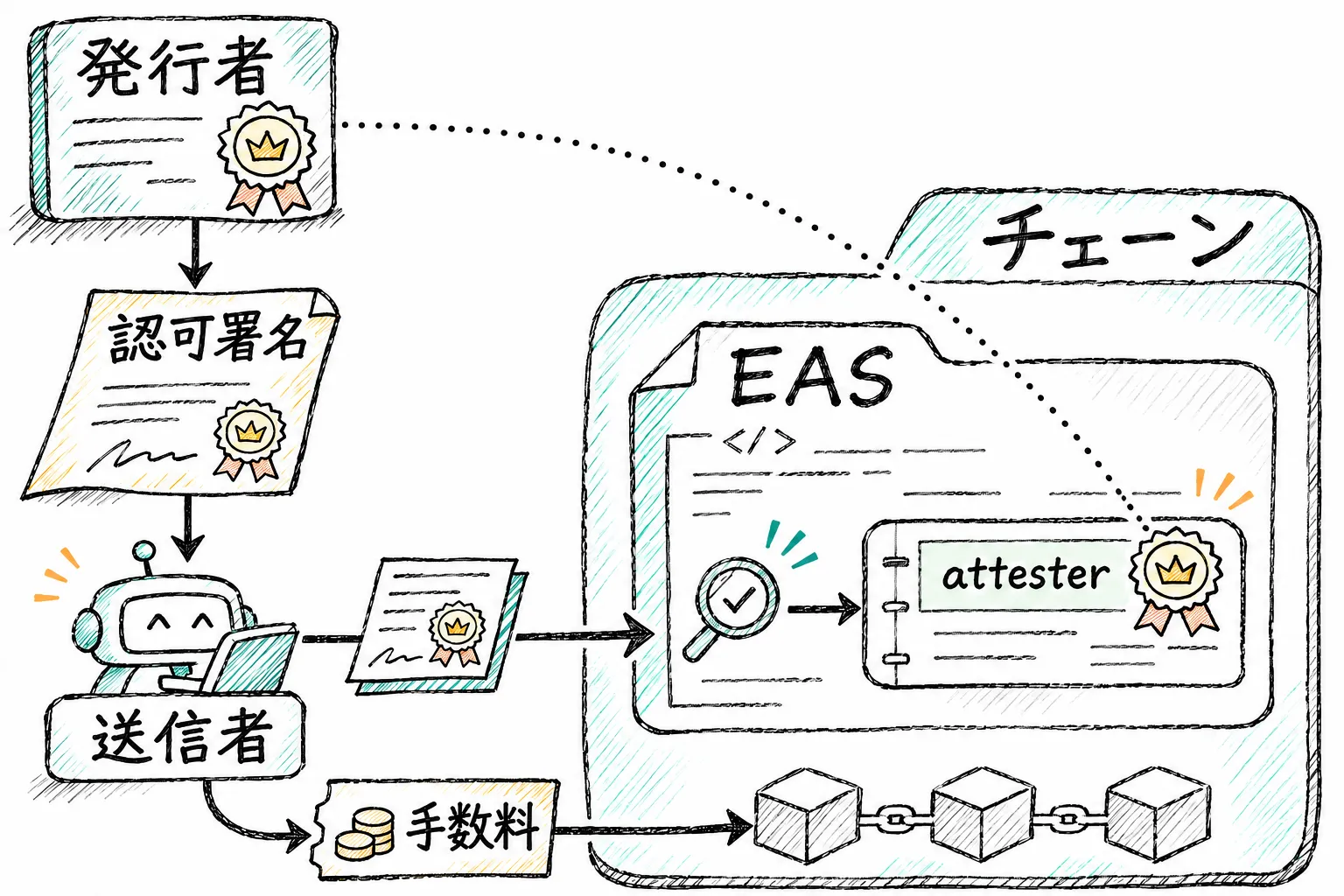
When a contract calls attest directly, that contract becomes the attester.
The address of the individual operating it is not automatically substituted as the attester.
The consuming application's allowlist must reflect the attester address actually recorded.
multiAttest processes multiple issuance requests together.
It can group individual attendees' data under one schema and combine requests for multiple schemas.
If a request fails to meet a mandatory condition during batch processing, the entire transaction fails.
For large-scale issuance, increasing the batch size also increases the submitted data and computation. Submit separate transactions when failures must be isolated by attendee; for a batch, confirm successful issuance for all its records. Gas savings vary with the chain and the amount of data, so do not assume a universal percentage reduction.
Offchain Issuance
For offchain issuance, the organizer signs attendance attestation data and gives the signed payload to the attendee. No transaction writes the attestation itself to the chain for each issuance. The attendee presents the data to the benefits application, which verifies the organizer's signature and its eligibility conditions.
The distinction from delegated issuance is where the resulting record resides. With delegated issuance, another sender creates an onchain record; with offchain issuance, signed data is distributed outside the chain. The presence of a signature in both cases does not make retrieval methods or storage responsibilities identical.
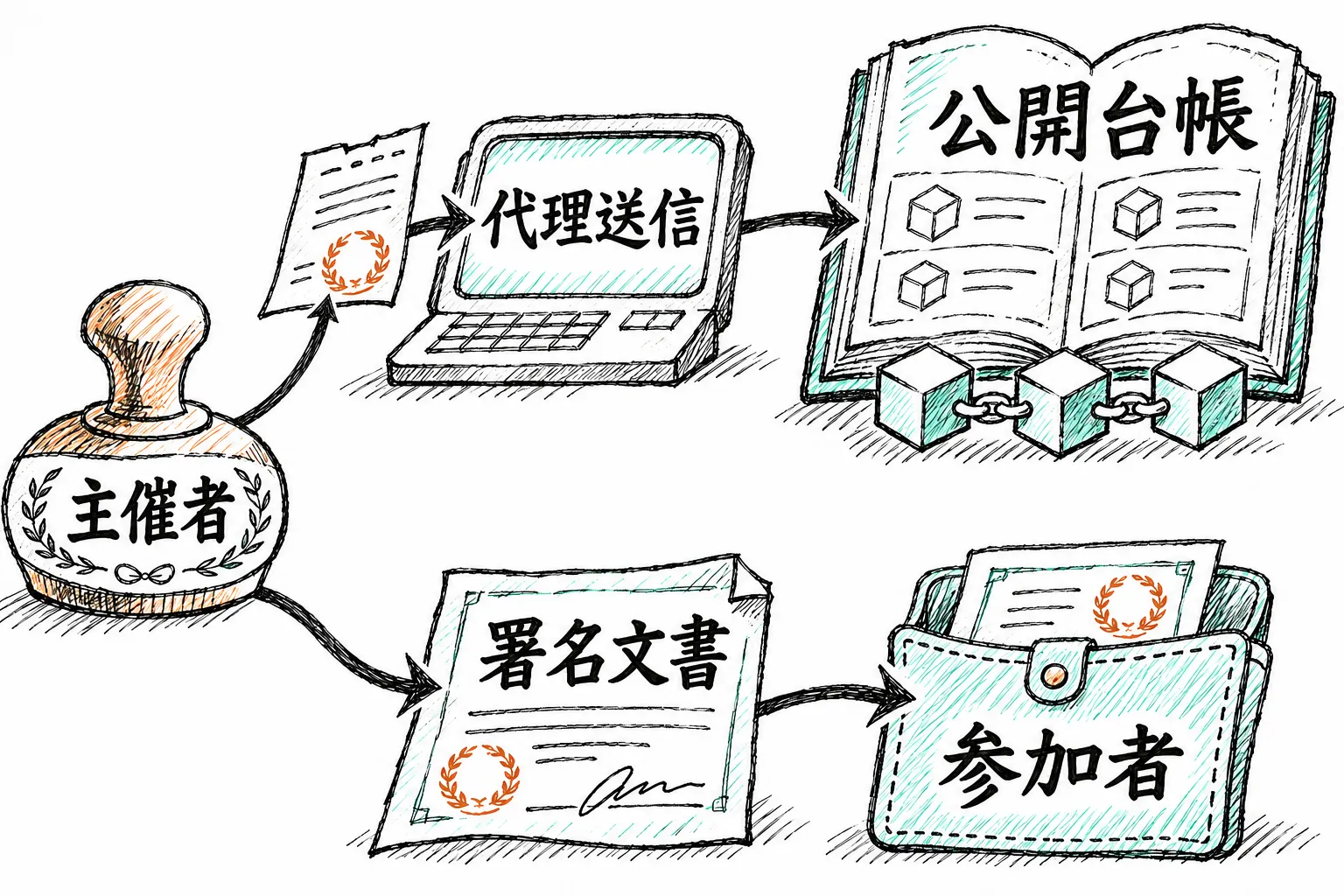
The benefits application checks that the received file matches the organizer's signature, is for an attendee of event 42, remains unexpired, and has not been revoked. If revocation is managed onchain, the application reads blockchain data at verification time even though issuance occurred offchain. Avoiding an onchain write during issuance is distinct from being able to decide everything offline when the record is used.
Creating and Verifying Signatures
Offchain attestations use EIP-712 structured data signatures. The attendee address, schema, data, expiration, revocability, and reference UID are signed according to defined types. The domain includes information about the target chain and EAS contract to prevent confusion between different verification environments.
A verifier must not unconditionally trust the domain declared by a submitted file. The application determines the chains and EAS deployments it accepts in advance and verifies the signature using that configuration. This prevents it from accepting a signature valid in a different environment chosen by an attacker as proof of attendance at event 42.
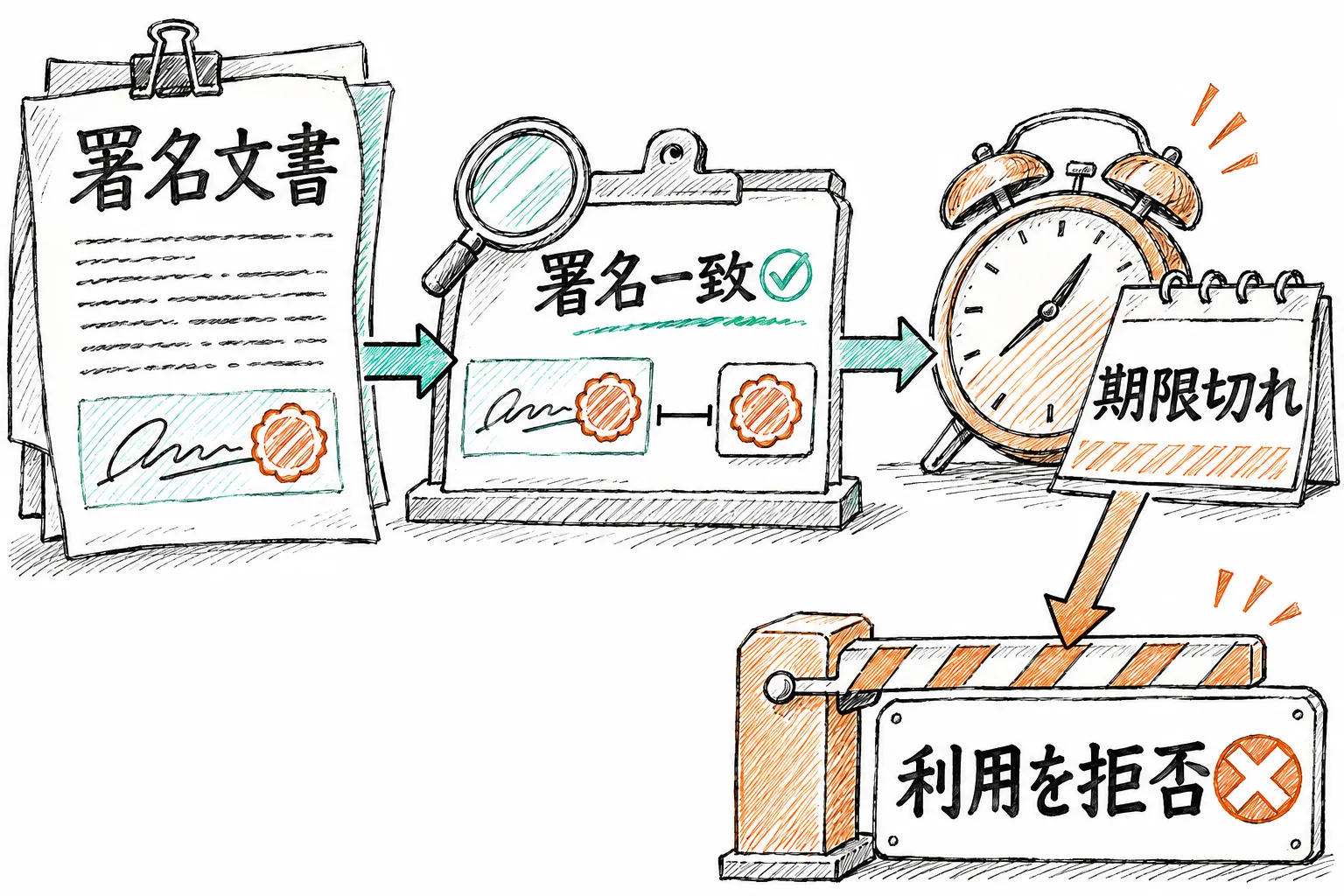
In SDK 2.10.0, the offchain format Version2 includes a 32-byte salt in the UID and signed data. The SDK generates it randomly if none is supplied.
The nonce found in examples of older formats is not simply added as a Version2 field.
Offchain format Version2, the SDK version, and the contract source version are separate identifiers.
Examining contract source version 1.4.0 does not establish that every chain has the same deployed EAS version or address. When implementing an integration, align the chosen SDK with deployment information for the target chain.
The SDK's verifyOffchainAttestationSignature verifies UID consistency and the signature.
It does not decide on the application's behalf whether the organizer is trusted, the record has expired or been revoked, or the record belongs to the applicant.
Even with a matching signature, records for event 41 or another person are excluded from eligibility for the benefit.
Receiving only the UID of an offchain attestation does not let the application reconstruct its contents from EAS.
Signature verification requires the original signed data, including the schema, values, recipient, and salt.
The organizer and attendee must retain that data so they can present it to consuming applications.
Storage and Visibility
Third parties reading the chain can retrieve onchain attestation data. Using an address for the recipient does not necessarily make the attendee anonymous if they want to keep their attendance history private. Public information from other services may link the same address to an individual or their activities.
With offchain attestations, the attendee and benefits application can exchange the data privately. But storing it in public storage or at a URL anyone can read makes it public as well. A signature detects tampering; it does not encrypt the contents or restrict who can read them.
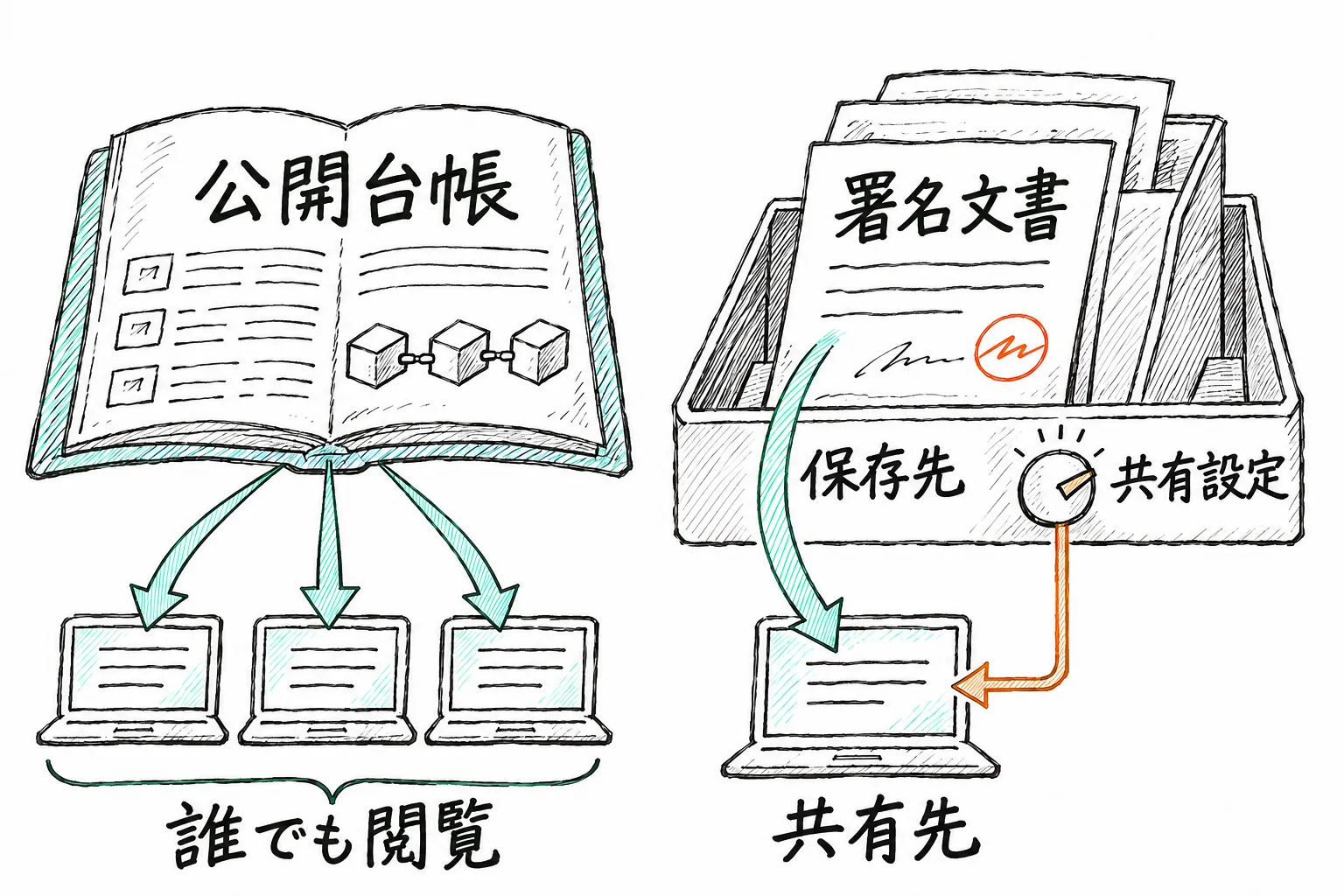
The SDK's PrivateData can construct a Merkle tree of hashes of multiple values and record the overall root in an attestation.
A holder can disclose selected values and provide a proof demonstrating that those values are included in the committed data.
For example, an attendee could disclose only their attendance at event 42 to the benefits application, withholding other fields in the same data.
The consuming application checks that the proof for the disclosed value corresponds to the root attested to by the trusted organizer.
Even in this design, the organizer must retain the original data and salt.
If the data needed to construct a proof is lost, the disclosure cannot be reconstructed from the root alone.
Simply hashing names or Boolean values with a small set of plausible inputs makes guessing easier. Design the handling of disclosed data and the salt accordingly.
When storing personal information externally, determine who may read it, how long it is retained, and how deletion requests are handled within that storage system. Recording a hash in EAS does not automatically enforce external access permissions or delete external data.
Using and Updating Attestations
The benefits application needs to know more than whether an attendance UID exists. It checks whether the organizer of event 42 issued a still-usable record to the authenticated applicant. A correctly signed attestation for event 41 is insufficient to claim a benefit associated with event 42.
The organizer may discover an error after issuance.
Instead of rewriting the record, the organizer can revoke a revocable attestation and issue a corrected one. The consuming application checks the record's status at the time of application so it does not continue to accept an obsolete UID.
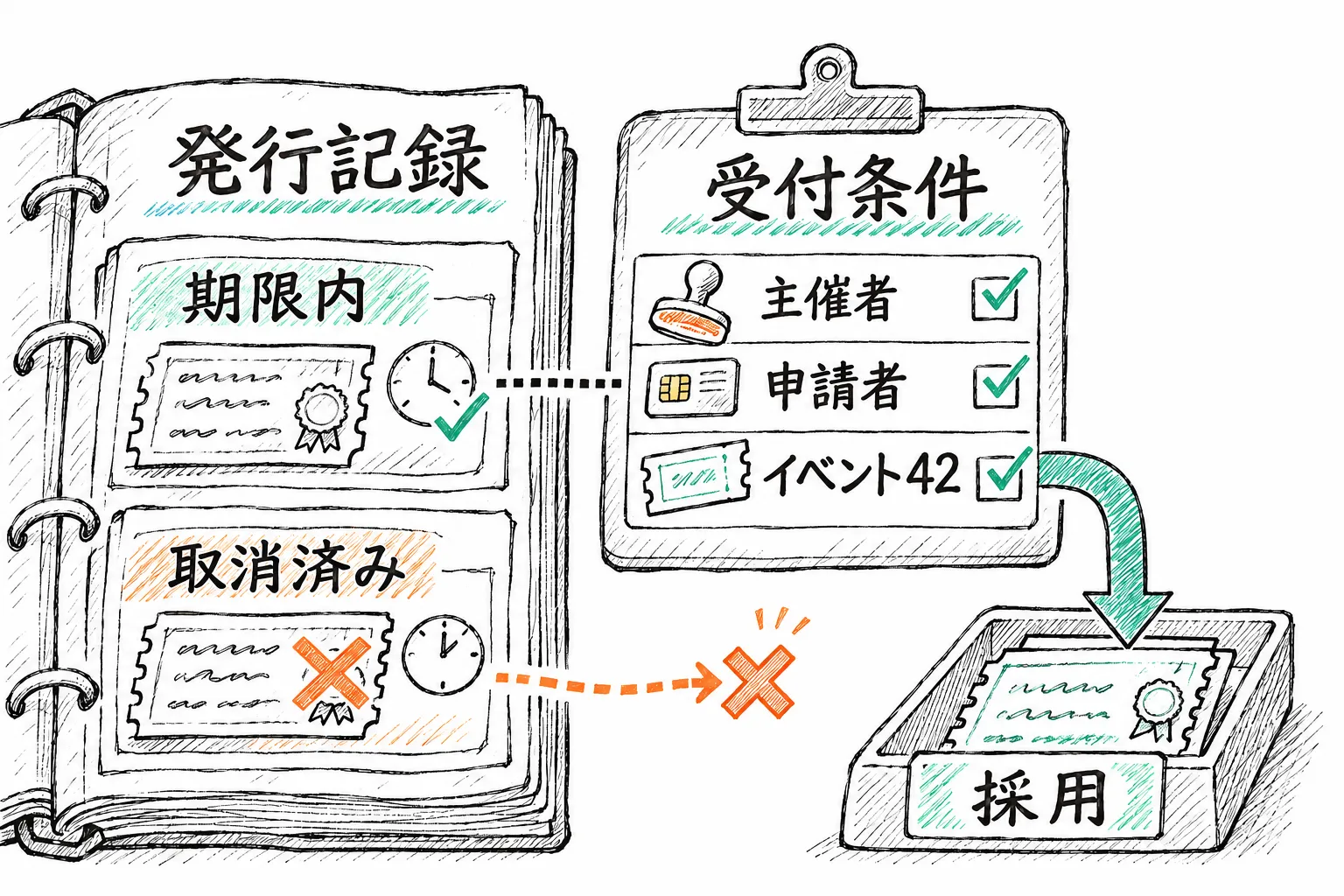
A new attestation can reference the old one to express a correction relationship. However, a reference alone does not cause EAS to give precedence to the newer record. The benefits application defines correction rules and decides how to handle original and corrected records.
Verifying a Retrieved Attestation
Retrieve an onchain attestation by calling getAttestation(uid) on EAS on the target chain.
Querying the same UID on another chain or deployment does not necessarily retrieve the intended record.
Fix the chain and contract in application configuration and check for the record there.
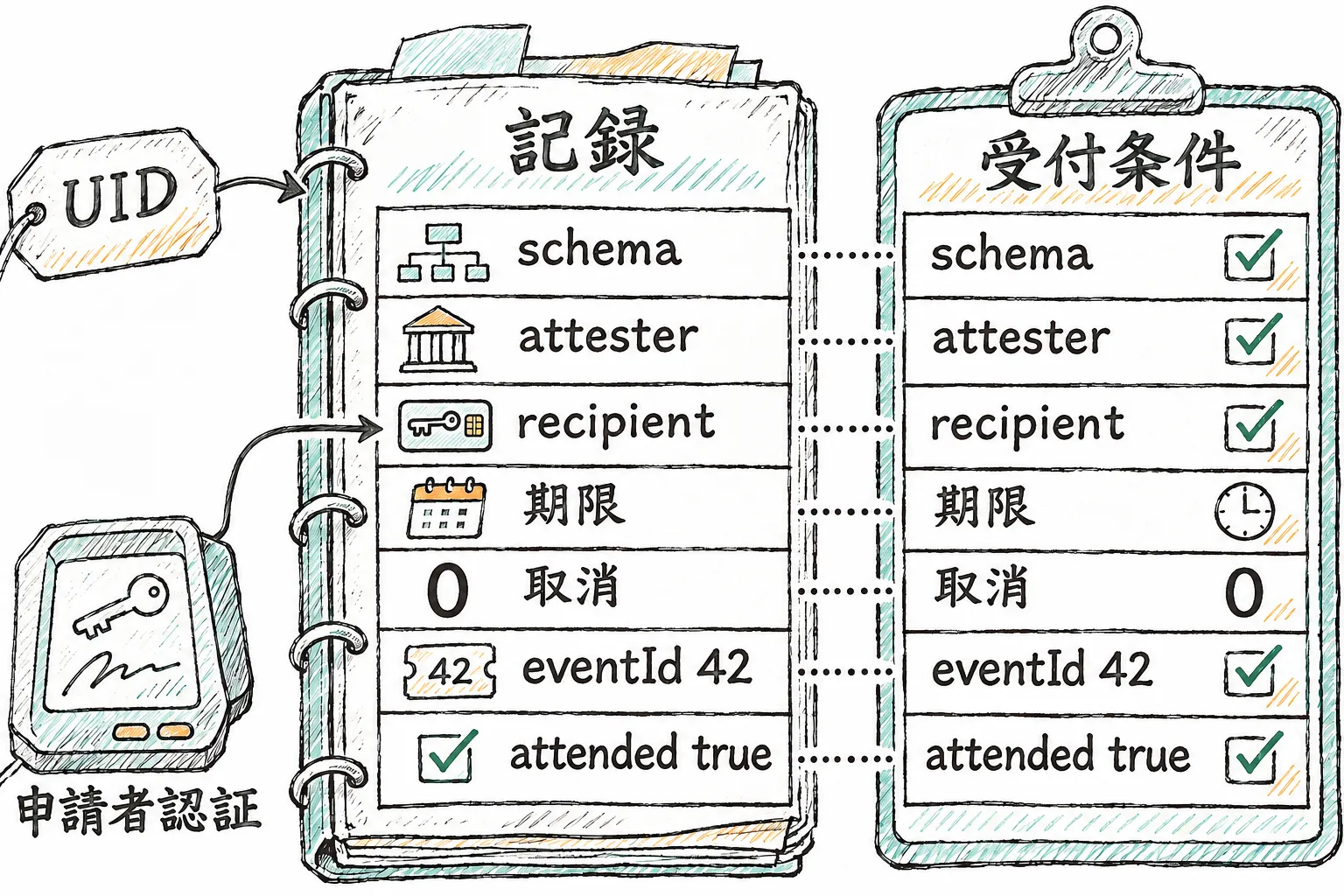
| Check | Eligibility condition for event 42 |
|---|---|
| Attestation UID | The UID is nonzero and the record exists at the expected deployment |
| Schema | The schema UID matches an accepted attendance schema |
| Attester | The address belongs to an approved organizer |
| Recipient | The address matches the authenticated applicant's address |
| Revocation time | revocationTime is 0 |
| Expiration | 0 means no expiration; otherwise, it must be later than the application time |
| Data | Decodes using the expected types, with event number 42 and attendance set to true |
Check the schema first, then decode the data using that definition. This avoids interpreting a byte sequence of incompatible types as an attendance attestation and accepting it merely because its apparent values happen to match. Before comparing recipient addresses, establish that the applicant controls the address, for example through a login signature.
Pay particular attention to the function named isAttestationValid.
In the implementation examined here, this function returns whether the record exists.
It does not check expiration or revocation timestamps, so do not grant a benefit solely because it returns true.
A revoked attestation does not cease to exist.
The record can still be retrieved and its revocation time inspected, so existence and eligibility are separate checks. For offchain attestations, add signature verification and an offchain revocation lookup to the same business-level checks.
To find every attestation associated with a recipient, provide a search mechanism distinct from retrieving a single UID. Find candidate UIDs through an indexer that processes issuance events or a search API, then inspect the actual records and their status before accepting them. Do not confuse indexing delays with the absence of an onchain attestation.
Expiration and Revocation
An expirationTime of 0 means the attestation itself has no expiration.
For a nonzero timestamp, the benefits application rejects the attestation once that time has been reached.
Expiration does not automatically delete the data or trigger an expiration transaction.
To revoke an onchain attestation, specify the schema UID and attestation UID.
EAS checks whether the caller is the attester, the schema matches, the attestation is revocable, and it has not already been revoked, then records the revocation time.
If a Resolver is configured, the revocation must also pass its additional checks.
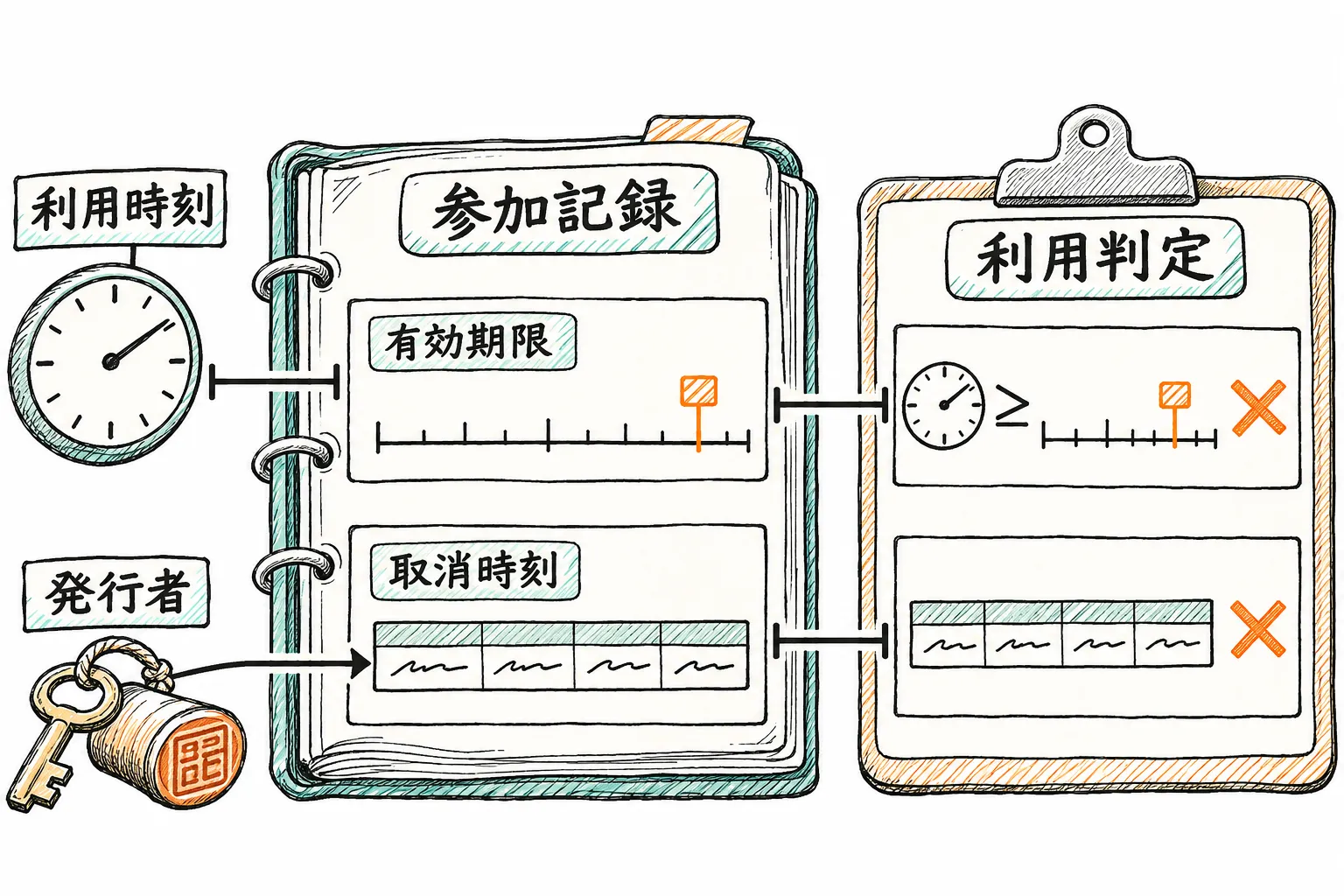
The intended use alone does not dictate revocability: a qualification attestation is not necessarily irrevocable, nor is an attendance attestation necessarily revocable. Decide whether an incorrectly issued record should be invalidated or whether a separate correction record should be referenced. Choose schema and attestation revocability settings accordingly. An attestation issued as irrevocable cannot be changed to revocable afterward.
Rewriting a signed file cannot revoke an offchain attestation.
When the attester passes a UID to EAS's revokeOffchain, a revocation timestamp is recorded for that attester address and UID pair.
A verifier uses getRevokeOffchain(attester, uid) to check whether the original attester revoked the record.
If someone else registers the same UID, the revocation record is associated with that other person's address. It does not count as revocation of the original attester's record. Conversely, even when the correct attester revokes the attestation, previously distributed files remain. Do not continue accepting them solely because their signatures still verify.
If the revocation lookup fails, do not convert the unknown status into not revoked. Hold the application or request another check, and distinguish the unknown status from records whose status has been confirmed.
Integrating with Applications
Implementing issuance and consumption separately clarifies the permissions each side needs. The organizer's issuance service connects a signing account, whereas the benefits application's read operations connect a provider that queries the chain. The consuming application does not need the organizer's private key merely to accept applications for a benefit.
With SDK 2.10.0, direct issuance involves passing the encoded data to attest and waiting for the returned transaction.
The following function accepts an eas instance already connected to EAS on the target chain and a registered schemaUID.
This is an implementation example that has not been executed against a network. Verify the actual deployment, permissions, and gas costs separately.
import {
  EAS,
  SchemaEncoder,
} from "@ethereum-attestation-service/eas-sdk";

async function issueAttendance(
  eas: EAS,
  schemaUID: string,
  participant: string,
): Promise<string> {
  const encoder = new SchemaEncoder("uint256 eventId, bool attended");
  const data = encoder.encodeData([
    { name: "eventId", type: "uint256", value: 42n },
    { name: "attended", type: "bool", value: true },
  ]);

  const transaction = await eas.attest({
    schema: schemaUID,
    data: {
      recipient: participant,
      expirationTime: 0n,
      revocable: true,
      refUID: "0x" + "00".repeat(32),
      data,
      value: 0n,
    },
  });

  return await transaction.wait();
}
This example sets no expiration, allows revocation, and uses zero values for the reference UID and transferred amount.
The schema must therefore permit revocation, and any Resolver must be configured so its issuance conditions are satisfied.
The SDK's wait() in this example returns the attestation UID.
The organizer's application saves the UID as the issuance result associated with event 42 and the attendee.
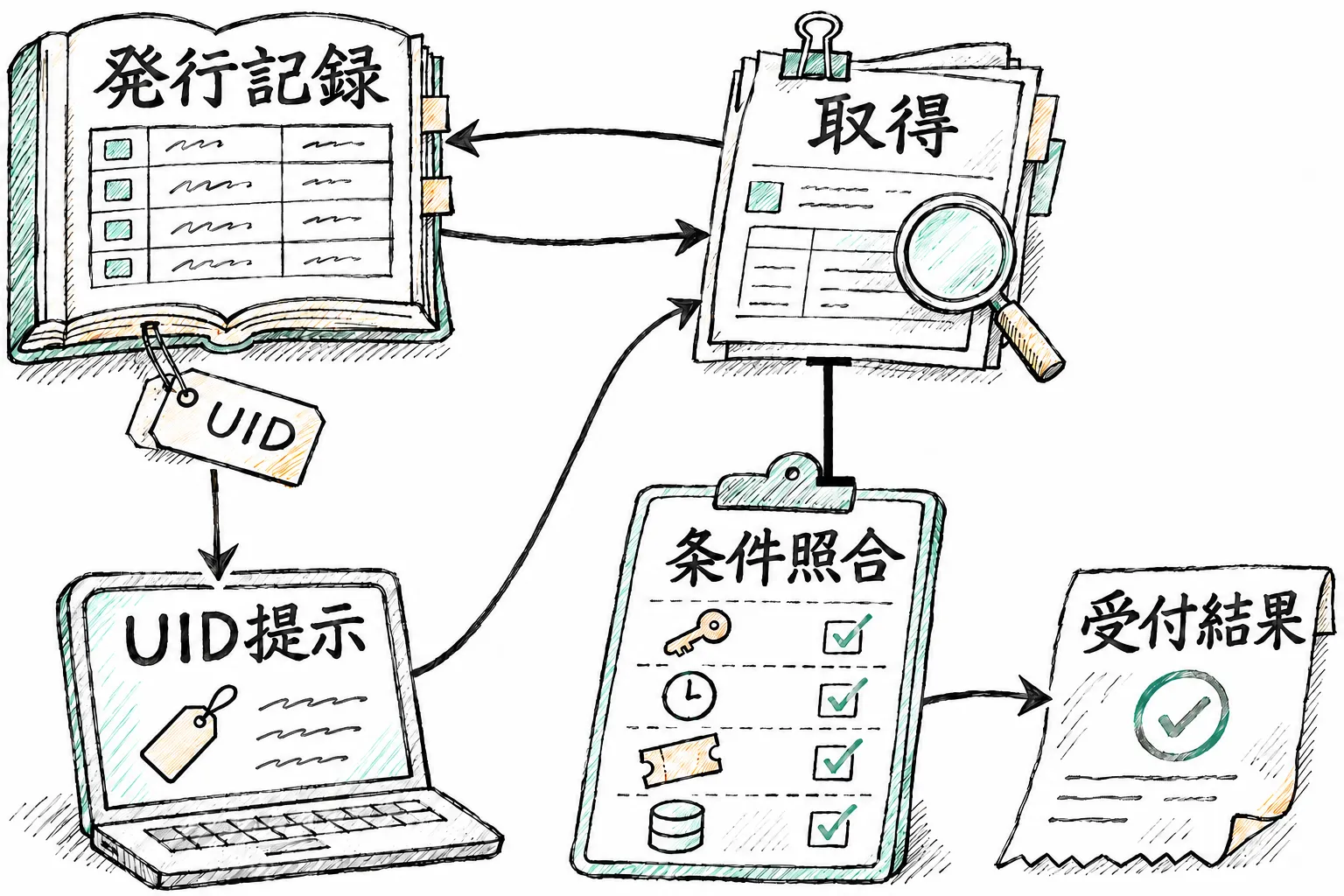
The consuming application checks the conditions described above for the retrieved attestation, then decodes its data using the same definition.
In the return value of SchemaEncoder.decodeData, each field's actual value is available at value.value.
const encoder = new SchemaEncoder("uint256 eventId, bool attended");
const decoded = encoder.decodeData(attestation.data);
const eventId = decoded[0].value.value;
const attended = decoded[1].value.value;
If the types or fields do not match expectations, exclude records that cannot be decoded from eligibility.
After decoding the values, check that the event number and attendance flag satisfy the eligibility conditions.
When using EAS Explorer to inspect attestations, use the same chain and deployment and check the issuer and expiration against the same criteria.
In the interface, distinguish pending submission, confirmed issuance, ineligibility, and failure to retrieve status so attendees can understand why another action may be required. This avoids presenting a communication error as ineligibility or treating transaction submission as confirmed issuance.
Beyond attendance attestations, multiple applications can use attestations if they share which qualification issuers they trust, how products are identified and linked to records, or the conditions for voting eligibility. Medical and financial records still require external data verification and access control. Even for applications submitted by AI agents, the consuming service defines what counts as acceptable evidence. Portability through a common format does not automatically guarantee the truth of the content or business-level approval.
Conclusion
EAS provides a shared format for an attester's claims and enables another application to verify the issuer and the contents. For attendance at event 42, the schema establishes a common meaning, the organizer issues the record, and the benefits application determines eligibility by checking the attester, recipient, contents, expiration, and revocation.
Onchain issuance relies on retrieving records from the chain, whereas offchain issuance requires retaining and presenting signed data. By implementing retrieval and revocation checks appropriate to the chosen issuance method, separate issuing and consuming applications can explain the conditions under which a record was accepted.
See the official EAS documentation, contract implementation, and SDK implementation for details.